Creating a Student Dashboard with React: UI/UX Best Practices for EdTech
The digital transformation in education has accelerated at an unprecedented pace. Educational institutions and EdTech companies are no longer just offering online courses; they are building comprehensive digital ecosystems to manage the entire student lifecycle, from admissions to alumni engagement. At the heart of this ecosystem lies the student dashboard – a critical touchpoint that dictates much of the student's daily interaction with the platform. A poorly designed dashboard can lead to frustration, disengagement, and ultimately, higher churn rates, directly impacting key metrics for companies like ApplyBoard or Edvoy.
As a full-stack developer who has spent years architecting and implementing robust EdTech solutions, I've seen firsthand the impact of a well-crafted student dashboard React application. It's not just about functionality; it's about creating an intuitive, empowering, and personalized experience. This post will delve into the UI/UX best practices for building an exceptional student dashboard React application, leveraging modern front-end techniques and back-end integration strategies. We'll explore how to design a student portal UI that not only looks good but also significantly enhances the learning and administrative experience, ensuring your EdTech platform stands out.
The Pivotal Role of the Student Dashboard in EdTech
A student dashboard is far more than a simple landing page; it's the central nervous system of a student's digital academic life. It's where they access courses, track progress, manage applications, communicate with advisors, and much more. In the competitive EdTech landscape, where personalized learning paths and seamless user experiences are paramount, the dashboard becomes a key differentiator. According to a 2025 HolonIQ report, student engagement platforms that offer highly personalized experiences are projected to capture over 60% of the market share, highlighting the urgency for superior education UX design.
Understanding the Core Needs of a Student User
Before we even consider a single line of React code, it's crucial to empathize with the student. What are their primary objectives when they log in?
- Accessing Learning Materials: Courses, assignments, grades, discussion forums.
- Tracking Progress: Visual representations of completion rates, upcoming deadlines, skill mastery.
- Administrative Tasks: Managing applications (especially for international students using platforms like AECC Global), paying fees, updating profiles, viewing financial aid information.
- Communication: Messaging instructors, peers, and support staff.
- Personalization: Tailored recommendations for courses, career paths, or scholarship opportunities.
A successful student portal UI must address these needs directly, efficiently, and with minimal cognitive load. The UI should guide the student, not overwhelm them.
Data-Driven Design: Metrics and Personalization
Modern EdTech platforms thrive on data. A student dashboard is the ideal place to leverage this data for personalization. Imagine a dashboard that, based on a student's performance in a particular subject, suggests supplementary resources or connects them with a tutor. Or one that, for prospective students, dynamically updates their application status with real-time feedback, much like the advanced tracking systems employed by leading study-abroad agencies. This requires a robust backend, often powered by Laravel or Python, feeding a dynamic React frontend.
Architectural Considerations for a Scalable React Student Dashboard
Building a robust student dashboard React application demands careful architectural planning. We're not just building a static site; we're creating a data-intensive, interactive application that needs to handle varying loads and integrate with multiple backend services.
Choosing the Right React Framework and State Management
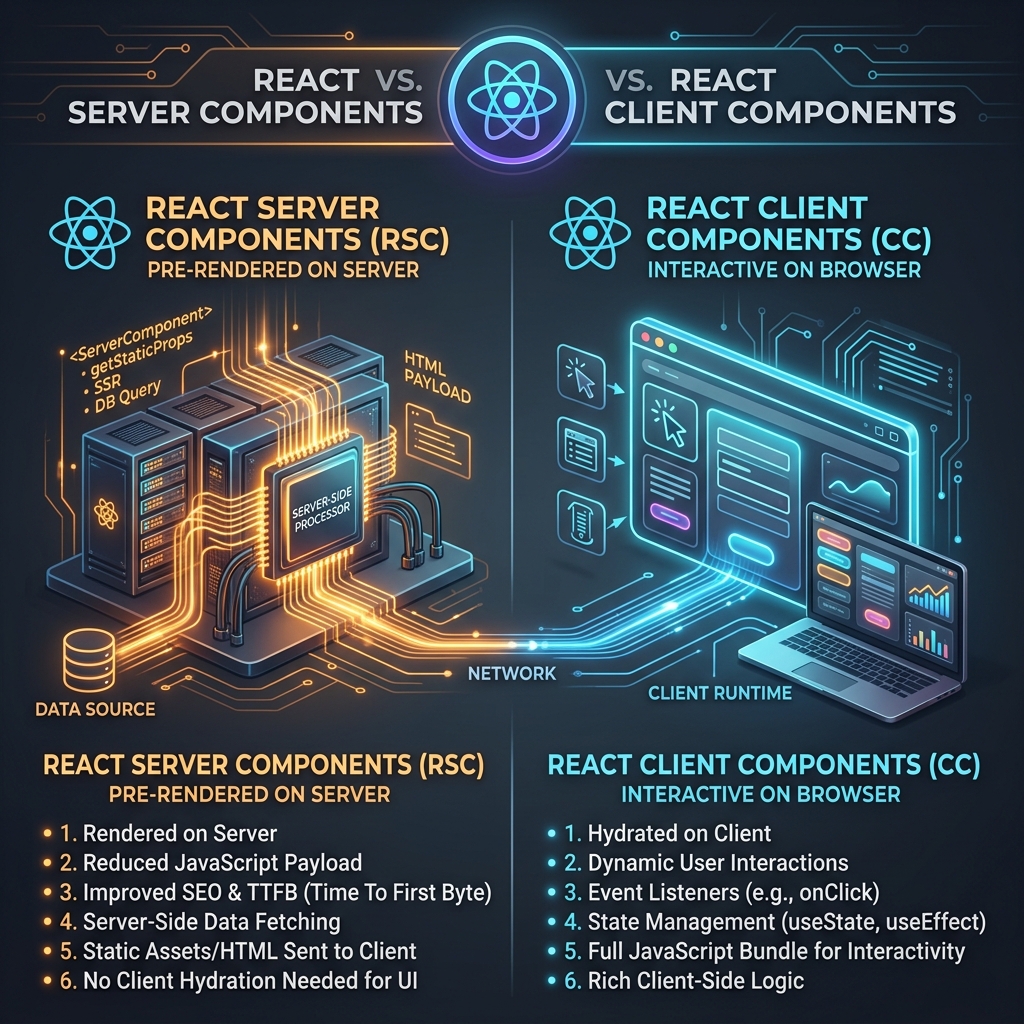
For complex EdTech applications, pure React can quickly become unwieldy. Frameworks like Next.js or Remix provide excellent solutions for server-side rendering (SSR), static site generation (SSG), and API routes, which are invaluable for performance and SEO – especially if parts of your dashboard need to be publicly accessible or easily indexed.
For state management, while React Context API is sufficient for simpler applications, Redux Toolkit, Zustand, or Jotai offer more scalable and maintainable solutions for managing global state, asynchronous data fetching, and complex interactions typical of a comprehensive student portal UI.
// Example: Basic Next.js page fetching student data
// pages/dashboard/index.js
import { useEffect, useState } from 'react';
import axios from 'axios';
import StudentOverview from '../../components/StudentOverview';
import CourseList from '../../components/CourseList';

export default function Dashboard() {
  const [studentData, setStudentData] = useState(null);
  const [loading, setLoading] = useState(true);
  const [error, setError] = useState(null);

  useEffect(() => {
    const fetchStudentData = async () => {
      try {
        const response = await axios.get('/api/student/me'); // Your backend API endpoint
        setStudentData(response.data);
      } catch (err) {
        setError('Failed to fetch student data.');
        console.error(err);
      } finally {
        setLoading(false);
      }
    };
    fetchStudentData();
  }, []);

  if (loading) return <p>Loading dashboard...</p>;
  if (error) return <p className="text-red-500">{error}</p>;
  if (!studentData) return <p>No student data found.</p>;

  return (
    <div className="container mx-auto p-4">
      <h1 className="text-3xl font-bold mb-6">Welcome, {studentData.firstName}!</h1>
      <StudentOverview student={studentData} />
      <CourseList courses={studentData.courses} />
      {/* ... other dashboard components */}
    </div>
  );
}
This snippet demonstrates a basic data fetching pattern in Next.js, integrating with a backend API. The components StudentOverview and CourseList would then consume this data.
Backend Integration: RESTful APIs and Microservices
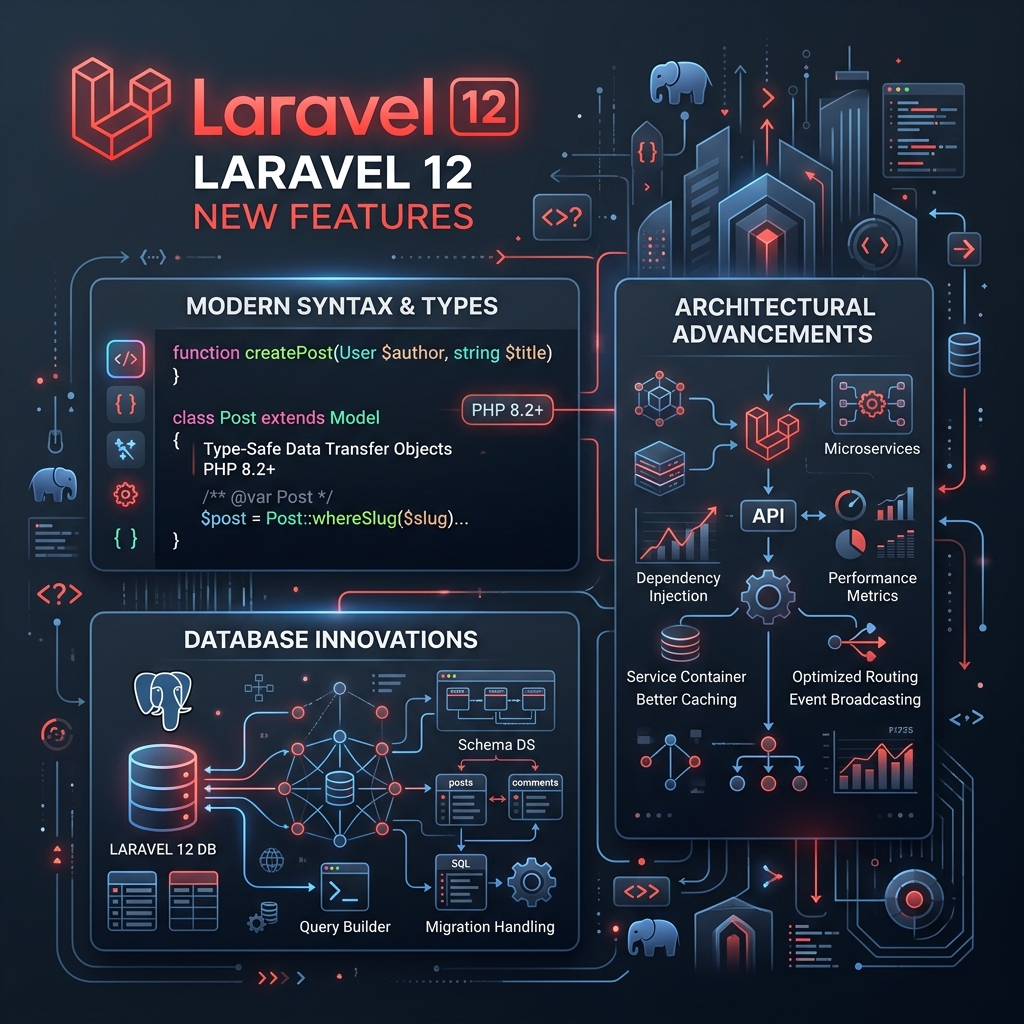
A robust backend is the backbone of any sophisticated EdTech platform. Whether you're using Laravel with PHP for its rapid development capabilities and extensive ecosystem, or Python with Django/Flask for data science and AI integration, a well-defined RESTful API is crucial. For large-scale systems, a microservices architecture can provide scalability and fault tolerance, allowing different parts of the dashboard (e.g., course management, payment gateway, communication) to be managed by independent services.
Consider a microservice for admissions management, handling complex workflows for international student applications, visa processes, and document uploads. This service could be developed independently and expose a clean API for the student dashboard React frontend to consume.
// Example: Laravel API Controller for Student Data
// app/Http/Controllers/Api/StudentController.php
<?php

namespace App\Http\Controllers\Api;

use App\Http\Controllers\Controller;
use Illuminate\Http\Request;
use App\Models\Student;
use App\Http\Resources\StudentResource;

class StudentController extends Controller
{
    public function me(Request $request)
    {
        // Assuming authentication middleware protects this route
        // and sets the authenticated student
        $student = $request->user();

        if (!$student) {
            return response()->json(['message' => 'Unauthorized'], 401);
        }

        // Load related data (e.g., courses, applications)
        $student->load(['courses', 'applications']);

        return new StudentResource($student);
    }

    // ... other student-related API methods
}
This Laravel example shows a simple me endpoint to fetch authenticated student data, which the React frontend can then consume.
UI/UX Best Practices for an Engaging Student Dashboard
The visual and interactive design of the student dashboard React application is paramount. It must be intuitive, accessible, and visually appealing to keep students engaged.
Intuitive Navigation and Information Hierarchy
A cluttered dashboard is a useless dashboard. Employ clear, consistent navigation patterns. Use a sidebar for primary navigation items (e.g., "Courses," "Grades," "Applications," "Profile") and a top bar for secondary actions or notifications.
- Prioritize Information: What does the student need to see immediately? Upcoming deadlines, new announcements, and progress summaries should be front and center.
- Visual Cues: Use icons, color-coding, and clear typography to differentiate sections and highlight important information.
- Search Functionality: For large platforms, a robust search bar (e.g., for courses, documents, or FAQs) is essential.
Personalization and Customization Options
Beyond just displaying relevant data, empower students to customize their experience. This could include:
- Theme selection: Light/dark mode.
- Widget reordering: Allowing students to drag and drop dashboard components to suit their preferences.
- Notification preferences: Letting them choose how and when they receive alerts.
Personalization significantly boosts engagement. A 2026 report by the GSMA Education initiative indicated that platforms offering high levels of personalization experienced a 25% higher user retention rate.
Accessibility and Responsiveness
EdTech platforms serve a diverse user base. Your student portal UI must be accessible to all students, including those with disabilities.
- WCAG Compliance: Adhere to Web Content Accessibility Guidelines (WCAG) standards. This means proper ARIA attributes, keyboard navigation, sufficient color contrast, and screen reader compatibility.
- Responsive Design: Students access platforms from desktops, tablets, and smartphones. A fluid, responsive design using CSS frameworks like Tailwind CSS or Bootstrap (or custom CSS-in-JS solutions) is non-negotiable.
// Example: Responsive layout using Tailwind CSS classes in React
export function DashboardLayout({ children }) {
  return (
    <div className="flex flex-col md:flex-row min-h-screen">
      <aside className="w-full md:w-64 bg-gray-800 text-white p-4">
        {/* Sidebar navigation */}
        <nav>
          <ul>
            <li className="mb-2"><a href="/dashboard" className="block p-2 hover:bg-gray-700 rounded">Home</a></li>
            <li className="mb-2"><a href="/dashboard/courses" className="block p-2 hover:bg-gray-700 rounded">My Courses</a></li>
            <li className="mb-2"><a href="/dashboard/applications" className="block p-2 hover:bg-gray-700 rounded">Applications</a></li>
            {/* ... other links */}
          </ul>
        </nav>
      </aside>
      <main className="flex-1 p-6 bg-gray-100">
        {children}
      </main>
    </div>
  );
}
This React component demonstrates a simple responsive layout using Tailwind CSS, adapting from a column layout on small screens to a row layout on medium screens and up.
Enhancing User Experience with Interactive Components
The interactivity of your student dashboard React application can dramatically improve the user experience. Leveraging React's component-based architecture allows for rich, dynamic elements.
Progress Tracking and Gamification
Visual progress bars, completion checklists, and badges for achieving milestones can be incredibly motivating. For example, a student applying to multiple universities through a platform like ApplyBoard would benefit from a visual pipeline showing their application status (submitted, under review, accepted, rejected) for each institution.
// Example: Simple React Progress Bar Component
const ProgressBar = ({ progress }) => {
  return (
    <div className="w-full bg-gray-200 rounded-full h-4 relative">
      <div
        className="bg-blue-600 h-4 rounded-full transition-all duration-500 ease-out"
        style={{ width: `${progress}%` }}
      ></div>
      <span className="absolute inset-0 flex items-center justify-center text-xs font-semibold text-white">
        {progress}%
      </span>
    </div>
  );
};

// Usage: <ProgressBar progress={75} />
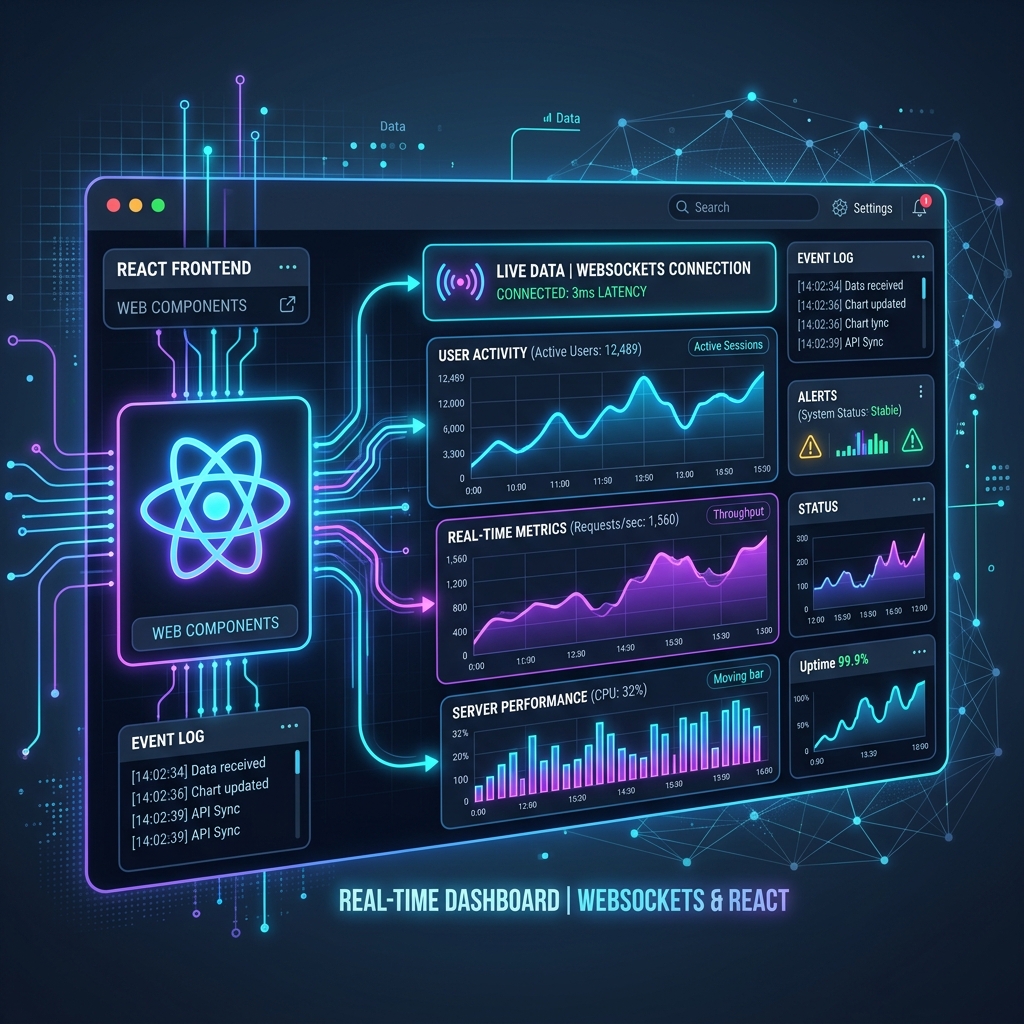
Real-time Notifications and Alerts
Timely information is critical. Implement a robust notification system for:
- New assignments or course announcements.
- Application status updates.
- Upcoming deadlines.
- Messages from instructors or advisors.
Leverage WebSockets for real-time updates (e.g., using Laravel Echo with Pusher or Ably, or a similar solution for Node.js backends).
Integrated Communication Tools
Direct messaging, discussion forums, or even integrated video conferencing links within the dashboard streamline communication. This reduces the need for students to navigate to external platforms, creating a more cohesive education UX design.
Security and Performance Considerations
While UI/UX are crucial, they are built upon a foundation of robust security and optimal performance. Neglecting these aspects can severely undermine the trust and usability of your EdTech platform.
Data Security and Privacy (GDPR, FERPA Compliance)
Student data is highly sensitive. Your student dashboard React application and its backend must adhere to stringent data protection regulations like GDPR (for European users) and FERPA (for US educational institutions).
- Secure Authentication: Implement strong authentication mechanisms (OAuth, JWT, multi-factor authentication).
- Data Encryption: Encrypt data both in transit (HTTPS) and at rest (database encryption).
- Role-Based Access Control (RBAC): Ensure students can only access data and functionalities relevant to their role.
- Regular Security Audits: Conduct penetration testing and vulnerability assessments.
Optimizing React Performance
A slow dashboard is a frustrating dashboard. Optimize your React application for speed:
- Code Splitting: Load only the necessary components for the initial view using
React.lazy()andSuspenseor Next.js's automatic code splitting. - Memoization: Use
React.memo(),useCallback(), anduseMemo()to prevent unnecessary re-renders of components. - Virtualization: For long lists (e.g., a student's course history), use libraries like
react-windoworreact-virtualizedto render only the visible items. - Image Optimization: Compress images and use modern formats like WebP.
- Efficient Data Fetching: Implement caching strategies (e.g., with
react-queryorSWR) and pagination for large datasets.
// Example: Using React.memo for performance optimization
import React from 'react';

const StudentCourseCard = React.memo(({ course }) => {
  console.log(`Rendering Course Card: ${course.title}`);
  return (
    <div className="bg-white rounded-lg shadow p-4 mb-4">
      <h3 className="text-xl font-semibold">{course.title}</h3>
      <p className="text-gray-600">{course.instructor}</p>
      <p className={`mt-2 text-sm ${course.status === 'Completed' ? 'text-green-600' : 'text-blue-600'}`}>
        Status: {course.status}
      </p>
      {/* ... other course details */}
    </div>
  );
});

export default StudentCourseCard;
By wrapping StudentCourseCard with React.memo, it will only re-render if its course prop changes, preventing unnecessary re-renders when parent components update unrelated state.
Key Takeaways
- Student-Centric Design: Always prioritize the student's needs and pain points when designing the student dashboard React application.
- Scalable Architecture: Choose appropriate React frameworks (Next.js), state management, and backend technologies (Laravel, microservices) to ensure long-term scalability and maintainability.
- Intuitive UI/UX: Focus on clear navigation, information hierarchy, and visual appeal to reduce cognitive load and enhance engagement.
- Personalization is Power: Leverage data to offer tailored experiences, boosting retention and satisfaction.
- Accessibility and Responsiveness: Ensure your student portal UI is usable by everyone, on any device.
- Performance & Security: A fast and secure dashboard builds trust and prevents frustration. Implement robust security measures and optimize for speed.
- Iterative Development: Gather feedback continuously and iterate on your design. The EdTech landscape evolves rapidly, and your dashboard should too.
FAQ
Q1: What is the biggest challenge in developing a student dashboard with React for EdTech?
A1: The biggest challenge often lies in integrating disparate data sources (e.g., LMS, CRM, payment systems) into a cohesive, real-time experience while maintaining high performance and stringent security standards. Balancing personalization with data privacy is also a significant hurdle.
Q2: Should I use a UI component library for my React student dashboard?
A2: Absolutely. Libraries like Material-UI, Ant Design, or Chakra UI provide pre-built, accessible, and customizable components, significantly accelerating development and ensuring design consistency. They are excellent for establishing a professional education UX design.
Q3: How do I ensure my student dashboard is secure against common vulnerabilities?
A3: Implement secure coding practices (e.g., OWASP Top 10), use HTTPS, sanitize all user inputs, implement robust authentication (MFA, strong password policies), authorize all requests with RBAC, and regularly update dependencies. Regular security audits are non-negotiable.
Q4: What's the role of AI in a modern student dashboard?
A4: AI can revolutionize dashboards through intelligent recommendations for courses, study materials, or career paths; personalized learning analytics; AI-powered chatbots for support; and predictive analytics for student success or risk assessment. This enhances the personalized aspect of the student dashboard React experience.
Q5: How important is mobile responsiveness for an EdTech student dashboard?
A5: Extremely important. With a significant portion of students accessing educational content and platform features via mobile devices, a fully responsive and optimized mobile experience is critical for engagement and accessibility. A non-responsive design can lead to high bounce rates and poor user satisfaction.
Looking to build an EdTech platform, student CRM, or admission management system? I specialize in developing scalable education technology solutions using Laravel, React, and cloud infrastructure. Whether you're a study-abroad agency, EdTech startup, or university looking for custom software development, blank" rel="noopener noreferrer" style="color: var(--primary); text-decoration: none; border-bottom: 1px dashed var(--primary);">let's discuss your project. Check out my portfolio and technical expertise to see how I can help bring your vision to life.