Building an EdTech SaaS Platform Using Laravel: Architecture Guide
The education technology landscape is experiencing unprecedented growth, projected to reach over \$400 billion by 2026. This surge is driven by a global demand for accessible, personalized, and efficient learning solutions. For entrepreneurs and established institutions alike, the opportunity to innovate in this space is immense. However, building a robust, scalable, and secure EdTech platform is no trivial task. It requires a deep understanding of both educational paradigms and sophisticated software architecture. Many aspiring EdTech ventures struggle with foundational decisions, often leading to technical debt, performance bottlenecks, and an inability to adapt to evolving user needs.
As a senior full-stack developer who has spent years architecting and implementing complex EdTech solutions – from student CRMs for study-abroad agencies like ApplyBoard and Edvoy to comprehensive admission management systems for global education providers such as AECC Global – I've witnessed firsthand the challenges and triumphs in this domain. The choice of technology stack is paramount, and for many reasons, Laravel stands out as a compelling framework for building sophisticated EdTech SaaS platforms. Its developer-friendly syntax, robust ecosystem, and emphasis on convention over configuration make it an ideal candidate for rapidly developing and maintaining complex applications.
This guide will delve into the core architectural considerations for building an EdTech SaaS Laravel platform. We'll explore how to leverage Laravel's strengths for multi-tenancy, scalability, data security, and integration, providing practical insights and code examples. Our focus will be on creating an edtech multi-tenant system that can serve diverse educational institutions and users while maintaining high performance and data isolation, addressing the critical needs of education SaaS development.
Understanding the Core Requirements of EdTech SaaS
Before diving into the technical blueprint, it's crucial to grasp the unique demands of EdTech SaaS. Unlike generic business applications, educational platforms often deal with sensitive student data, complex user roles (students, teachers, administrators, parents), diverse content types, and fluctuating peak usage times (e.g., during admissions cycles or exam periods).
Multi-Tenancy: The Foundation of EdTech SaaS
A true SaaS platform requires efficient multi-tenancy – the ability to serve multiple independent "tenants" (e.g., schools, universities, individual educators) from a single application instance. This is a non-negotiable for EdTech SaaS Laravel applications aiming for scalability and cost-effectiveness.
There are several multi-tenancy strategies, each with its trade-offs:
- Separate Databases per Tenant: Offers the highest data isolation and security. Backup and restore operations are tenant-specific. However, it incurs higher infrastructure costs and management overhead as the number of tenants grows.
- Shared Database, Separate Schemas: A middle ground, providing logical separation while sharing the same database instance. Still offers good isolation but can be more complex to manage at the schema level.
- Shared Database, Shared Schema with Tenant ID Column: The most common and often most cost-effective for high-volume SaaS. All tenant data resides in the same tables, distinguished by a
tenant_idcolumn. Requires strict application-level enforcement of data access.
For most education SaaS development scenarios, especially when starting out, the "Shared Database, Shared Schema with Tenant ID" approach offers the best balance of scalability, cost, and development speed. Laravel's Eloquent ORM makes implementing this strategy relatively straightforward.
Scalability and Performance for Peak Loads
EdTech platforms often experience unpredictable spikes in traffic, such as during course registration, assignment deadlines, or application submission periods. A well-architected system must handle these loads gracefully without compromising user experience. This involves:
- Stateless Architecture: Ensuring that individual requests don't rely on session data stored on a specific server, allowing for easy horizontal scaling.
- Caching: Implementing robust caching mechanisms (e.g., Redis for session, database queries, and frequently accessed content).
- Asynchronous Processing: Offloading heavy tasks (e.g., email notifications, report generation, video encoding) to background queues.
- Database Optimization: Proper indexing, query optimization, and potentially read replicas for heavy read workloads.
Data Security and Compliance (GDPR, FERPA)
Student data is highly sensitive. Adhering to regulations like GDPR (Europe), FERPA (USA), and local data privacy laws is paramount. This impacts data storage, access control, encryption, and audit logging. A robust EdTech SaaS Laravel platform must bake security into its core design.
Architectural Blueprint: Laravel as the Backend Powerhouse
Laravel's elegant syntax and powerful features make it an excellent choice for the backend of an EdTech SaaS. We'll outline a typical architecture.
1. Frontend: Engaging User Experiences with Modern Frameworks
While Laravel can render views, for a modern, highly interactive EdTech platform, a decoupled frontend is often preferred. This allows for dedicated teams, better user experience, and easier adoption of new UI/UX trends.
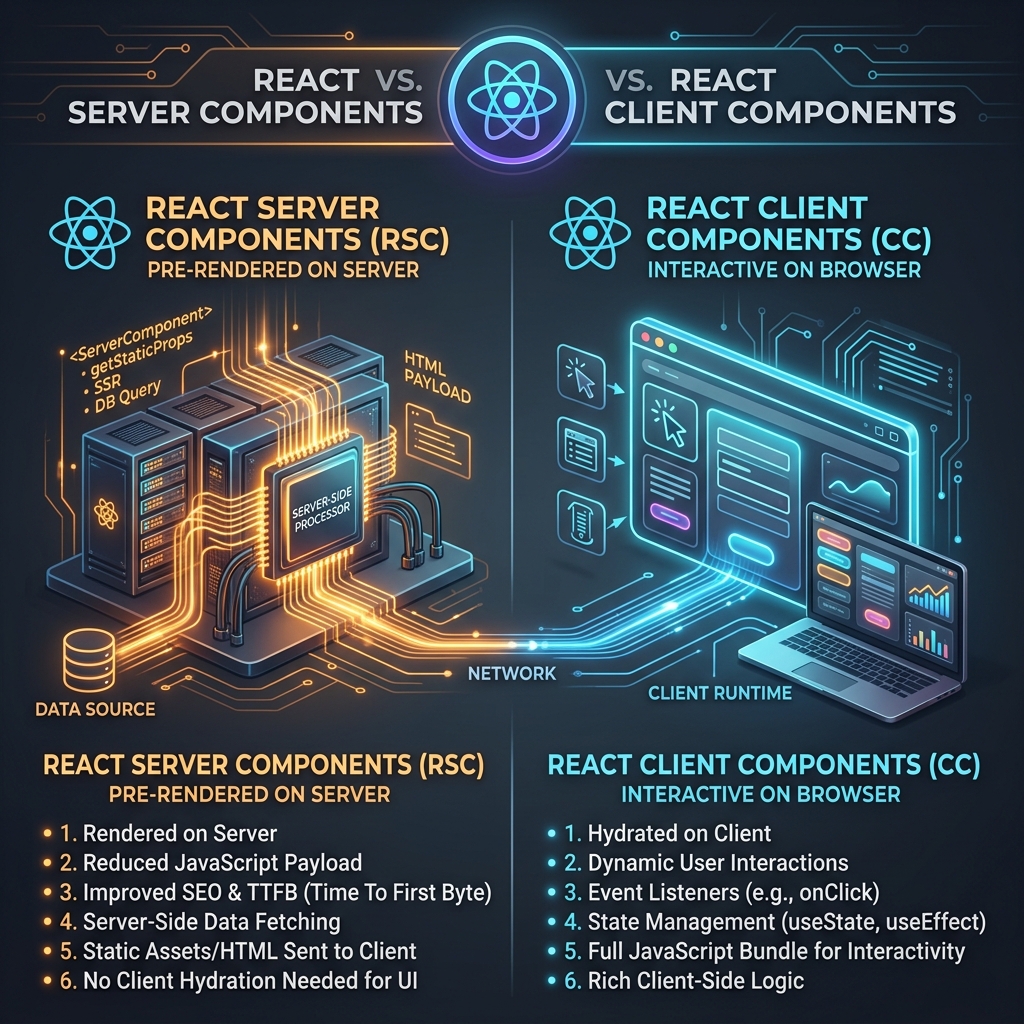
- Technology Stack: React or Next.js are popular choices. Next.js offers server-side rendering (SSR) and static site generation (SSG) benefits, which can improve initial load times and SEO for public-facing pages (e.g., course catalogs).
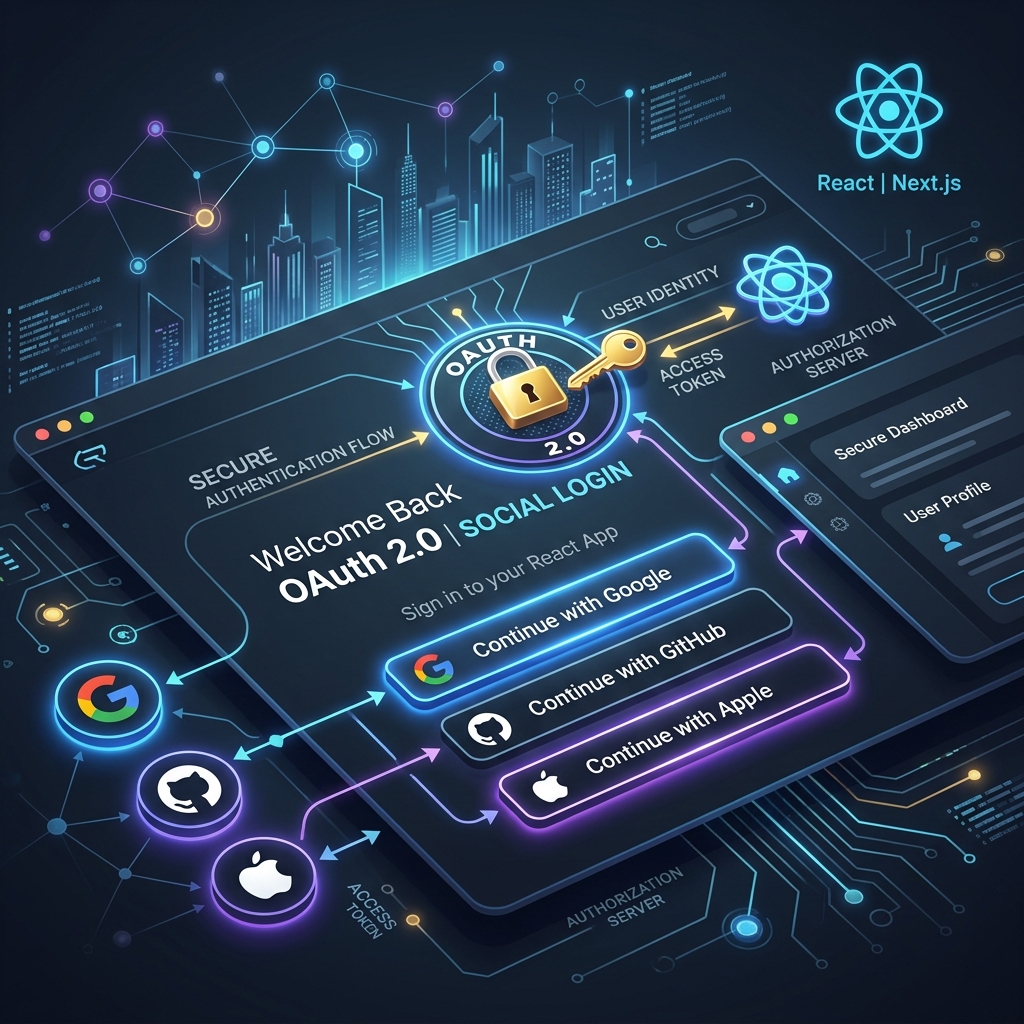
- API Communication: The frontend communicates with the Laravel backend via a RESTful API or GraphQL. Laravel provides excellent tools for building APIs with Laravel Sanctum for token-based authentication.
// Example of a Next.js component fetching data from a Laravel API
// pages/courses/[id].js
import { useRouter } from 'next/router';
import { useEffect, useState } from 'react';
import axios from 'axios';

export default function CourseDetail() {
  const router = useRouter();
  const { id } = router.query;
  const [course, setCourse] = useState(null);
  const [loading, setLoading] = useState(true);
  const [error, setError] = useState(null);

  useEffect(() => {
    if (id) {
      const fetchCourse = async () => {
        try {
          const response = await axios.get(`${process.env.NEXT_PUBLIC_API_URL}/api/courses/${id}`);
          setCourse(response.data);
        } catch (err) {
          setError('Failed to load course details.');
          console.error(err);
        } finally {
          setLoading(false);
        }
      };
      fetchCourse();
    }
  }, [id]);

  if (loading) return <p>Loading course...</p>;
  if (error) return <p className="text-red-500">{error}</p>;
  if (!course) return <p>Course not found.</p>;

  return (
    <div className="container mx-auto p-4">
      <h1 className="text-3xl font-bold mb-4">{course.title}</h1>
      <p className="text-gray-700 mb-2">{course.description}</p>
      <p className="text-lg font-semibold">Instructor: {course.instructor}</p>
      {/* More course details */}
    </div>
  );
}
2. Backend: Laravel API and Business Logic
The Laravel application serves as the heart of the EdTech platform, handling all business logic, data persistence, and API interactions.
- API Endpoints: Implement RESTful API endpoints for all core functionalities: user management, course creation, enrollment, assignment submission, grading, reporting, etc. Laravel's built-in routing and controller capabilities simplify this.
- Multi-Tenancy Implementation:
- Tenant Identification: Use a middleware to identify the current tenant based on the subdomain (e.g.,
school1.edtech.com), a custom header, or a query parameter. - Global Scopes: Leverage Laravel's global scopes on Eloquent models to automatically filter data by
tenant_idfor every query. This is a critical component for edtech multi-tenant applications.
// app/Http/Middleware/TenantMiddleware.php
namespace App\Http\Middleware;

use Closure;
use App\Models\Tenant;
use Illuminate\Http\Request;
use Illuminate\Support\Facades\Config;
use Illuminate\Support\Facades\DB;
use Symfony\Component\HttpFoundation\Response;

class TenantMiddleware
{
    /**
     * Handle an incoming request.
     *
     * @param  \Closure(\Illuminate\Http\Request): (\Symfony\Component\HttpFoundation\Response)  $next
     */
    public function handle(Request $request, Closure $next): Response
    {
        // Example: Identify tenant by subdomain
        $subdomain = explode('.', $request->getHost())[0];

        $tenant = Tenant::where('subdomain', $subdomain)->first();

        if (!$tenant) {
            abort(404, 'Tenant not found.');
        }

        // Store tenant info for global access
        app()->instance('tenant', $tenant);

        // Optional: Set database connection if using separate databases
        // Config::set('database.connections.tenant.database', $tenant->database_name);
        // DB::setDefaultConnection('tenant');

        return $next($request);
    }
}

// app/Models/Course.php (Example with Global Scope)
namespace App\Models;

use Illuminate\Database\Eloquent\Builder;
use Illuminate\Database\Eloquent\Factories\HasFactory;
use Illuminate\Database\Eloquent\Model;

class Course extends Model
{
    use HasFactory;

    protected static function booted(): void
    {
        static::addGlobalScope('tenant', function (Builder $builder) {
            if (app()->has('tenant')) {
                $builder->where('tenant_id', app('tenant')->id);
            }
        });

        static::creating(function ($model) {
            if (app()->has('tenant') && empty($model->tenant_id)) {
                $model->tenant_id = app('tenant')->id;
            }
        });
    }

    // ... other model properties and relationships
}
- Authentication & Authorization: Laravel Fortify and Sanctum provide robust authentication for SPAs and mobile apps. For authorization, Laravel's built-in Gates and Policies are powerful. For complex role-based access control (RBAC), packages like Spatie's Laravel Permission are excellent.
- Job Queues: Use Laravel Queues with Redis or AWS SQS for asynchronous tasks. This is crucial for performance, especially in education SaaS development where tasks like sending bulk emails, generating large reports, or processing video uploads can be resource-intensive.
3. Database: Reliable Data Storage
MySQL or PostgreSQL are standard choices. For high-availability and scalability, consider managed database services like AWS RDS or Azure Database.
- Schema Design: Design a flexible schema that accommodates various educational contexts. For multi-tenancy, ensure a
tenant_idcolumn is present on all tenant-specific tables. - Indexing: Proper indexing is vital for query performance, especially on frequently queried columns like
tenantid,userid,courseid, andcreatedat.
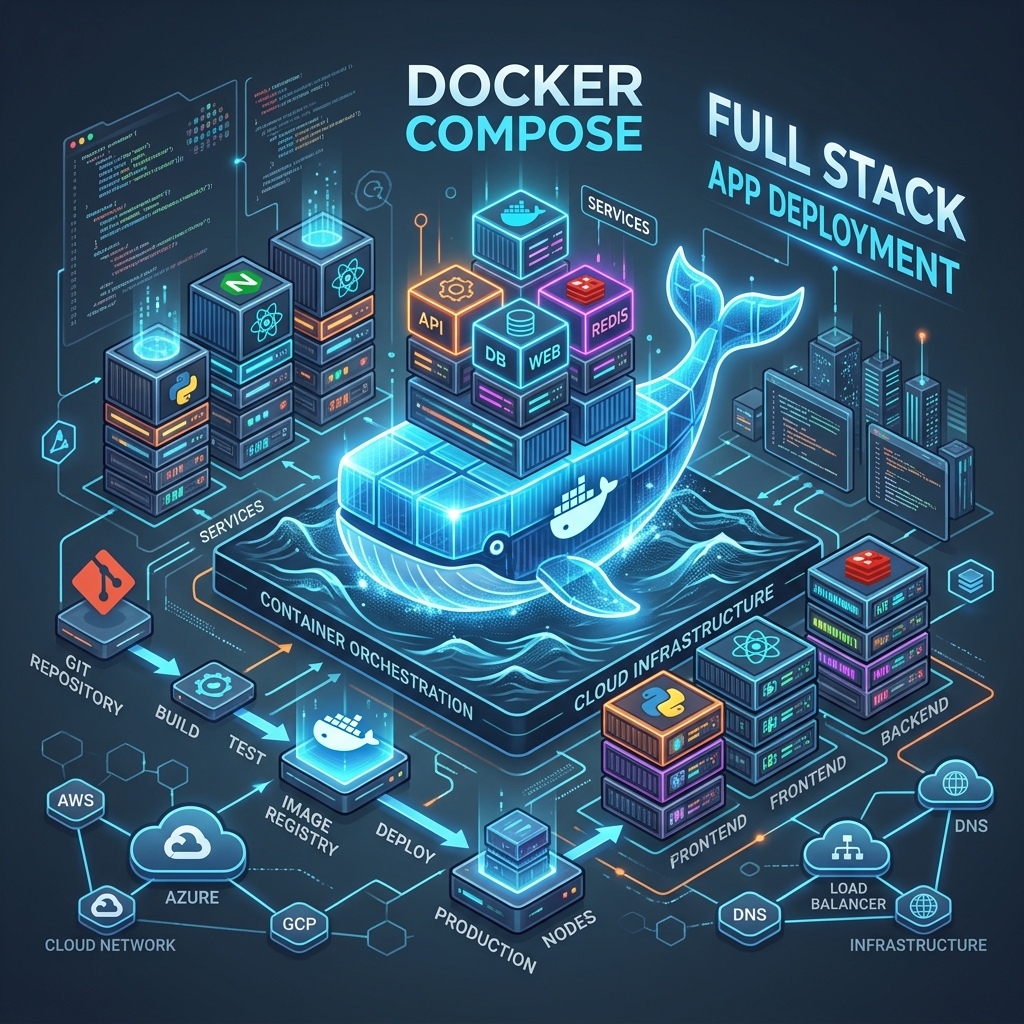
4. Infrastructure: Cloud-Native Deployment
Leveraging cloud platforms (AWS, Google Cloud, Azure) is essential for scalability, reliability, and cost-efficiency.
- Compute: AWS EC2, Google Compute Engine, or managed services like AWS Elastic Beanstalk or Laravel Vapor (for serverless deployments).
- Database: AWS RDS (MySQL/PostgreSQL), Google Cloud SQL.
- Storage: AWS S3 for static assets (images, videos, documents). This offloads file serving from your application servers and provides high availability.
- Caching: AWS ElastiCache (Redis) or Google Cloud Memorystore.
- Queues: AWS SQS, Redis.
- CDN: Cloudflare or AWS CloudFront to serve static assets globally, reducing latency for users worldwide.
Advanced Features and Integrations
To stand out in the competitive EdTech market, consider these advanced features.
Integrations with Third-Party EdTech Tools
Modern EdTech platforms rarely exist in isolation. Integration with other systems is key.
- LMS Integration: Integrate with popular Learning Management Systems (LMS) like Moodle, Canvas, or Blackboard via LTI (Learning Tools Interoperability) standards, or their respective APIs.
- Communication Tools: Integrate with Zoom, Google Meet for live classes, or Twilio for SMS notifications.
- Payment Gateways: Stripe, PayPal for course payments, subscriptions.
- CRM/ERP Integration: For institutions, integration with their existing student information systems (SIS) or enterprise resource planning (ERP) systems is often required. This is where a robust student CRM built on Laravel shines, allowing seamless data flow.
Real-time Features with WebSockets
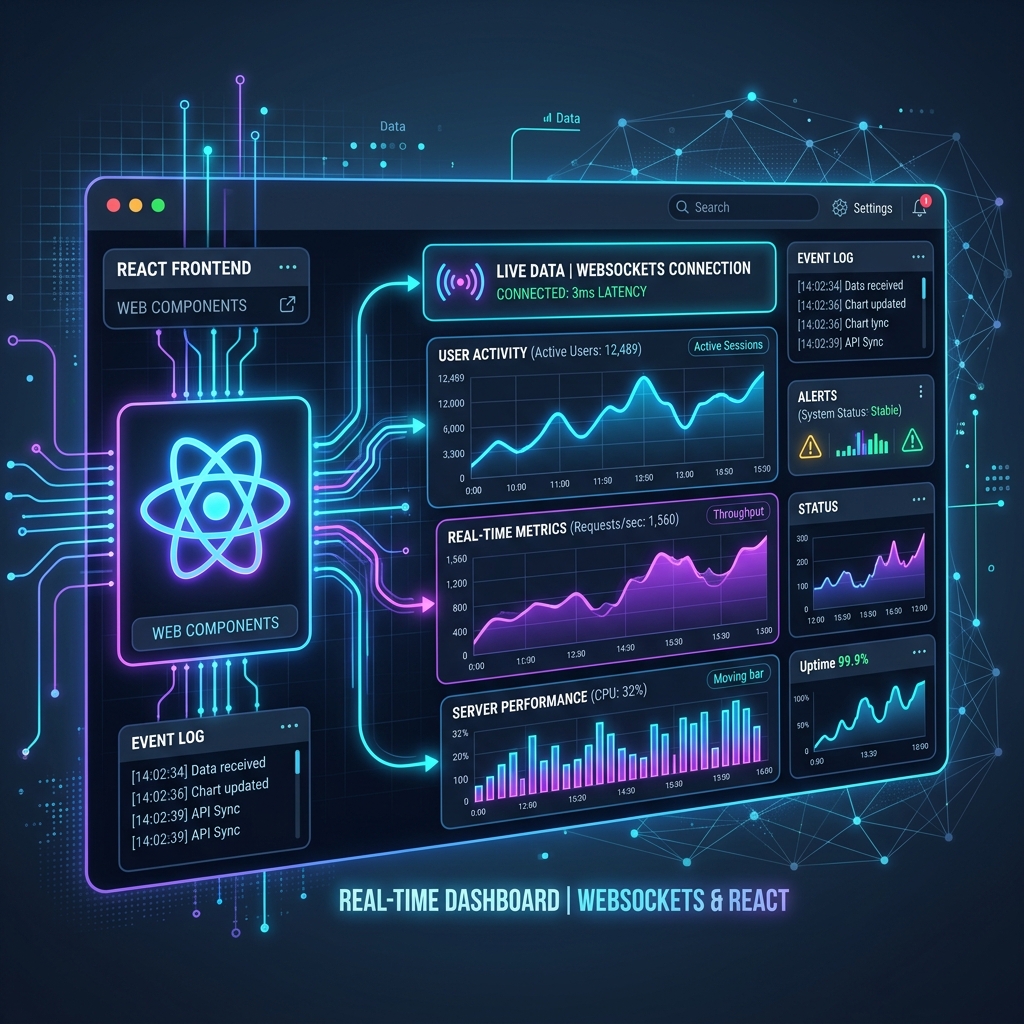
For features like live chat, real-time quizzes, collaborative whiteboards, or instant notifications, WebSockets are indispensable.
- Laravel Echo & Pusher/WebSockets: Laravel Echo provides an elegant way to implement real-time events. It integrates seamlessly with Pusher, Ably, or a self-hosted WebSocket server (e.g., using
beyondcode/laravel-websockets).
// Example: Broadcasting a new message in a course chat
// app/Events/NewChatMessage.php
namespace App\Events;

use App\Models\Message;
use Illuminate\Broadcasting\InteractsWithSockets;
use Illuminate\Broadcasting\PrivateChannel;
use Illuminate\Contracts\Broadcasting\ShouldBroadcast;
use Illuminate\Foundation\Events\Dispatchable;
use Illuminate\Queue\SerializesModels;

class NewChatMessage implements ShouldBroadcast
{
    use Dispatchable, InteractsWithSockets, SerializesModels;

    public Message $message;

    public function __construct(Message $message)
    {
        $this->message = $message;
    }

    public function broadcastOn(): array
    {
        return [
            new PrivateChannel('course.' . $this->message->course_id),
        ];
    }

    public function broadcastWith(): array
    {
        return [
            'id' => $this->message->id,
            'user_name' => $this->message->user->name,
            'content' => $this->message->content,
            'created_at' => $this->message->created_at->toDateTimeString(),
        ];
    }
}
Analytics and Reporting
Data-driven insights are crucial for both platform administrators and educational institutions.
- Event Tracking: Implement robust event tracking (e.g., using Google Analytics, Mixpanel, or a custom event logging system) to understand user behavior.
- Reporting Dashboard: Provide intuitive dashboards for tenants to track student progress, engagement, attendance, and performance.
- Data Warehousing: For advanced analytics, consider moving aggregated data to a data warehouse (e.g., AWS Redshift, Google BigQuery) for complex queries and machine learning applications.
Security Best Practices for EdTech SaaS
Security is paramount in EdTech.
- Input Validation: Always validate and sanitize all user input to prevent XSS, SQL injection, and other vulnerabilities. Laravel's validation rules are a strong first line of defense.
- Authentication & Authorization: Enforce strong password policies, multi-factor authentication (MFA), and granular access control.
- Data Encryption: Encrypt sensitive data both at rest (database encryption) and in transit (SSL/TLS for all communication).
- Regular Security Audits: Conduct penetration testing and security audits regularly.
- GDPR/FERPA Compliance: Design data retention policies, consent mechanisms, and data access controls to comply with relevant regulations.
Key Takeaways
- Multi-tenancy is fundamental: Choose a strategy (shared schema with
tenant_idis often optimal for EdTech SaaS Laravel). - Decoupled architecture: Laravel API backend + modern frontend (React/Next.js) for flexibility and better UX.
- Scalability baked in: Utilize caching, queues, and cloud-native services from day one.
- Security is non-negotiable: Implement robust authentication, authorization, encryption, and compliance measures.
- Integrations are key: Plan for interoperability with LMS, communication tools, and payment gateways.
- Leverage Laravel's ecosystem: Utilize packages for RBAC, real-time features, and testing.
FAQ
Q1: What are the main benefits of using Laravel for EdTech SaaS development?
A1: Laravel offers rapid development with its expressive syntax, a rich ecosystem of packages, robust security features out-of-the-box, excellent API capabilities (with Sanctum), and strong community support. Its emphasis on developer experience allows teams to focus on core business logic rather than boilerplate, which is crucial for education SaaS development.
Q2: How do you handle data isolation in a shared database multi-tenant Laravel application?
A2: We primarily use Laravel's global scopes on Eloquent models. Every model that contains tenant-specific data is configured with a global scope that automatically adds a WHERE tenantid = currenttenantid clause to all queries. Additionally, we enforce tenantid assignment during model creation. This ensures that a tenant can only access their own data.
Q3: What are the typical hosting costs for an EdTech SaaS platform built with Laravel?
A3: Hosting costs can vary widely based on scale, traffic, and chosen cloud providers. For a lean startup, you might begin with a DigitalOcean droplet or AWS EC2 instance for around \$50-100/month. As you scale, costs will increase for managed databases (RDS), caching (Redis), CDN, and more compute resources. A well-optimized medium-sized platform might cost \$500-2000/month, while large-scale platforms can run into tens of thousands. Using serverless options like Laravel Vapor can optimize costs for fluctuating loads.
Q4: How do you manage content delivery for videos and large educational resources efficiently?
A4: For large files like videos, PDFs, and high-resolution images, we use cloud object storage services like AWS S3 or Google Cloud Storage. These services are highly scalable and cost-effective. We then integrate a Content Delivery Network (CDN) like AWS CloudFront or Cloudflare to cache and deliver these assets from edge locations globally, drastically reducing latency and improving performance for users worldwide.
Q5: What are the key considerations for building accessible EdTech platforms?
A5: Accessibility (WCAG 2.1 AA compliance) is crucial for EdTech. This involves semantic HTML, proper ARIA attributes, keyboard navigation support, sufficient color contrast, captioning for videos, and screen reader compatibility. A decoupled frontend framework like React or Next.js allows for greater control over accessibility implementation. Designing with accessibility in mind from the start is far more efficient than retrofitting it later.
Looking to build an EdTech platform, student CRM, or admission management system? I specialize in developing scalable education technology solutions using Laravel, React, and cloud infrastructure. Whether you're a study-abroad agency, EdTech startup, or university looking for custom software development, blank" rel="noopener noreferrer" style="color: var(--primary); text-decoration: none; border-bottom: 1px dashed var(--primary);">let's discuss your project. Check out my portfolio and technical expertise to see how I can help bring your vision to life.