Mastering International Student Application Management in EdTech Platforms
The global landscape of higher education is more interconnected than ever. Universities worldwide are vying for top talent, and international students represent a significant portion of their enrollment goals and diverse campus communities. However, the journey from prospective international student to enrolled scholar is fraught with complexities: diverse academic systems, visa regulations, language barriers, financial aid intricacies, and a labyrinth of documentation. For EdTech platforms, this isn't just a challenge; it's a monumental opportunity to streamline, simplify, and scale.
As a senior full-stack developer who has spent years architecting and implementing robust EdTech solutions, I've seen firsthand the intricate dance involved in managing thousands of international student applications. From the initial inquiry to visa approval and enrollment, every step demands precision, compliance, and an exceptional user experience. This post will delve deep into how leading EdTech platforms tackle international student application management, exploring the technical architectures, workflow automation, and data strategies that underpin their success. We'll uncover the secrets behind efficient edtech application workflow design and how a well-crafted student admission software can transform a chaotic process into a seamless journey.
The Unique Challenges of International Student Applications
Managing applications from domestic students already presents its share of hurdles, but international applications introduce a whole new layer of complexity. EdTech platforms must be designed from the ground up to address these specific needs, ensuring compliance, accuracy, and a positive applicant experience.
Diverse Academic Credentials and Equivalencies
One of the primary challenges is evaluating academic qualifications from various educational systems. A high school diploma from India is not the same as a German Abitur or a US GED. This necessitates robust data models and integration with equivalency databases.
- Problem: Standardizing academic records from over 190 countries.
- Solution: Implementing a flexible schema for academic history and potentially integrating with third-party credential evaluation services.
// Example: Laravel model for International Academic History
namespace App\Models;

use Illuminate\Database\Eloquent\Factories\HasFactory;
use Illuminate\Database\Eloquent\Model;

class InternationalAcademicHistory extends Model
{
    use HasFactory;

    protected $fillable = [
        'student_id',
        'country_of_education',
        'institution_name',
        'degree_type',
        'major_or_program',
        'graduation_date',
        'gpa_or_equivalent', // Stored as string to handle different grading systems
        'transcript_url',
        'certificate_url',
        'evaluation_status', // e.g., 'Pending', 'Evaluated', 'Requires WES'
        'evaluation_notes',
    ];

    protected $casts = [
        'graduation_date' => 'date',
    ];

    public function student()
    {
        return $this->belongsTo(Student::class);
    }
}
This model allows for a flexible capture of academic details, essential for any student admission software dealing with global applicants.
Visa and Immigration Compliance
Visa requirements are a moving target, constantly updated by governments. Any application tracking system must incorporate mechanisms to track these changes and guide students through the often-onerous visa application process. This includes collecting necessary documents like financial statements, proof of ties to home country, and medical clearances.
- Dynamic Rule Engines: Platforms often employ rule engines to dynamically determine required documents based on the student's nationality, target country, and program of study.
- Integration with Embassies/Consulates (Indirectly): While direct API integration with government visa systems is rare, platforms can provide structured guidance and checklists derived from official sources.
Architecting a Robust International Student Application Management System
A successful international student application management platform is built on a foundation of well-chosen technologies and thoughtful architectural patterns. Our goal is always to create a system that is scalable, secure, and highly available.
Microservices for Modularity and Scalability
Instead of a monolithic application, microservices architecture is often preferred for its ability to handle complex, domain-specific logic in isolated services. This is particularly beneficial for EdTech platforms managing diverse functionalities.
- Applicant Profile Service: Manages student demographics, contact information, and preferences.
- Application Submission Service: Handles form data, document uploads, and initial validation.
- Document Verification Service: Orchestrates the process of verifying transcripts, English proficiency tests (e.g., IELTS, TOEFL), and financial documents. This might involve integrations with third-party APIs or internal human review queues.
- University Integration Service: Manages API connections and data synchronization with various university CRMs and application portals.
- Visa & Compliance Service: Houses logic for visa requirements, checklists, and status tracking.
graph TD
    A[Student Portal (Next.js/React)] --> B(API Gateway)
    B --> C[Applicant Profile Service]
    B --> D[Application Submission Service]
    B --> E[Document Verification Service]
    B --> F[University Integration Service]
    B --> G[Visa & Compliance Service]
    C --> H(MySQL/PostgreSQL)
    D --> H
    E --> I(AWS S3 for Docs)
    E --> J(AI Document Parser/Human Review)
    F --> K(University APIs/CRMs)
    G --> L(External Visa Databases/Rules)
    M[Admin Dashboard] --> B
This high-level diagram illustrates how different services collaborate, each handling a specific aspect of the edtech application workflow.
Data Management and Security
Data privacy and security are paramount, especially when dealing with sensitive personal and financial information. Compliance with regulations like GDPR, FERPA, and local data protection laws is non-negotiable.
- Database Choices: A combination of relational databases (e.g., PostgreSQL for structured applicant data) and NoSQL databases (e.g., MongoDB for flexible document metadata) is common.
- Encryption: All sensitive data, both at rest and in transit, must be encrypted. AWS KMS or similar services are essential.
- Access Control: Role-based access control (RBAC) ensures that only authorized personnel can view or modify specific data.
Streamlining the EdTech Application Workflow
The core value proposition of an EdTech platform in this space is to simplify the application process. This requires intelligent workflow design, automation, and clear communication.
Automated Document Collection and Validation
Manual document handling is a bottleneck. Platforms like ApplyBoard and Edvoy excel by automating much of this process.
- Smart Forms: Dynamic forms that adapt based on previous inputs, guiding students to provide relevant information.
- OCR and AI for Document Parsing: Using services like AWS Textract or custom machine learning models to extract key information from uploaded transcripts, passports, and bank statements. This significantly speeds up initial review.
- Pre-application Checklists: Providing clear, personalized checklists of required documents for each university and program.
Consider this Python snippet for a simplified document validation using a hypothetical API:
# Python function to validate English Proficiency Test scores
import requests

def validate_english_test_score(test_type, score, min_required_score, university_id):
    """
    Validates an English proficiency test score against university requirements.
    In a real system, this would involve a database lookup or API call to get
    university-specific requirements.
    """
    if score >= min_required_score:
        return {"status": "valid", "message": f"{test_type} score {score} meets requirements."}
    else:
        return {"status": "invalid", "message": f"{test_type} score {score} is below the minimum required {min_required_score}."}

# Example Usage:
university_reqs = {
    "university_abc": {"IELTS": 6.5, "TOEFL": 80},
    "university_xyz": {"IELTS": 6.0, "TOEFL": 70}
}

student_ielts_score = 7.0
target_university = "university_abc"

if target_university in university_reqs:
    min_ielts = university_reqs[target_university].get("IELTS")
    if min_ielts:
        result = validate_english_test_score("IELTS", student_ielts_score, min_ielts, target_university)
        print(result)
This kind of logic is fundamental to any robust application tracking system.
Integrated Communication and Collaboration Tools
Students, counselors, and university admissions officers need to communicate seamlessly.
- In-app Messaging: A centralized communication hub where students can ask questions, and counselors can provide updates.
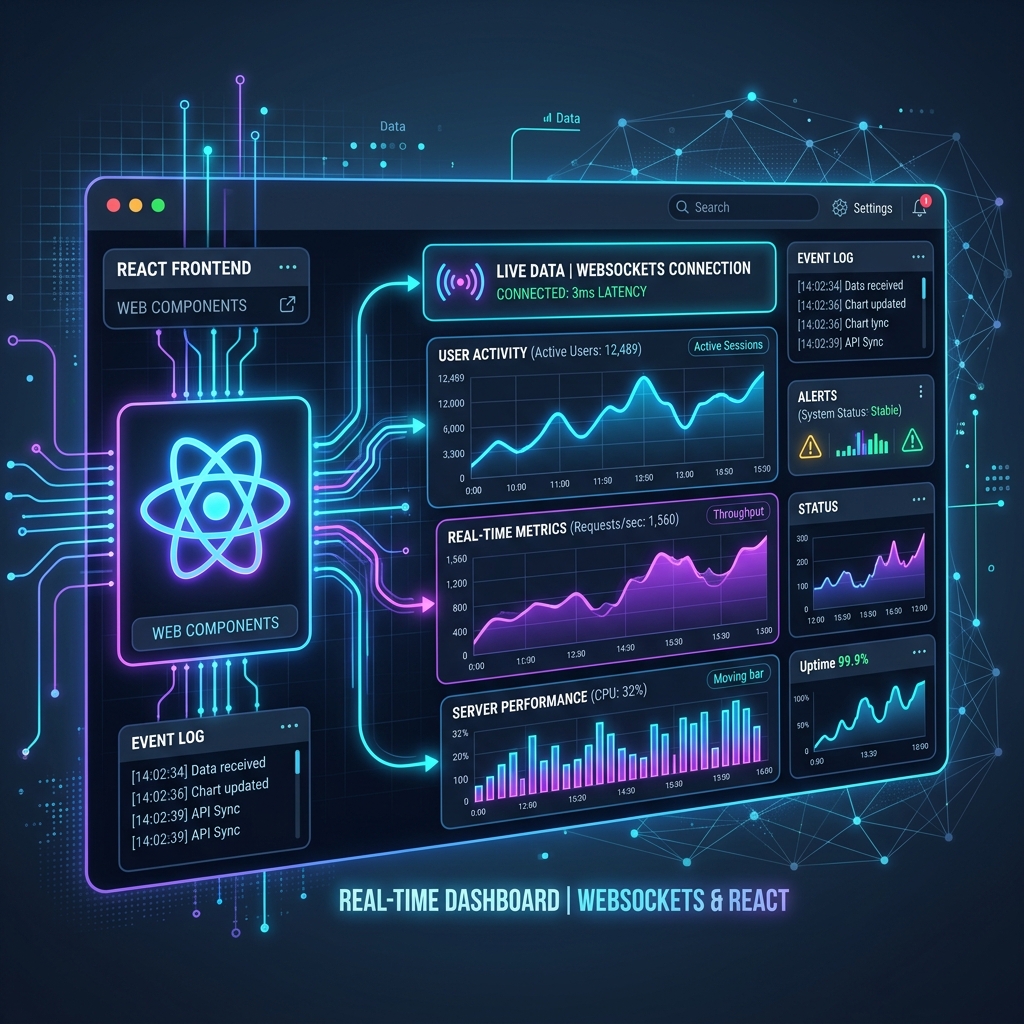
- Notification System: Real-time alerts for application status changes, document requests, and deadlines. This could leverage WebSockets for immediate updates in the frontend.
- Shared Document Repositories: Secure cloud storage (e.g., AWS S3, Google Cloud Storage) for all application documents, accessible by authorized parties.
// React/Next.js example for a real-time notification component
import React, { useEffect, useState } from 'react';
import io from 'socket.io-client';

const NotificationCenter = ({ userId }) => {
  const [notifications, setNotifications] = useState([]);

  useEffect(() => {
    // Connect to WebSocket server
    const socket = io('https://api.your-edtech-platform.com');

    socket.emit('joinNotifications', userId); // Join a specific user's notification room

    socket.on('newNotification', (notification) => {
      setNotifications((prevNotifications) => [notification, ...prevNotifications]);
      // Optionally show a toast or badge update
    });

    return () => {
      socket.disconnect();
    };
  }, [userId]);

  return (
    <div className="notification-center">
      <h3>Your Notifications ({notifications.length})</h3>
      <ul>
        {notifications.map((notif, index) => (
          <li key={index} className={notif.read ? 'read' : 'unread'}>
            <strong>{notif.title}</strong>: {notif.message}
            <span className="timestamp">{new Date(notif.timestamp).toLocaleString()}</span>
          </li>
        ))}
      </ul>
      {notifications.length === 0 && <p>No new notifications.</p>}
    </div>
  );
};

export default NotificationCenter;
This snippet demonstrates how a frontend (like one built with Next.js or React) might consume real-time updates from a backend WebSocket server, a critical feature for effective international student application management.
Leveraging AI and Data Analytics for Enhanced Outcomes
The sheer volume of data generated by international student applications provides fertile ground for AI and machine learning to improve efficiency and student outcomes.
Predictive Analytics for Student Success and Recruitment
Platforms can analyze historical data to predict student success rates, identify suitable programs, and even forecast application trends.
- Matching Algorithms: Using ML to match student profiles (academic background, interests, budget) with suitable universities and programs, increasing conversion rates.
- Risk Assessment: Identifying students who might face visa challenges or academic difficulties, allowing for proactive intervention.
- Recruitment Optimization: Helping universities target the right student demographics with personalized outreach campaigns.
According to a 2025 HolonIQ report, EdTech platforms leveraging AI for student matching and retention saw a 15-20% increase in enrollment efficiency and a 10% reduction in student attrition for international cohorts. This highlights the growing importance of data-driven insights in student admission software.
Personalized Guidance and Chatbots
AI-powered chatbots can provide 24/7 support, answering frequently asked questions about applications, documents, and visa processes.
- Virtual Assistants: Guiding students through the application form, clarifying requirements, and providing links to resources.
- Sentiment Analysis: Analyzing student inquiries to identify common pain points and improve support documentation.
The Role of Integrations in an Application Tracking System
No EdTech platform is an island. Seamless integrations with other systems are crucial for a comprehensive application tracking system.
University CRM and SIS Integrations
The ultimate goal is to get the student's application correctly into the university's system. This often involves complex API integrations.
- Direct API Connections: For major university CRMs (e.g., Salesforce, Slate) or Student Information Systems (SIS) like Banner, PeopleSoft.
- Middleware/ETL: For universities with legacy systems, an Extract, Transform, Load (ETL) process or a middleware layer might be necessary to format data correctly for ingestion.
- Standardized Data Formats: Adhering to standards like Common App XML or custom JSON schemas for data exchange.
Third-Party Services
- Payment Gateways: For application fees or tuition deposits (Stripe, PayPal, local payment solutions).
- English Proficiency Testing: APIs for verifying IELTS, TOEFL, Duolingo English Test scores.
- Credential Evaluation Services: Integrations with WES (World Education Services) or ECE (Educational Credential Evaluators) for academic equivalency reports.
- CRM & Marketing Automation: Connecting with tools like HubSpot or Marketo for lead nurturing and communication.
Companies like AECC Global and Edvoy heavily rely on these sophisticated integrations to provide their end-to-end services. This ensures that the edtech application workflow is not just internal but extends to external partners seamlessly.
Key Takeaways
- International student application management requires a specialized approach due to diverse academic systems, visa complexities, and cultural nuances.
- Microservices architecture provides the scalability and flexibility needed to handle complex workflows and integrations.
- Robust data security and compliance (GDPR, FERPA) are non-negotiable.
- Automation, particularly in document collection and validation using AI/OCR, is crucial for efficiency.
- Integrated communication tools and real-time notifications enhance the user experience for students and counselors.
- AI and data analytics can significantly improve student matching, success prediction, and recruitment strategies.
- Extensive integrations with university CRMs, payment gateways, and credential evaluation services are essential for a comprehensive application tracking system.
FAQ
Q1: What are the biggest technical challenges when building an international student application management system?
A1: The primary technical challenges include handling highly diverse and unstructured data (academic records from various countries), ensuring real-time synchronization with numerous external university systems (often with legacy APIs), maintaining high levels of data security and privacy compliance globally, and building scalable infrastructure to support fluctuating application volumes.
Q2: How do EdTech platforms ensure the authenticity of international student documents?
A2: Platforms employ a multi-pronged approach:
1. OCR and AI: Initial automated checks for anomalies or inconsistencies.
2. Integrations: Direct API integrations with testing bodies (e.g., IELTS, TOEFL) to verify scores.
3. Human Review: A dedicated team of experts conducts manual verification for suspicious documents or those requiring in-depth analysis.
4. Blockchain (Emerging): Some platforms are exploring blockchain for immutable credential verification, though this is still nascent.
Q3: What role does a CRM play within an international student application management system?
A3: A CRM (Customer Relationship Management) is fundamental. It serves as the central hub for managing student leads, tracking their journey from inquiry to enrollment, personalizing communications, and managing counselor interactions. For international students, it's crucial for tracking visa status, follow-ups, and providing tailored support throughout their complex application process. This is the core of any effective student admission software.
Q4: How do platforms like ApplyBoard or Edvoy handle the vast number of university programs and their specific requirements?
A4: They typically use a sophisticated data ingestion and normalization process. This involves:
1. Data Scraping/APIs: Program data is collected from university websites or direct APIs.
2. Data Normalization: A robust internal schema standardizes program details, entry requirements, and deadlines.
3. Rule Engines: Dynamic rule engines are built to match student profiles against specific program criteria (e.g., "requires 70% in mathematics, IELTS 6.5, and a Bachelor's degree in a related field").
4. Human Curation: A team of experts often curates and verifies this data to ensure accuracy and resolve ambiguities.
Q5: Is it better to build a custom solution or use off-the-shelf software for international application management?
A5: The "build vs. buy" decision depends on unique needs, budget, and timeline.
- Off-the-shelf solutions (e.g., some modules of Salesforce CRM, specific EdTech SaaS) offer quicker deployment and lower initial costs but may lack customization for specific international student workflows or unique university partnerships.
- Custom solutions (like those I build using Laravel, React, etc.) provide complete control, tailored features, deeper integrations, and competitive advantage, but require significant upfront investment in development and ongoing maintenance. For truly innovative and scalable platforms, custom development often yields better long-term results and a more optimized edtech application workflow.
Looking to build an EdTech platform, student CRM, or admission management system? I specialize in developing scalable education technology solutions using Laravel, React, and cloud infrastructure. Whether you're a study-abroad agency, EdTech startup, or university looking for custom software development, blank" rel="noopener noreferrer" style="color: var(--primary); text-decoration: none; border-bottom: 1px dashed var(--primary);">let's discuss your project. Check out my portfolio and technical expertise to see how I can help bring your vision to life.