Building Production-Ready REST APIs with Laravel 12: Best Practices 2026
In the rapidly evolving landscape of web development, robust, scalable, and secure REST APIs are no longer a luxury but a fundamental necessity. As we delve into 2026, the demand for high-performance backend services continues to surge, powering everything from sophisticated single-page applications (SPAs) built with React or Next.js to mobile applications and IoT devices. For developers aiming to deliver top-tier solutions, choosing the right framework and adhering to best practices is paramount. This is where Laravel, with its elegant syntax and powerful features, shines as a leading choice for crafting production-ready REST APIs.
Having built and maintained numerous mission-critical backends throughout my career, I've seen firsthand how a well-architected Laravel API can accelerate development, enhance maintainability, and ensure long-term stability. Laravel 12, slated for a late 2025 release, promises further refinements and performance improvements, solidifying its position as a go-to framework for modern API development. This comprehensive guide will walk you through the essential best practices and architectural considerations to build a truly production-grade REST API with Laravel 12, ensuring your applications are not just functional, but also secure, performant, and scalable for the challenges of tomorrow.
Architecting for Scalability and Maintainability
Building a production-ready REST API Laravel 12 application starts with a solid architectural foundation. Without careful planning, even the most elegant code can become a tangled mess, hindering future development and scalability. This section explores key architectural patterns and considerations.
Domain-Driven Design (DDD) Principles
Adopting Domain-Driven Design (DDD) principles helps in creating a clear separation of concerns and a more maintainable codebase. Instead of merely thinking about CRUD operations, DDD encourages modeling the business domain.
- Ubiquitous Language: Ensure your code, database, and team discussions use a consistent terminology derived from the business domain. This reduces ambiguity and improves communication.
- Bounded Contexts: For larger applications, breaking down the API into smaller, cohesive Bounded Contexts can manage complexity. Each context owns its specific domain logic and data, communicating with others through well-defined interfaces or events.
- Aggregates and Entities: Identify aggregates (clusters of domain objects treated as a single unit) and entities with unique identities. This helps in defining clear transactional boundaries and preventing inconsistent states.
For example, an e-commerce API might have separate bounded contexts for Order Management, Product Catalog, and User Accounts. Each context exposes its own set of API endpoints, managed by dedicated controllers and services.
API Versioning Strategy
As your API evolves, you'll inevitably need to introduce breaking changes. A robust versioning strategy is crucial for maintaining backward compatibility and preventing client applications from crashing.
- URL Versioning (e.g.,
/api/v1/users): This is the most common and often easiest to implement. It's explicit and clear, but can lead to URL bloat. - Header Versioning (e.g.,
Accept: application/vnd.yourapi.v1+json): More flexible as it keeps URLs clean, but can be less discoverable and harder to test in browsers. - Query Parameter Versioning (e.g.,
/api/users?version=1): Generally discouraged as it can lead to caching issues and is less RESTful.
For Laravel, URL versioning is straightforward to implement using route groups:
// routes/api.php
Route::prefix('v1')->group(function () {
    Route::middleware('auth:sanctum')->group(function () {
        Route::apiResource('posts', App\Http\Controllers\Api\V1\PostController::class);
    });
});

Route::prefix('v2')->group(function () {
    Route::middleware('auth:sanctum')->group(function () {
        Route::apiResource('posts', App\Http\Controllers\Api\V2\PostController::class);
    });
});
When considering versioning, plan for at least 12-18 months of support for older versions, aligning with modern software update cycles. Recent data from Statista suggests that over 60% of enterprise software users upgrade within 18 months, highlighting the need for stable API contracts.
Folder Structure and Organization
A well-organized project structure enhances readability and maintainability, especially in larger teams. Beyond Laravel's default structure, consider adopting a feature-based or domain-based organization for your API.
Instead of grouping by type (e.g., all controllers in app/Http/Controllers), group by feature or domain:
app/
├── Http/
│   └── Controllers/
│       └── Api/
│           ├── V1/
│           │   ├── AuthController.php
│           │   ├── OrderController.php
│           │   └── ProductController.php
│           └── V2/
│               └── ProductController.php
├── Services/
│   ├── OrderService.php
│   └── ProductService.php
├── Repositories/
│   ├── OrderRepository.php
│   └── ProductRepository.php
├── Models/
│   ├── Order.php
│   └── Product.php
└── ...
This structure makes it easier to locate related files and understand the scope of changes when working on a specific feature. My experience building complex systems for clients at /projects often involves this granular approach to maintain clarity.
Security First: Protecting Your API
Security is non-negotiable for any production-ready REST API Laravel 12 application. A single vulnerability can compromise data, trust, and your reputation.
Authentication and Authorization
Laravel provides robust tools for securing your API endpoints.
- Laravel Sanctum: For SPAs, mobile applications, and simple token-based APIs, Sanctum is an excellent choice. It provides a light-weight authentication system using API tokens or session-based authentication for SPAs.
    // In your User model
    use Laravel\Sanctum\HasApiTokens;

    class User extends Authenticatable
    {
        use HasApiTokens, Notifiable;
        // ...
    }
When a user logs in, you can create a token:
    public function login(Request $request)
    {
        // ... validate credentials ...
        $user = User::where('email', $request->email)->first();
        if (! $user || ! Hash::check($request->password, $user->password)) {
            return response()->json(['message' => 'Invalid credentials'], 401);
        }

        $token = $user->createToken('api-token')->plainTextToken;
        return response()->json(['token' => $token]);
    }
For API routes, apply the auth:sanctum middleware.
- Laravel Passport: For OAuth2 server implementation, Passport is the go-to solution. It's more heavyweight but necessary for applications requiring standard OAuth2 grants (e.g., authorization code, client credentials).
- Role-Based Access Control (RBAC): Implement RBAC using packages like Spatie's Laravel Permission. This allows you to assign roles and permissions to users, controlling access to specific API resources or actions.
    // In a middleware or controller
    public function update(Request $request, Post $post)
    {
        if (! $request->user()->can('update posts')) {
            abort(403, 'Unauthorized action.');
        }
        // ... update post logic ...
    }
Input Validation and Sanitization
Never trust user input. Always validate and sanitize all incoming data. Laravel's powerful validation features make this easy.
public function store(Request $request)
{
    $validatedData = $request->validate([
        'title' => 'required|string|max:255',
        'content' => 'required|string',
        'category_id' => 'required|exists:categories,id',
        'tags' => 'array',
        'tags.*' => 'string|max:50', // Validate each item in the array
    ]);

    // Data is now validated and can be used to create/update resources
    $post = Post::create($validatedData);
    return response()->json($post, 201);
}
Beyond basic validation, consider using packages like jaybizzle/laravel-html-purifier to sanitize HTML input, preventing XSS attacks if your API handles user-generated content that might be rendered later.
Rate Limiting and Throttling
Protect your API from abuse, brute-force attacks, and resource exhaustion by implementing rate limiting. Laravel offers built-in rate limiting features.
// routes/api.php
Route::middleware('throttle:api')->group(function () {
    Route::apiResource('posts', App\Http\Controllers\Api\PostController::class);
});

// Or define custom rate limiters in App\Providers\RouteServiceProvider
protected function configureRateLimiting()
{
    RateLimiter::for('api', function (Request $request) {
        return Limit::perMinute(60)->by($request->user()?->id ?: $request->ip());
    });

    RateLimiter::for('login', function (Request $request) {
        return Limit::perMinute(5)->by($request->email);
    });
}
This prevents a single user or IP from making an excessive number of requests within a given timeframe, crucial for maintaining service availability.
Performance Optimization
A slow API is a bad API. Optimizing performance is key to a production-ready REST API Laravel 12.
Database Query Optimization
The database is often the biggest bottleneck.
- N+1 Problem: Eager load related models to avoid the N+1 query problem.
    // Bad (N+1 queries)
    $posts = Post::all();
    foreach ($posts as $post) {
        echo $post->user->name; // Each access triggers a new query
    }

    // Good (2 queries)
    $posts = Post::with('user')->get();
    foreach ($posts as $post) {
        echo $post->user->name; // User is already loaded
    }
- Indexing: Ensure your database columns, especially those used in
WHEREclauses,JOINconditions, andORDER BYclauses, are properly indexed. - Lazy Loading vs. Eager Loading: Understand when to use
with()for eager loading and when to useload()for lazy eager loading (e.g., when a relationship needs to be loaded only under certain conditions). - Query Scopes: Encapsulate common query logic into reusable query scopes.
    // In Post model
    public function scopePublished($query)
    {
        return $query->where('is_published', true);
    }

    // Usage
    $publishedPosts = Post::published()->get();
Caching Strategies
Caching is vital to reduce database load and improve response times.
- Route Caching: For static routes, Laravel's route caching can significantly speed up route registration.
- Query Caching: Cache the results of expensive database queries using Laravel's cache facade.
    $posts = Cache::remember('all_published_posts', 60*60, function () {
        return Post::published()->get();
    });
- Response Caching: For endpoints that return the same data for a period, consider caching the entire API response. Packages like
spatie/laravel-response-cachecan simplify this. - HTTP Caching (ETags, Last-Modified): Implement HTTP caching headers to allow clients to cache responses. This reduces bandwidth and server load for subsequent requests.
Using Queues for Background Tasks
Offload long-running tasks from the main request-response cycle to background queues. This keeps your API responses fast and snappy.
- Examples: Sending emails, processing images, generating reports, external API calls, and data synchronization.
- Laravel Queues: Configure Laravel queues with drivers like Redis, Beanstalkd, or Amazon SQS.
    // Dispatch a job
    App\Jobs\ProcessPodcast::dispatch($podcast)->onQueue('processing');

    // Define the Job
    class ProcessPodcast implements ShouldQueue
    {
        use Dispatchable, InteractsWithQueue, Queueable, SerializesModels;

        public function handle(): void
        {
            // Perform the long-running task
        }
    }
By 2026, cloud-native queue services like AWS SQS or Google Cloud Pub/Sub are expected to dominate, offering superior scalability and reliability for Laravel API best practices.
API Documentation and Testing
A well-documented and thoroughly tested API is easier to consume and maintain.
OpenAPI (Swagger) Documentation
Automated API documentation is a game-changer. OpenAPI (formerly Swagger) provides a standard, language-agnostic interface for REST APIs.
- Packages: Use packages like
darkaonline/l5-swaggerorscribe/laravelto generate OpenAPI specifications directly from your Laravel code (controllers, routes, form requests). - Benefits:
- Interactive Documentation: Provides a user-friendly interface for exploring endpoints, trying out requests, and understanding responses.
- Code Generation: Allows clients (e.g., Next.js or React frontend, mobile apps) to generate API client SDKs automatically.
- Consistency: Enforces a consistent API contract across your services.
Ensuring your documentation is up-to-date and accurate is paramount. According to a 2025 developer survey, 75% of developers cite poor documentation as a major hindrance to API adoption.
Automated Testing (Unit, Feature, API)
Comprehensive testing ensures your API behaves as expected and helps prevent regressions.
- Unit Tests: Test individual components (e.g., models, services, helpers) in isolation.
- Feature Tests: Test the interaction between multiple components, typically covering an entire request-response cycle without hitting a live HTTP server. Laravel's HTTP testing utilities are excellent for this.
    // tests/Feature/PostApiTest.php
    public function test_can_create_post()
    {
        $user = User::factory()->create();
        $response = $this->actingAs($user, 'sanctum')->postJson('/api/v1/posts', [
            'title' => 'My New Post',
            'content' => 'This is the content.',
            'category_id' => 1,
        ]);

        $response->assertStatus(201)
                 ->assertJson(['title' => 'My New Post']);

        $this->assertDatabaseHas('posts', ['title' => 'My New Post']);
    }
- API Tests: These are essentially feature tests that specifically target your API endpoints, ensuring correct status codes, data formats, and error handling. For complex APIs, consider contract testing between your frontend and backend.
My work on various /projects has consistently reinforced the value of a robust test suite. It's an investment that pays dividends in reduced bugs and faster development cycles.
Deployment and Monitoring
Getting your API into production is just the beginning. Ensuring its health and availability requires proper deployment and monitoring.
Deployment Strategies
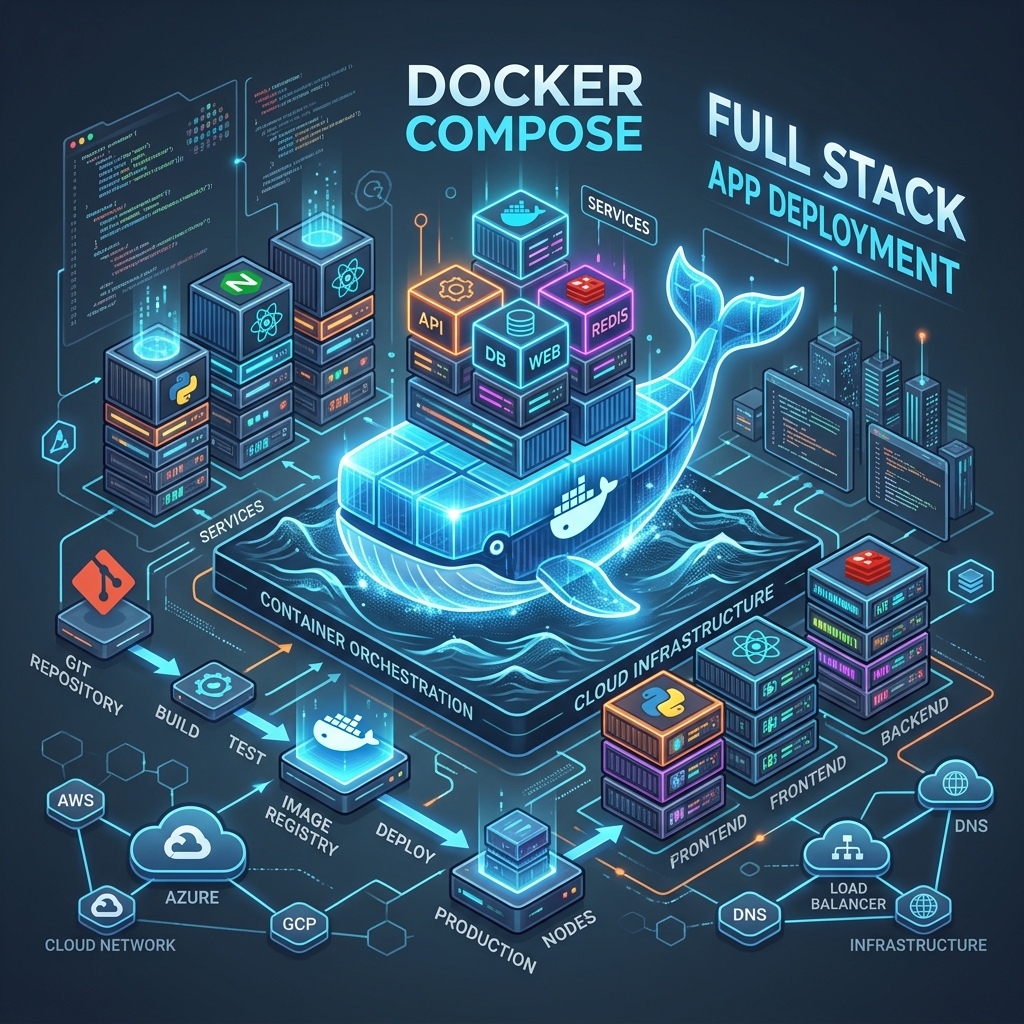
- Containerization (Docker): Packaging your Laravel application in Docker containers provides consistency across development, staging, and production environments. This is a fundamental step for modern DevOps practices.
- Orchestration (Kubernetes): For large-scale applications, Kubernetes can manage containerized deployments, providing automated scaling, self-healing, and load balancing.
- Serverless (AWS Lambda, Vapor): For APIs with spiky traffic or variable load, serverless platforms can be highly cost-effective and scalable. Laravel Vapor is a first-party solution for deploying Laravel applications on AWS Lambda.
    # Example Dockerfile snippet for a Laravel app
    FROM php:8.3-fpm-alpine

    WORKDIR /var/www

    COPY . .

    RUN docker-php-ext-install pdo_mysql opcache
    RUN composer install --no-dev --optimize-autoloader

    EXPOSE 9000
    CMD ["php-fpm"]
Logging and Error Tracking
Robust logging and error tracking are essential for debugging and proactive issue detection.
- Centralized Logging: Aggregate logs from all your API instances into a centralized system like ELK Stack (Elasticsearch, Logstash, Kibana), Splunk, or cloud-native solutions like AWS CloudWatch Logs.
- Error Reporting Tools: Integrate error reporting tools like Sentry or Bugsnag. These tools catch exceptions, provide detailed stack traces, and notify you of errors in real-time.
- Contextual Logging: Log relevant context (user ID, request ID, payload snippets) with your errors to make debugging easier.
    // Example of contextual logging
    Log::error('Order creation failed', [
        'user_id' => auth()->id(),
        'order_data' => $request->all(),
        'exception' => $e->getMessage(),
    ]);
Performance Monitoring and Alerting
Proactive monitoring keeps your API healthy.
- APM (Application Performance Monitoring): Tools like New Relic, Datadog, or OpenTelemetry provide deep insights into API performance, database queries, external service calls, and bottlenecks.
- Health Checks: Implement dedicated health check endpoints (
/healthor/status) that your load balancers or orchestrators can use to determine the API's availability. - Alerting: Set up alerts for critical metrics: high error rates, slow response times, server resource exhaustion (