Cloud Infrastructure for Education Platforms: AWS and Beyond
The global education technology market is a rapidly expanding universe, projected to reach an astounding \$600 billion by 2027. This growth isn't just about new apps; it's fundamentally driven by the robust, scalable, and secure cloud infrastructure education platform solutions that underpin them. As a full-stack developer who’s spent years architecting and deploying complex EdTech systems – from student CRMs for international recruitment agencies like ApplyBoard and Edvoy to full-fledged admission management platforms – I've witnessed firsthand the transformation cloud computing brings. The days of managing on-premise servers for fluctuating student traffic, data-intensive analytics, and real-time learning environments are long gone.
However, navigating the vast landscape of cloud providers and services can be daunting. It’s not just about picking AWS; it’s about understanding which services within a chosen provider best serve the unique demands of an EdTech ecosystem. From ensuring data privacy (GDPR, FERPA compliance) to handling peak admission periods and delivering low-latency content to a global student base, the architectural decisions made at the infrastructure level profoundly impact an EdTech platform's success, user experience, and ultimately, its educational impact. This deep dive will explore the critical role of cloud infrastructure, focusing primarily on AWS, while also touching upon other viable alternatives, and providing practical architectural insights for developers and EdTech leaders alike.
Why Cloud is Non-Negotiable for Modern EdTech
The shift to cloud computing for educational platforms isn't merely a trend; it's a fundamental requirement for agility, scalability, and cost-efficiency. Traditional on-premise setups struggle to cope with the dynamic nature of EdTech, where user loads can spike during enrollment seasons or exam periods, and content delivery needs to be global and instantaneous.
Scalability and Elasticity for Variable Demand
One of the most compelling advantages of cloud infrastructure is its inherent scalability. EdTech platforms often experience highly fluctuating user demand. An admission portal for a university, for instance, might see a massive surge in traffic during application deadlines, followed by periods of lower activity. Similarly, an online learning platform might have peak usage during evenings or weekends.
Definition: Elasticity in cloud computing refers to the ability of a system to grow or shrink resources dynamically, in real-time, to meet changing workload demands, ensuring optimal performance and cost-efficiency.
Without cloud elasticity, EdTech companies would either over-provision expensive hardware (leading to wasted resources) or under-provision (leading to performance bottlenecks and frustrated users). AWS services like Amazon EC2 Auto Scaling, AWS Lambda, and Amazon RDS allow platforms to automatically adjust compute and database resources as needed.
// Example: Simplified Auto Scaling Group configuration for EC2
{
  "AutoScalingGroupName": "EdTech-WebApp-ASG",
  "LaunchTemplate": {
    "LaunchTemplateName": "EdTech-WebApp-Template",
    "Version": "$Latest"
  },
  "MinSize": 2,
  "MaxSize": 10,
  "DesiredCapacity": 3,
  "VPCZoneIdentifier": "subnet-0abcdef1234567890,subnet-0fedcba9876543210",
  "TargetGroupARNs": [
    "arn:aws:elasticloadbalancing:us-east-1:123456789012:targetgroup/EdTech-WebApp-TG/abcdef1234567890"
  ],
  "Tags": [
    {"Key": "Project", "Value": "EdTechPlatform"},
    {"Key": "Environment", "Value": "Production"}
  ]
}
This configuration ensures that our web application servers scale out when demand increases and scale in when it decreases, maintaining performance without manual intervention.
Global Reach and Low Latency Content Delivery
Education is increasingly global. Students from diverse geographical locations access learning materials, submit assignments, and participate in virtual classrooms. A platform's ability to deliver content quickly and reliably, regardless of the user's location, is paramount. This is where Content Delivery Networks (CDNs) shine.
AWS CloudFront, for example, caches static and dynamic content at edge locations worldwide. When a student in Mumbai accesses an EdTech platform hosted in Virginia, the content is served from the nearest CloudFront edge location, significantly reducing latency and improving the user experience. This is crucial for rich media content like video lectures, interactive simulations, and large course files. Companies like AECC Global, dealing with international student recruitment, benefit immensely from such global reach to serve their diverse clientele efficiently.
AWS EdTech Deployment: A Deep Dive into Architecture
AWS offers an unparalleled suite of services that cater perfectly to the demands of an education cloud architecture. From compute and storage to databases and machine learning, a well-architected AWS solution can power any EdTech vision.
Core Compute and Database Services
For the backend of an EdTech platform, reliable compute and robust database solutions are essential.
- Amazon EC2 (Elastic Compute Cloud): Provides resizable compute capacity in the cloud. For applications built with frameworks like Laravel (PHP) or Next.js (Node.js), EC2 instances can host your web servers, API endpoints, and background workers. For more serverless approaches, AWS Lambda can run code without provisioning or managing servers, ideal for event-driven microservices.
- Amazon RDS (Relational Database Service): Managed relational databases (MySQL, PostgreSQL, Aurora, etc.) simplify database administration tasks like patching, backups, and scaling. For a student CRM, maintaining data integrity and high availability for student profiles, course enrollments, and application statuses is critical.
- Amazon DynamoDB: A fast, flexible NoSQL database service for single-digit millisecond performance at any scale. Excellent for use cases requiring high throughput and low latency, such as real-time chat features, personalized learning recommendations, or session management.
A typical EdTech backend might involve:
// Example: Laravel Eloquent model for a Student
<?php

namespace App\Models;

use Illuminate\Database\Eloquent\Factories\HasFactory;
use Illuminate\Database\Eloquent\Model;

class Student extends Model
{
    use HasFactory;

    protected $fillable = [
        'first_name',
        'last_name',
        'email',
        'date_of_birth',
        'country_of_origin',
        'admission_status',
        'application_id',
    ];

    public function applications()
    {
        return $this->hasMany(Application::class);
    }
}
This Student model would typically interact with an Amazon RDS MySQL instance, managed and scaled by AWS.
Storage and Content Management
EdTech platforms deal with a massive variety of data: student documents, video lectures, course materials, assignment submissions, and more. Efficient and secure storage is paramount.
- Amazon S3 (Simple Storage Service): Object storage built to store and retrieve any amount of data from anywhere. It's highly durable, available, and scalable. Ideal for storing user-uploaded files, media assets, backups, and static website content. For example, a student submitting a large project file would upload it directly to an S3 bucket.
- Amazon EBS (Elastic Block Store): Block storage volumes for use with EC2 instances. Suitable for applications requiring persistent, low-latency storage for their operating system, databases, or scratch space.
- Amazon EFS (Elastic File System): A scalable, elastic, cloud-native NFS file system. Useful for shared file storage across multiple EC2 instances, such as common course resources accessed by several application servers.
For a Next.js or React frontend, assets like images, videos, and JavaScript bundles are often served from S3, integrated with CloudFront for global delivery.
Security, Compliance, and Data Privacy
In EdTech, data privacy is not just good practice; it's a legal and ethical imperative. Compliance with regulations like GDPR (Europe), FERPA (US), and various local data residency laws is critical.
- AWS IAM (Identity and Access Management): Controls who can do what in your AWS account. Granular permissions ensure that only authorized users and services can access specific resources.
- AWS KMS (Key Management Service): Manages encryption keys, essential for encrypting sensitive student data at rest and in transit.
- AWS WAF (Web Application Firewall): Protects web applications from common web exploits that could affect application availability, compromise security, or consume excessive resources.
- AWS Shield: Provides DDoS protection.
- VPC (Virtual Private Cloud): Allows you to provision a logically isolated section of the AWS Cloud where you can launch AWS resources in a virtual network that you define, giving you complete control over your network environment.
Implementing a robust security posture from day one is non-negotiable. For example, encrypting sensitive fields in your database using KMS keys is a standard practice.
// Example: Encrypting sensitive data before storing in DB (Laravel)
// This is a simplified example; actual implementation might use encryption at rest via RDS or application-level encryption.
use Illuminate\Support\Facades\Crypt;

class StudentService {
    public function createStudent(array $data) {
        $data['social_security_number'] = Crypt::encryptString($data['social_security_number']);
        // ... save student data
        return Student::create($data);
    }

    public function getStudentSsn(Student $student) {
        return Crypt::decryptString($student->social_security_number);
    }
}
This demonstrates basic application-level encryption, complementing AWS's infrastructure-level encryption.
EdTech DevOps: Streamlining Development and Deployment
EdTech DevOps practices are crucial for accelerating development cycles, ensuring reliable deployments, and maintaining high-quality software. Integrating CI/CD pipelines with cloud infrastructure automates much of the deployment process.
CI/CD Pipelines with AWS Developer Tools
Continuous Integration and Continuous Deployment (CI/CD) pipelines automate the steps from code commit to production deployment. This significantly reduces manual errors and speeds up the delivery of new features and bug fixes.
- AWS CodeCommit: A fully managed source control service that hosts secure Git repositories.
- AWS CodeBuild: A fully managed continuous integration service that compiles source code, runs tests, and produces deployable artifacts.
- AWS CodePipeline: A continuous delivery service that automates the release pipelines for fast and reliable application and infrastructure updates.
- AWS CodeDeploy: Automates code deployments to any instance, including EC2 instances and on-premises servers.
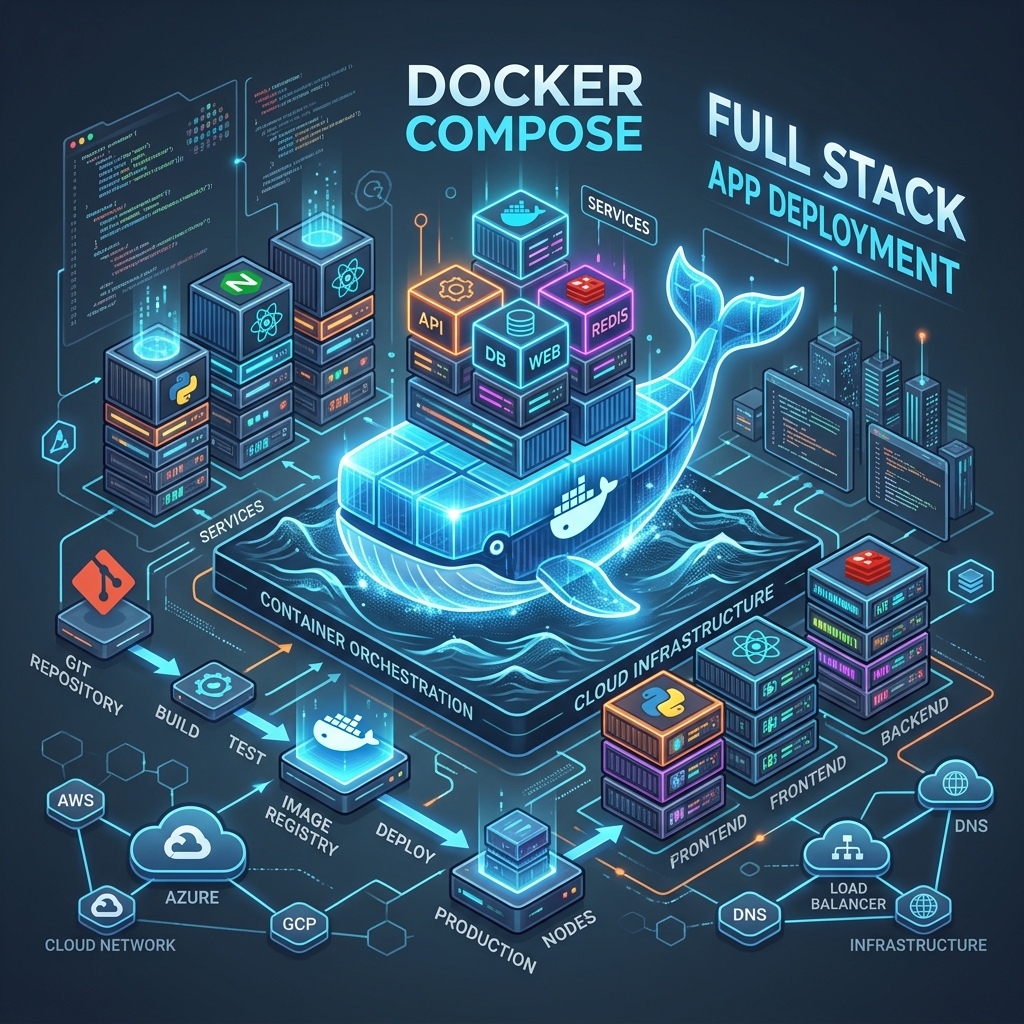
A typical CI/CD flow for a Laravel-based EdTech platform might look like this:
1. Developer pushes code to CodeCommit.
2. CodeCommit triggers CodePipeline.
3. CodePipeline initiates CodeBuild to run tests (PHPUnit, Dusk) and build artifacts.
4. If tests pass, CodePipeline triggers CodeDeploy to deploy to staging environments.
5. After manual or automated approval, CodeDeploy deploys to production.
Infrastructure as Code (IaC)
Managing cloud resources manually is prone to error and difficult to scale. Infrastructure as Code (IaC) defines your infrastructure using configuration files, allowing you to version, reuse, and automate its deployment.
- AWS CloudFormation: Allows you to model your entire AWS infrastructure (EC2 instances, RDS databases, S3 buckets, security groups, etc.) in a text file (YAML or JSON). This ensures consistency and repeatability.
- Terraform (HashiCorp): A popular open-source IaC tool that supports multiple cloud providers (AWS, Azure, GCP), making it a flexible choice for multi-cloud strategies.
Using IaC, you can spin up an entire testing environment identical to production with a single command, which is invaluable for robust testing in EdTech.
# Example: Simplified AWS CloudFormation template for an S3 bucket
AWSTemplateFormatVersion: '2010-09-09'
Description: A simple S3 bucket for EdTech assets

Resources:
  EdTechAssetsBucket:
    Type: AWS::S3::Bucket
    Properties:
      BucketName: !Sub 'edtech-assets-${AWS::AccountId}'
      AccessControl: Private
      PublicAccessBlockConfiguration:
        BlockPublicAcls: true
        IgnorePublicAcls: true
        BlockPublicPolicy: true
        RestrictPublicBuckets: true
      Tags:
        - Key: Project
          Value: EdTechPlatform
        - Key: Environment
          Value: Production
This CloudFormation snippet ensures our S3 bucket adheres to security best practices and is easily reproducible.
Beyond AWS: Other Cloud Providers and Multi-Cloud Strategy
While AWS is a dominant player and often a go-to for EdTech due to its comprehensive service offering, other cloud providers like Google Cloud Platform (GCP) and Microsoft Azure also offer compelling solutions.
Google Cloud Platform (GCP)
GCP excels in areas like machine learning and big data analytics, which are increasingly relevant in personalized learning and predictive analytics for student success. Services like Google Kubernetes Engine (GKE) for container orchestration, BigQuery for data warehousing, and AI Platform for machine learning are strong contenders. For an EdTech platform heavily investing in AI tutors or adaptive learning paths, GCP might offer a competitive edge.
Microsoft Azure
Azure has a strong enterprise focus and integrates well with existing Microsoft ecosystems. For educational institutions with significant investments in Microsoft products (e.g., Office 365, Active Directory), Azure can provide a seamless transition and integration point. Its global network and compliance certifications also make it a strong option.
Multi-Cloud and Hybrid Cloud Approaches
Some larger EdTech organizations adopt a multi-cloud strategy, using different providers for specific workloads to mitigate vendor lock-in, leverage best-of-breed services, or meet specific regulatory requirements. A hybrid cloud approach combines on-premises infrastructure with public cloud resources, often used during migration phases or for sensitive data that must remain on-site. While complex to manage, these strategies offer ultimate flexibility and resilience.
Key Takeaways
- Scalability is Paramount: EdTech platforms need to handle highly variable user loads, making cloud elasticity a non-negotiable feature.
- Security and Compliance First: Student data privacy (GDPR, FERPA) and robust security measures are critical for trust and legal compliance.
- Global Reach with Low Latency: CDNs like AWS CloudFront are essential for delivering content efficiently to a global student base.
- DevOps Drives Efficiency: CI/CD pipelines and Infrastructure as Code (IaC) streamline development, deployment, and maintenance.
- AWS is a Strong Contender: Its vast ecosystem of services makes it a comprehensive choice for diverse EdTech requirements.
- Consider Alternatives: GCP and Azure offer specialized strengths, particularly in AI/ML and enterprise integration, respectively.
FAQ
Q1: What is the biggest challenge when migrating an existing EdTech platform to the cloud?
A1: Data migration, especially large volumes of sensitive student data, is often the biggest challenge. This involves careful planning, ensuring data integrity, minimizing downtime, and adhering to compliance regulations throughout the process. Refactoring legacy applications to be cloud-native can also be a significant undertaking.
Q2: How do EdTech platforms ensure data security and privacy on AWS?
A2: EdTech platforms on AWS ensure data security through a multi-layered approach: using AWS IAM for strict access control, encrypting data at rest (S3, RDS, EBS with KMS) and in transit (TLS/SSL), implementing VPCs for network isolation, leveraging AWS WAF and Shield for protection against web exploits and DDoS attacks, and regularly auditing with AWS CloudTrail and Config. Compliance certifications (e.g., ISO 27001, SOC 2, HIPAA, GDPR, FERPA) are also key.
Q3: Is serverless architecture suitable for all EdTech applications?
A3: While serverless architectures (like AWS Lambda, API Gateway) offer excellent benefits in terms of cost-efficiency for intermittent workloads and automatic scaling, they might not be suitable for all EdTech applications. Long-running processes, applications with predictable and constant high traffic, or those requiring very specific runtime environments might still benefit more from traditional EC2 instances or containerized solutions like ECS/EKS. It's often a hybrid approach.
Q4: How can cloud infrastructure help with personalized learning experiences?
A4: Cloud infrastructure provides the computational power and storage needed for advanced analytics and machine learning. Services like AWS SageMaker, Google AI Platform, or Azure Machine Learning can process vast amounts of student data, identify learning patterns, recommend tailored content, and even power AI-driven tutors, enabling highly personalized educational journeys.
Q5: What are the key considerations for cost optimization on the cloud for an EdTech startup?
A5: Cost optimization for EdTech startups involves several strategies: rightsizing instances to match actual usage, leveraging auto-scaling to avoid over-provisioning, utilizing Reserved Instances or Savings Plans for predictable workloads, adopting serverless architectures where appropriate, implementing efficient data storage tiers (e.g., S3 Intelligent-Tiering), and diligently monitoring cloud spend with tools like AWS Cost Explorer. Regular architectural reviews are crucial to identify and eliminate wasteful resources.
---
Looking to build an EdTech platform, student CRM, or admission management system? I specialize in developing scalable education technology solutions using Laravel, React, and cloud infrastructure. Whether you're a study-abroad agency, EdTech startup, or university looking for custom software development, blank" rel="noopener noreferrer" style="color: var(--primary); text-decoration: none; border-bottom: 1px dashed var(--primary);">let's discuss your project. Check out my portfolio and technical expertise to see how I can help bring your vision to life.