How to Build a University Search Platform with Filters and Matching: An EdTech Developer's Guide
The global education landscape is undergoing a profound transformation. As a senior full-stack developer who has spent years crafting sophisticated EdTech platforms, I've seen firsthand the challenges students face when navigating the labyrinthine world of higher education. From disparate university websites to overwhelming course catalogs and opaque admission criteria, the journey to finding the "right fit" institution can be daunting. This complexity isn't just a student problem; it's a significant bottleneck for universities struggling to attract best-fit candidates and for recruitment agencies like ApplyBoard, Edvoy, and AECC Global striving to streamline their operations.
The solution lies in robust, intelligent university search platforms. These platforms move beyond simple directories, offering advanced filtering, personalized recommendations, and sophisticated matching algorithms that connect students with institutions based on a multitude of criteria. Building such a platform requires a deep understanding of both educational domain specifics and cutting-edge web development technologies. This guide will walk you through the architectural considerations, technical stacks, and implementation strategies necessary to build a truly impactful education search platform.
---
The Core Challenge: Bridging Student Aspirations with University Offerings
At its heart, a university search platform aims to solve an information asymmetry problem. Students often don't know what they don't know, while universities struggle to articulate their unique value propositions effectively to a global audience. My experience building student CRMs and admission management systems has shown that successful platforms excel at two things: making information accessible and making it relevant.
Understanding the User Journey: From Discovery to Application
A student's journey typically begins with broad exploration and gradually narrows down to specific choices. A well-designed platform must support this iterative process:
1. Discovery: Initial search based on broad criteria (e.g., "engineering degree," "universities in Canada").
2. Exploration: Refining search with filters (e.g., "tuition under $20k," "postgraduate," "scholarships available").
3. Comparison: Evaluating a shortlist of universities and courses side-by-side.
4. Matching & Recommendation: Receiving personalized suggestions based on profile, preferences, and eligibility.
5. Application: Directing users to application portals or facilitating direct applications.
This journey demands a highly performant and intuitive user interface backed by a powerful data engine.
Key Features of a Modern University Search Platform
To be competitive in the 2025-2026 EdTech landscape, a platform must offer more than basic search. Recent reports from HolonIQ indicate a continued surge in demand for personalized learning pathways and AI-driven recommendations. Essential features include:
- Advanced Filtering: Location, tuition, program type, duration, intake, language, scholarships, ranking, student-faculty ratio, etc.
- Comprehensive University & Course Profiles: Detailed information, images, videos, testimonials, faculty bios.
- Personalized Matching: A university matching algorithm that uses student profiles (academics, interests, budget) to suggest best-fit options.
- Comparison Tools: Side-by-side view of selected universities/courses.
- User Accounts & Dashboards: Save searches, favorite institutions, track applications.
- Review & Rating System: User-generated content to aid decision-making.
- Integration with Application Systems: APIs for seamless data transfer to university application portals or internal CRMs.
- Analytics & Reporting: For both students (tracking engagement) and platform administrators (identifying trends).
---
Architectural Design: Scalability and Performance
Building an education search platform that can handle millions of university and course records, concurrent user queries, and complex matching logic requires a robust and scalable architecture. From my experience with large-scale EdTech deployments, a microservices-oriented approach, coupled with powerful search indexing, is often the most effective.
Backend Technologies: Laravel, Python, and Microservices
For the backend, I typically lean towards a combination of Laravel (PHP) and Python.
- Laravel (PHP): Excellent for rapid development of core APIs, user management, and administrative interfaces. Its Eloquent ORM simplifies database interactions, and its robust ecosystem provides tools for everything from queues (for background processing) to authentication. For instance, managing university and course data, user profiles, and application workflows can be efficiently handled by a Laravel application. See the Laravel documentation for more details.
- Python: Ideal for developing the university matching algorithm and other data-intensive services. Its rich libraries (NumPy, Pandas, Scikit-learn) make it perfect for machine learning, data processing, and natural language processing (NLP) tasks required for advanced matching and semantic search. This service could run independently and communicate with the main Laravel application via REST APIs or message queues.
Example: Basic Laravel API Endpoint for Universities
// app/Http/Controllers/UniversityController.php
<?php

namespace App\Http\Controllers;

use App\Models\University;
use Illuminate\Http\Request;

class UniversityController extends Controller
{
    /**
     * Display a listing of the universities.
     */
    public function index(Request $request)
    {
        $query = University::query();

        // Basic filtering example
        if ($request->has('country')) {
            $query->where('country', $request->input('country'));
        }

        if ($request->has('program_type')) {
            $query->whereHas('programs', function ($q) use ($request) {
                $q->where('type', $request->input('program_type'));
            });
        }

        // Pagination
        $universities = $query->paginate(15);

        return response()->json($universities);
    }

    /**
     * Display the specified university.
     */
    public function show(University $university)
    {
        return response()->json($university->load('programs', 'admissions'));
    }
}
Frontend Development: Next.js and React for Dynamic UIs
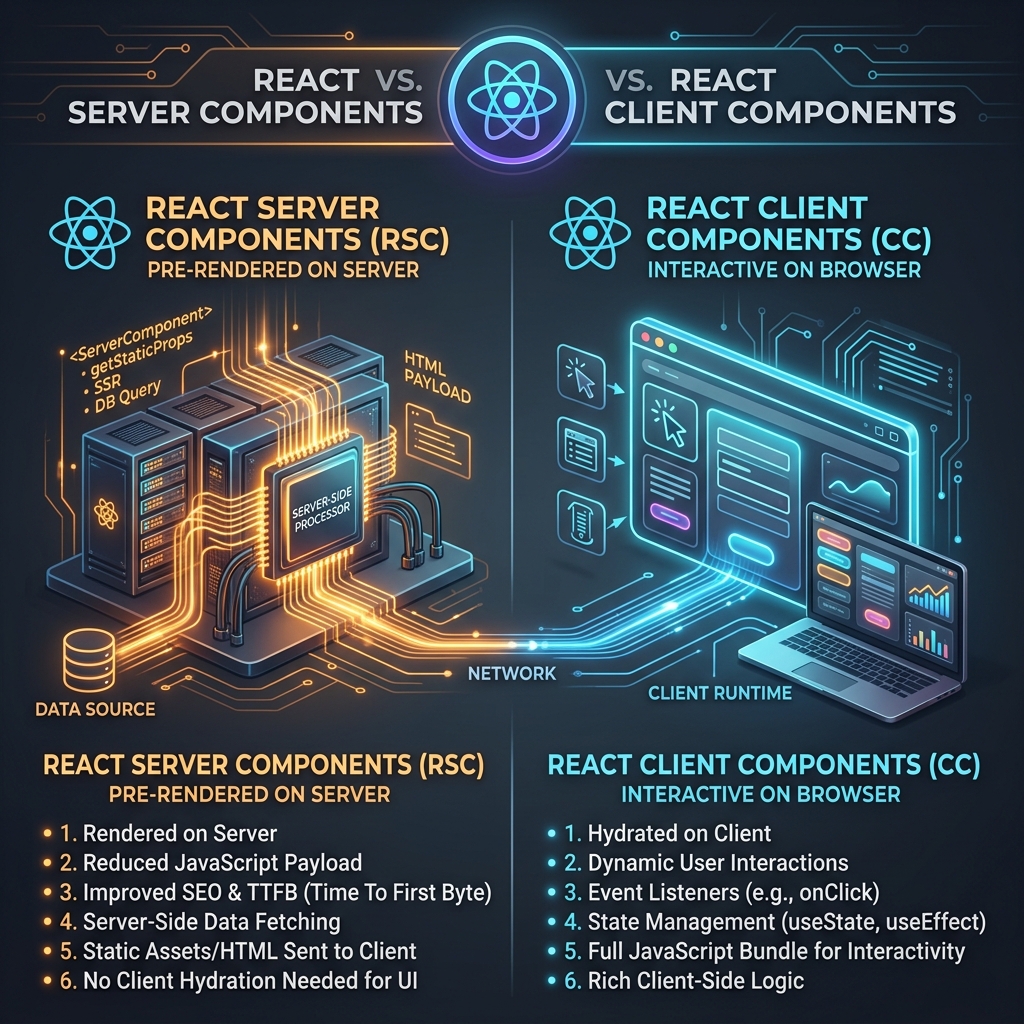
For a highly interactive and responsive user interface, Next.js with React is my go-to stack.
- React: Provides a component-based architecture, making it easy to build complex UIs from reusable pieces. This is crucial for dynamic filtering, comparison tables, and personalized dashboards.
- Next.js: Offers server-side rendering (SSR) and static site generation (SSG) capabilities, which are vital for SEO (especially for a course search engine), faster initial page loads, and improved user experience. It also simplifies routing, API integration, and deployment. The official Next.js documentation is an excellent resource.
Example: Basic React Component for University Listing
// components/UniversityList.jsx
import React, { useState, useEffect } from 'react';
import axios from 'axios';

const UniversityList = ({ filters }) => {
  const [universities, setUniversities] = useState([]);
  const [loading, setLoading] = useState(true);
  const [error, setError] = useState(null);

  useEffect(() => {
    const fetchUniversities = async () => {
      setLoading(true);
      try {
        const response = await axios.get('/api/universities', { params: filters });
        setUniversities(response.data.data); // Assuming Laravel pagination structure
      } catch (err) {
        setError(err);
      } finally {
        setLoading(false);
      }
    };

    fetchUniversities();
  }, [filters]); // Re-fetch when filters change

  if (loading) return <p>Loading universities...</p>;
  if (error) return <p>Error: {error.message}</p>;

  return (
    <div className="university-list">
      {universities.length === 0 && <p>No universities found matching your criteria.</p>}
      {universities.map(uni => (
        <div key={uni.id} className="university-card">
          <h3>{uni.name}</h3>
          <p>{uni.country}, {uni.city}</p>
          {/* Link to detailed university page */}
          <a href={`/universities/${uni.slug}`}>View Details</a>
        </div>
      ))}
    </div>
  );
};

export default UniversityList;
Database and Search Engine: MySQL + Elasticsearch/MeiliSearch
- MySQL: A reliable relational database for storing structured data like university details, course information, user profiles, and application statuses. Its maturity and robust transaction management make it a solid choice.
- Elasticsearch or MeiliSearch: Crucial for a fast and powerful university search platform. Traditional database queries struggle with complex full-text search, faceted navigation, and real-time filtering. Elasticsearch provides distributed, RESTful search and analytics engine capabilities, while MeiliSearch offers a developer-friendly, blazingly fast search experience, often easier to set up for smaller to medium-sized projects. These engines index your data, allowing for near-instantaneous search results, even with millions of records.
Conceptual Data Model (MySQL)
-- universities table
CREATE TABLE universities (
    id INT AUTO_INCREMENT PRIMARY KEY,
    name VARCHAR(255) NOT NULL,
    slug VARCHAR(255) UNIQUE NOT NULL,
    country VARCHAR(100) NOT NULL,
    city VARCHAR(100) NOT NULL,
    description TEXT,
    website VARCHAR(255),
    established_year INT,
    -- ... other university specific fields
    created_at TIMESTAMP DEFAULT CURRENT_TIMESTAMP,
    updated_at TIMESTAMP DEFAULT CURRENT_TIMESTAMP ON UPDATE CURRENT_TIMESTAMP
);

-- programs table
CREATE TABLE programs (
    id INT AUTO_INCREMENT PRIMARY KEY,
    university_id INT NOT NULL,
    name VARCHAR(255) NOT NULL,
    degree_type VARCHAR(50), -- e.g., 'Bachelors', 'Masters', 'PhD'
    duration_years INT,
    tuition_fee DECIMAL(10, 2),
    currency VARCHAR(10),
    intake_months VARCHAR(255), -- e.g., 'Jan, Sep'
    description TEXT,
    -- ... other program specific fields
    FOREIGN KEY (university_id) REFERENCES universities(id) ON DELETE CASCADE,
    created_at TIMESTAMP DEFAULT CURRENT_TIMESTAMP,
    updated_at TIMESTAMP DEFAULT CURRENT_TIMESTAMP ON UPDATE CURRENT_TIMESTAMP
);

-- users table
CREATE TABLE users (
    id INT AUTO_INCREMENT PRIMARY KEY,
    name VARCHAR(255) NOT NULL,
    email VARCHAR(255) UNIQUE NOT NULL,
    password VARCHAR(255) NOT NULL,
    country_of_residence VARCHAR(100),
    academic_level VARCHAR(50), -- e.g., 'High School', 'Undergraduate'
    -- ... other user profile fields relevant for matching
    created_at TIMESTAMP DEFAULT CURRENT_TIMESTAMP,
    updated_at TIMESTAMP DEFAULT CURRENT_TIMESTAMP ON UPDATE CURRENT_TIMESTAMP
);
---
Implementing Advanced Filters and Real-time Search
The true power of a university search platform lies in its ability to provide granular control over search results and deliver them instantly. This requires careful consideration of both the frontend UI and the backend search logic.
Building Dynamic Filter UIs with React
React's component-based nature makes building dynamic filters straightforward. Each filter category (e.g., country, degree type, tuition range) can be its own component, managing its state and dispatching updates to a central search state.
// components/filters/CountryFilter.jsx
import React from 'react';

const CountryFilter = ({ selectedCountry, onCountryChange }) => {
  const countries = ['Canada', 'USA', 'UK', 'Australia', 'Germany']; // From API or static list

  return (
    <div className="filter-group">
      <label htmlFor="country-select">Country:</label>
      <select id="country-select" value={selectedCountry} onChange={(e) => onCountryChange(e.target.value)}>
        <option value="">All Countries</option>
        {countries.map(country => (
          <option key={country} value={country}>{country}</option>
        ))}
      </select>
    </div>
  );
};

export default CountryFilter;
These individual filter components then feed into a parent SearchPage component, which aggregates the filter states and passes them to the UniversityList component (as shown earlier) to trigger API calls.
Integrating with Search Engines (Elasticsearch/MeiliSearch)
When a user applies filters or types into the search bar, the frontend sends these parameters to your backend API. Instead of querying MySQL directly for complex searches, the backend should proxy these requests to your search engine.
Example: Laravel Service for Elasticsearch Integration (Conceptual)
// app/Services/UniversitySearchService.php
<?php

namespace App\Services;

use Elasticsearch\ClientBuilder;

class UniversitySearchService
{
    protected $client;
    protected $index = 'universities_index';

    public function __construct()
    {
        $this->client = ClientBuilder::create()->setHosts(['localhost:9200'])->build(); // Or use a hosted service
    }

    public function search(array $filters, string $keyword = null)
    {
        $query = [
            'match_all' => new \stdClass(), // Default to match all
        ];

        $must = [];
        if ($keyword) {
            $must[] = [
                'multi_match' => [
                    'query' => $keyword,
                    'fields' => ['name^3', 'description', 'programs.name^2', 'city', 'country'], // Boost name field
                    'fuzziness' => 'AUTO'
                ]
            ];
        }

        if (isset($filters['country']) && $filters['country']) {
            $must[] = ['term' => ['country.keyword' => strtolower($filters['country'])]]; // .keyword for exact match
        }

        if (isset($filters['program_type']) && $filters['program_type']) {
            $must[] = ['term' => ['programs.degree_type.keyword' => strtolower($filters['program_type'])]];
        }

        // Add more filter conditions as needed

        if (!empty($must)) {
            $query = ['bool' => ['must' => $must]];
        }

        $params = [
            'index' => $this->index,
            'body' => [
                'query' => $query,
                'size' => 15,
                'from' => (isset($filters['page']) ? ($filters['page'] - 1) * 15 : 0),
                // Add aggregations for faceted search (e.g., count of universities per country)
                'aggs' => [
                    'countries' => [
                        'terms' => ['field' => 'country.keyword']
                    ]
                ]
            ]
        ];

        $response = $this->client->search($params);
        return $response;
    }

    // Method to index data into Elasticsearch
    public function indexUniversity(University $university)
    {
        // Logic to transform University model into an Elasticsearch document
        // including nested program data for better search
    }
}
This UniversitySearchService would be called from your UniversityController (or a dedicated search controller) to retrieve results.
---
Developing a University Matching Algorithm
This is where your platform truly differentiates itself. A sophisticated university matching algorithm moves beyond simple filtering to offer personalized recommendations. This typically involves a blend of rule-based logic and machine learning.
Rule-Based Matching: Essential Criteria
Start with hard rules based on explicit student input and university requirements.
- Academic Prerequisites: Minimum GPA, specific subject requirements (e.g., "must have Calculus for Engineering").
- Budget: Tuition fees within the student's stated budget.
- Location Preferences: Country, region, urban/rural.
- Program Type & Level: Matching Bachelor's, Master's, PhD, or specific disciplines.
- Intake Dates: Aligning student availability with university intake periods.
These rules act as initial filters, narrowing down the pool of potential matches significantly.
Machine Learning for Personalized Recommendations
Once the rule-based filters have narrowed down the options, machine learning can provide more nuanced recommendations. This is a critical component for a truly intelligent education search platform.
- Collaborative Filtering: "Students like you also liked..." This algorithm identifies users with similar profiles or search histories and recommends institutions/courses favored by those users.
- Content-Based Filtering: Recommends universities/courses with attributes similar to those the student has shown interest in (e.g., if a student frequently views universities with strong research in AI, recommend other universities with similar strengths).
- Hybrid Approaches: Combining both collaborative and content-based methods often yields the best results.
Python's Scikit-learn and libraries like LightFM are excellent for implementing these algorithms. Data points for training could include:
- Student's academic background (grades, subjects).
- Student's stated interests and career goals.
- Universities/courses saved, viewed, or applied to by the student.
- University attributes (rankings, research output, faculty specialties).
Conceptual Python Snippet for a Simple Matching Score
# matching_service/matcher.py
import pandas as pd
from sklearn.metrics.pairwise import cosine_similarity
from sklearn.feature_extraction.text import TfidfVectorizer

class UniversityMatcher:
    def __init__(self, universities_data, students_data):
        self.universities = pd.DataFrame(universities_data)
        self.students = pd.DataFrame(students_data)
        self.vectorizer = TfidfVectorizer(stop_words='english')

    def get_university_features(self):
        # Combine relevant text fields for vectorization
        self.universities['combined_features'] = self.universities['description'] + ' ' + \
                                                self.universities['program_names'] + ' ' + \
                                                self.universities['research_areas']
        return self.vectorizer.fit_transform(self.universities['combined_features'].fillna(''))

    def get_student_profile_vector(self, student_id):
        student = self.students[self.students['id'] == student_id].iloc[0]
        # Create a "pseudo-document" from student's preferences/interests
        student_text = f"{student['interests']} {student['desired_program_type']} {student['desired_location']}"
        return self.vectorizer.transform([student_text])

    def find_matches(self, student_id, top_n=10):
        university_features = self.get_university_features()
        student_vector = self.get_student_profile_vector(student_id)

        # Calculate cosine similarity between student profile and all universities
        similarities = cosine_similarity(student_vector, university_features).flatten()

        # Get top N university indices
        top_indices = similarities.argsort()[-top_n:][::-1]

        # Return matched universities with their similarity scores
        matched_universities = self.universities.iloc[top_indices].copy()
        matched_universities['similarity_score'] = similarities[top_indices]
        return matched_universities[['id', 'name', 'similarity_score']]

# Usage (example)
# universities_data = [...] # Load from database or API
# students_data = [...] # Load from database or API
# matcher = UniversityMatcher(universities_data, students_data)
# student_matches = matcher.find_matches(student_id=1, top_n=5)
# print(student_matches)
This Python service would be exposed via an API endpoint (e.g., using Flask or FastAPI) and consumed by your Laravel backend.