React Server Components vs Client Components - When to Use Each in 2026
In the ever-evolving landscape of web development, React has continually pushed the boundaries of what’s possible. With the introduction of React Server Components (RSC) in React 19, developers are presented with new choices for how to build their applications. Understanding the differences between React Server Components and Client Components is crucial for creating efficient, fast, and scalable applications. This post aims to break down these differences and provide practical guidance on when to use each in 2026.
As we dive deeper into the intricacies of RSC and Client Components, we will explore their architectures, performance implications, and best use cases. By the end of this article, you will be equipped with the knowledge you need to make informed decisions for your next project.
Understanding React Server Components and Client Components
What Are React Server Components?
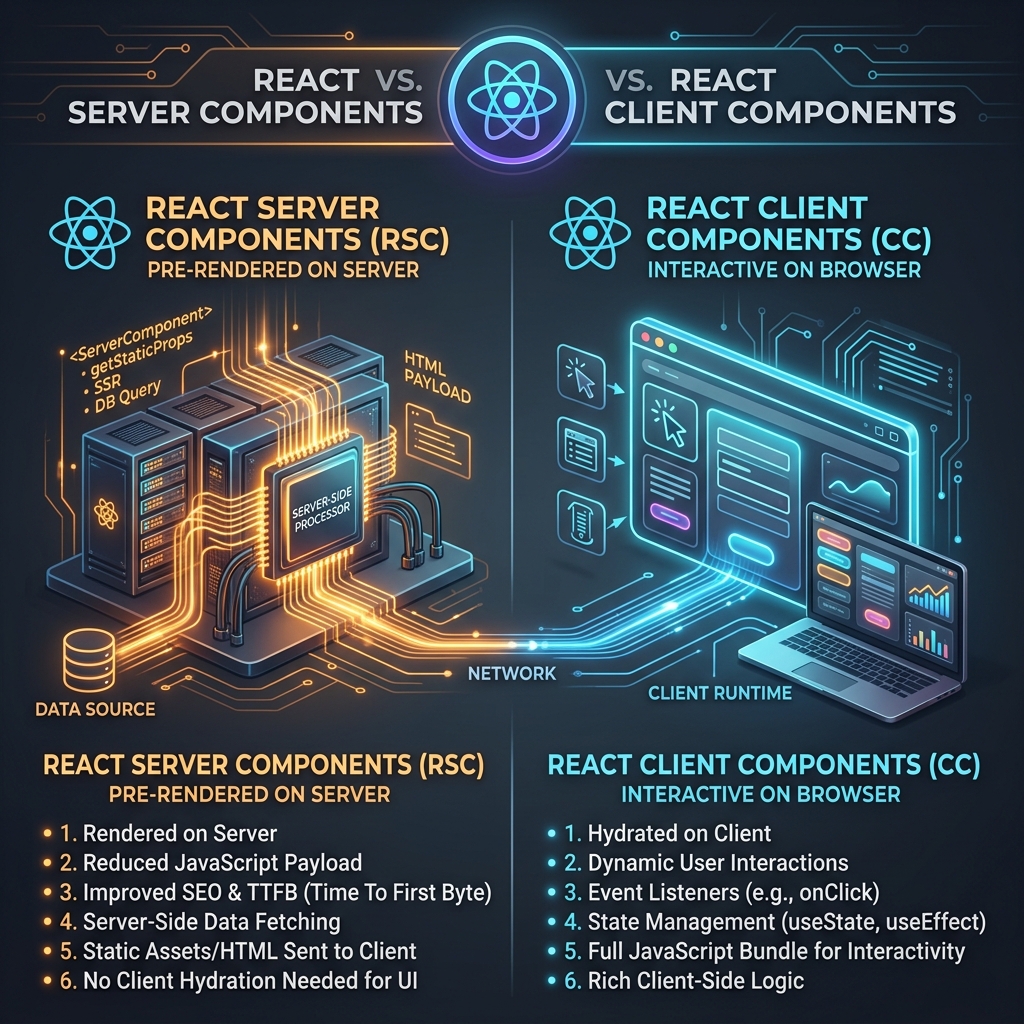
React Server Components are a new paradigm introduced in React 19, allowing developers to render components on the server. These components are designed to fetch data, compute, and send HTML back to the client, significantly improving the initial load time and reducing the amount of JavaScript sent to the browser.
Key benefits of RSC include:
- Reduced Client-Side JavaScript: RSC helps in sending minimal JavaScript to the client, leading to faster load times.
- Better SEO and Performance: Server-rendered content is accessible to search engines, making it an excellent choice for SEO-sensitive applications.
- Streaming Support: RSC supports streaming, allowing parts of the UI to be displayed as they are ready, enhancing user experience.
What Are Client Components?
Client Components, on the other hand, are the traditional approach in React, where components are rendered client-side. These components manage their own state and lifecycle, allowing for dynamic interactions.
Key characteristics of Client Components include:
- Full Client-Side Rendering: The component's logic runs entirely in the browser, making it ideal for interactive elements.
- Rich Interactivity: Best suited for components that require real-time updates or user interactions.
- Hydration: Client Components need to hydrate after being sent from the server, which can lead to performance bottlenecks if not managed correctly.
Performance Comparison
Initial Load Time
In 2026, initial load time remains a critical factor for user retention. RSC can significantly enhance this metric due to server-side rendering capabilities.
| Feature | React Server Components | Client Components |
| Initial Load Time | Fast (server-rendered) | Slower (client-side hydration required) |
| JavaScript Bundle Size | Smaller | Larger |
| SEO Friendliness | Excellent | Moderate |
Streaming and Hydration
Streaming is a game-changer for user experience. With RSC, components can be streamed to the client, rendering parts of the UI progressively. This reduces perceived load times and improves the overall performance.
- Streaming: RSC allows for the progressive rendering of components, which means users can interact with parts of the application before the entire page is loaded.
- Hydration: Client Components require hydration, where the client-side JavaScript takes over the server-rendered HTML, potentially causing delays and jank if not optimized.
Code Example: Streaming with RSC
Here is a simple example of how to use streaming in RSC:
// ServerComponent.jsx
import React from 'react';

export default function ServerComponent() {
    return (
        <div>
            <h1>Server Rendered Component</h1>
            <p>This content is streamed to the client.</p>
        </div>
    );
}
This component can be rendered on the server and streamed to the client, minimizing loading times and improving the user experience.
Use Cases for React Server Components
Data-Heavy Applications
Applications that require fetching large amounts of data can significantly benefit from RSC. Since data fetching happens on the server, the initial load is faster, and the client receives pre-rendered HTML.
- E-commerce Sites: Fast product listings and details pages improve conversion rates.
- Content Management Systems: Server-rendered pages enhance SEO and reduce waiting times for content-heavy sites.
Static Content
If your application heavily relies on static content, using RSC is ideal. Static pages can be rendered on the server, allowing for quick loads and better performance.
- Blogs and Portfolios: Static content can be served quickly, enhancing the user experience.
Use Cases for Client Components
Highly Interactive Applications
When building applications that require a lot of user interactions, Client Components shine. Their ability to manage state and respond to user events makes them the go-to choice for dynamic UIs.
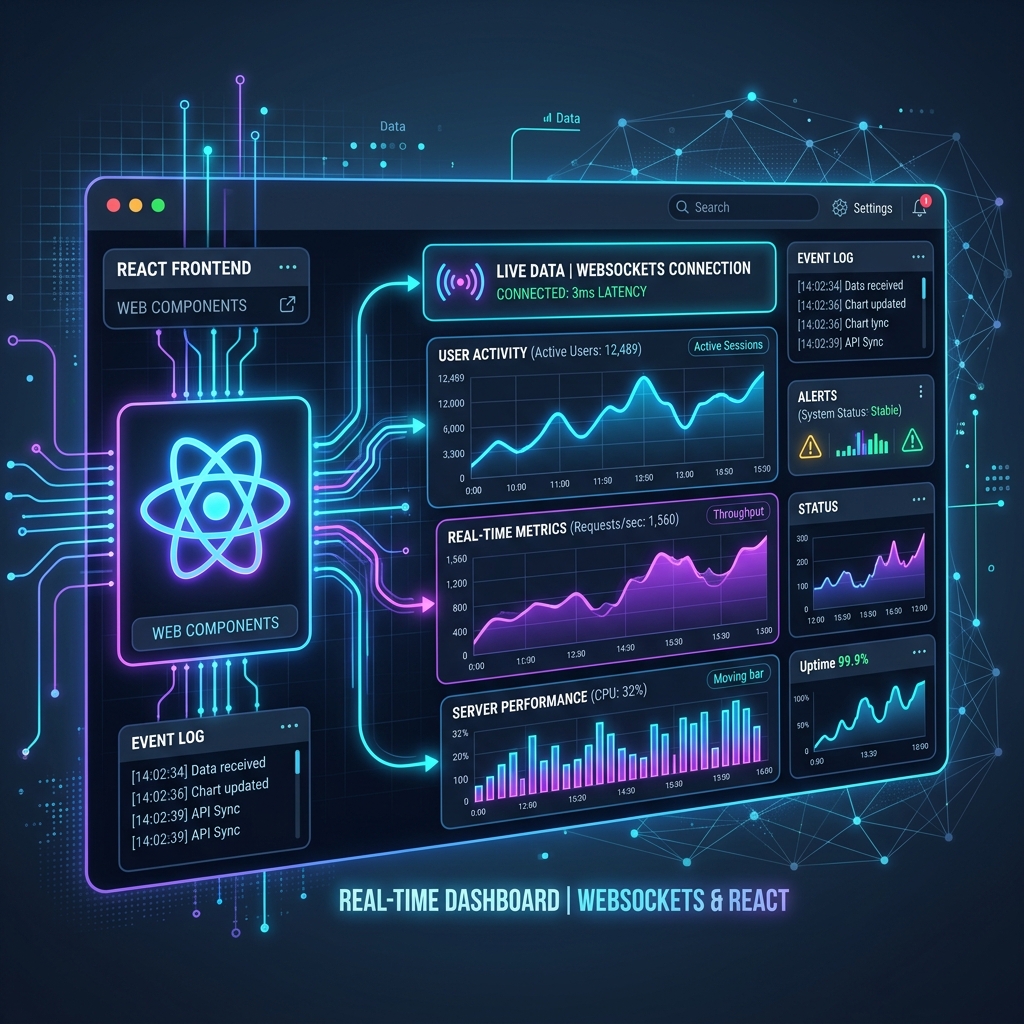
- Dashboards: Real-time data updates require immediate user feedback and interaction.
- Single Page Applications (SPAs): Applications that need seamless transitions and quick updates benefit from Client Components.
Complex State Management
Applications with intricate state management may find Client Components more suitable. The local state management capabilities provided by Client Components allow for more granular control over user interactions.
Best Practices for Combining RSC and Client Components
Hybrid Approach
In 2026, leveraging both RSC and Client Components can yield the best results. By utilizing RSC for data-fetching and static content, combined with Client Components for interactive features, developers can create a balanced architecture.
- Example Structure:
- Use RSC for the initial page load, fetching data and rendering static content.
- Employ Client Components for interactive elements like forms or modals.
Optimize for Performance
Regardless of your approach, optimizing performance is key. Here are a few optimization strategies:
1. Code Splitting: Only load components when needed.
2. Memoization: Use React.memo and useMemo to prevent unnecessary re-renders.
3. Use Pagination: For large datasets, paginate results to improve load times.
Key Takeaways
- React Server Components (RSC) are ideal for data-heavy applications and static content, offering better performance and SEO benefits.
- Client Components are best for highly interactive applications where user engagement is crucial.
- A hybrid approach can optimize both performance and interactivity, combining the strengths of both component types.
FAQ
1. What are React Server Components?
React Server Components (RSC) are components rendered on the server that can fetch data and send pre-rendered HTML to the client, improving load times and reducing JavaScript size.
2. How do React Client Components work?
Client Components are rendered in the browser and manage their own state and lifecycles, making them suitable for highly interactive applications.
3. When should I use React Server Components?
Use RSC for applications that are data-heavy or require SEO optimization, such as e-commerce sites or content management systems.
4. What is the difference between streaming and hydration?
Streaming allows parts of the UI to be sent to the client as they are ready, whereas hydration is the process where client-side JavaScript takes over server-rendered HTML.
5. Can I mix React Server Components and Client Components?
Yes, a hybrid approach is recommended for optimizing performance and interactivity in your applications.
If you are looking to enhance your web applications using the latest React features, feel free to blank" rel="noopener noreferrer" style="color: var(--primary); text-decoration: none; border-bottom: 1px dashed var(--primary);">reach out for our development services. Check out our projects to see how we leverage technologies like React, Laravel, and Next.js for innovative solutions. Explore our blank" rel="noopener noreferrer" style="color: var(--primary); text-decoration: none; border-bottom: 1px dashed var(--primary);">skills and experience to learn more about our expertise in full-stack development. For further insights and updates, visit our blog.