Building a Multi-University Admission Platform with Laravel: An Expert Guide
The global education technology market is projected to reach an astounding \$600 billion by 2027, with a significant portion driven by the increasing demand for streamlined admission processes. Yet, many universities and study-abroad agencies still grapple with fragmented, manual systems that hinder efficiency, increase error rates, and ultimately lead to lost opportunities. Imagine a prospective international student trying to apply to multiple institutions across different countries, each with its own labyrinthine application portal. This not only creates immense friction for the student but also presents a massive data management headache for educational institutions and recruiting agencies. This is precisely the problem a multi-university admission platform aims to solve.
As a senior full-stack developer who has navigated the complexities of EdTech platforms, student CRMs, and admission management systems, I've seen firsthand how a well-architected solution can transform the enrollment landscape. Companies like ApplyBoard, Edvoy, and AECC Global have successfully leveraged centralized platforms to connect students with institutions globally, demonstrating the immense value of such systems. This guide will delve into building a robust, scalable, and secure multi-university admission platform using Laravel, a framework renowned for its developer-friendliness, extensive features, and vibrant community. We'll explore the architectural considerations, key functionalities, and technical choices that underpin a successful Laravel admission system, ensuring it meets the unique demands of the education sector.
Understanding the Core Problem and Solution: Centralized University Application
The traditional university application process is often a decentralized nightmare. Students juggle multiple logins, disparate document requirements, and varying application deadlines. For universities, managing applications from diverse sources, tracking student progress, and communicating effectively can be overwhelming. A centralized university application platform acts as a single point of entry for students, allowing them to apply to numerous universities with a unified profile, while providing institutions with a streamlined pipeline for applicant management.
The Value Proposition: Why Centralize?
- For Students: Simplified application process, reduced administrative burden, better tracking of application status, and access to a wider range of educational opportunities.
- For Universities: Increased applicant reach, standardized data collection, efficient application review, reduced processing time, and improved communication with prospective students.
- For Agencies/Consultants: Enhanced operational efficiency, better client management, improved commission tracking, and a competitive edge in a crowded market.
According to a 2025 report by HolonIQ, platforms that simplify access to higher education are seeing a 15% year-over-year growth in adoption, underscoring the market's readiness for more sophisticated solutions. Our goal is to build a platform that serves as a bridge, connecting aspirations with opportunities, all powered by a robust backend.
Key Stakeholders and Their Needs
A successful multi-university admission platform must cater to several distinct user roles, each with specific requirements:
1. Students: Account creation, profile management, document upload, program search, application submission, application status tracking, communication with counselors/universities.
2. Universities/Institutions: Program listing management, application review and decision-making, applicant communication, reporting, integration with existing SIS (Student Information Systems).
3. Counselors/Advisors (Agency Staff): Student profile management, application submission on behalf of students, document verification, commission tracking, communication tools.
4. Admins (Platform Owners): User management, university/program management, system configuration, reporting and analytics, payment gateway integration, content management.
Each of these roles requires a tailored user experience and specific permissions, a perfect use case for Laravel's robust authorization and authentication features.
Architectural Blueprint: Designing for Scale and Security
Building a multi-university admission platform demands a scalable, secure, and maintainable architecture. We'll adopt a modular approach, leveraging Laravel's capabilities as our backend powerhouse and a modern frontend framework for a dynamic user experience.
Backend with Laravel: The Core Engine
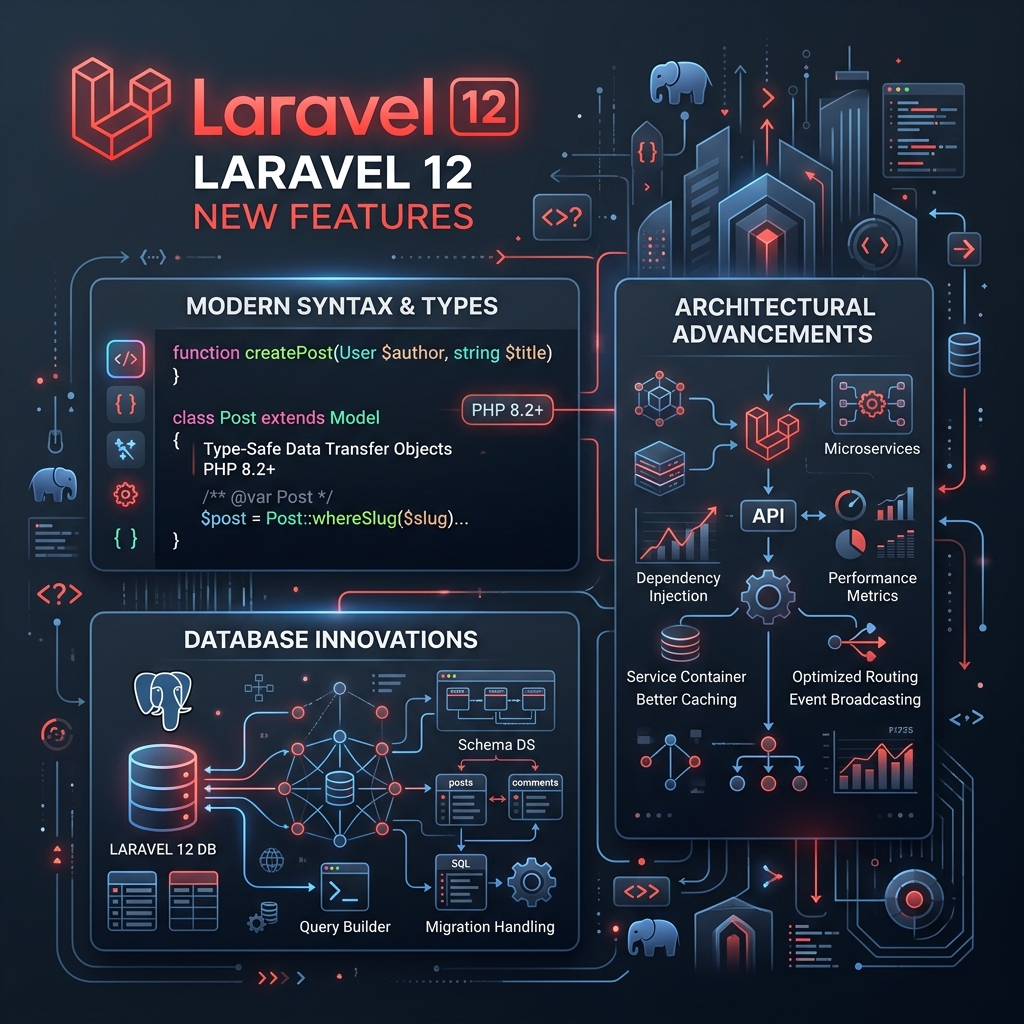
Laravel, with its elegant syntax and comprehensive features, is an ideal choice for the backend. It provides:
- Eloquent ORM: For seamless database interaction and managing complex relationships between students, applications, universities, and programs.
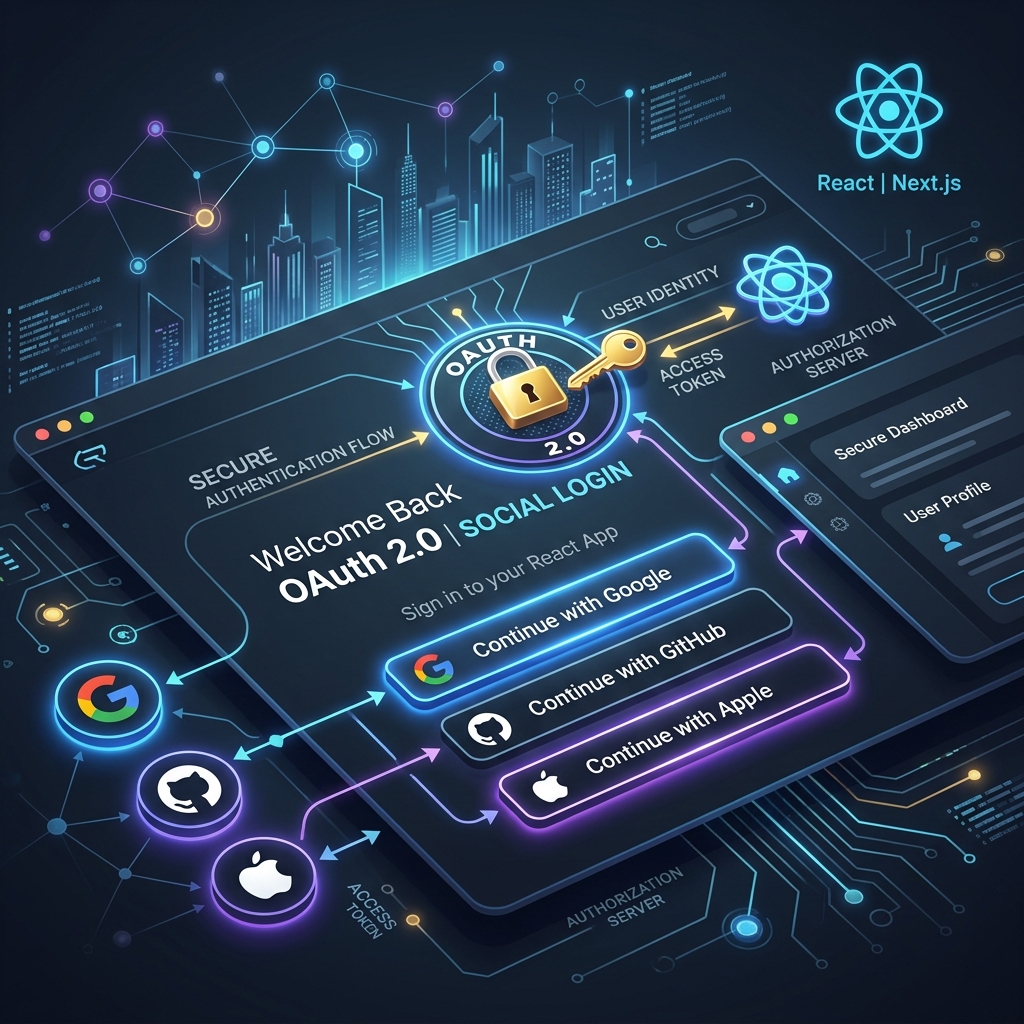
- Authentication & Authorization: Built-in mechanisms for user registration, login, and role-based access control (RBAC) using Laravel Fortify and Spatie's Laravel-Permission package.
- API Development: Laravel Sanctum for token-based API authentication, crucial for securing communication between the frontend and backend.
- Queues: For handling long-running tasks like document processing, email notifications, and data synchronization without blocking the main application thread.
- Event-Driven Architecture: For decoupling components and reacting to application events (e.g., "application submitted," "document approved").
Here's a simplified conceptual architecture:
+-------------------+       +-------------------+       +--------------------+
|   Frontend App    |       |   Mobile App      |       |  External Systems  |
| (React/Next.js)   |       |    (React Native) |       | (SIS, Payment Gate) |
+---------+---------+       +---------+---------+       +---------+----------+
          |                         |                         |
          |  RESTful API / GraphQL  |                         |
          v                         v                         v
+-----------------------------------------------------------------------------+
|                      Laravel Backend Application (API)                      |
| +-----------------+ +-------------------+ +-------------------+           |
| |   Authentication| |   Application     | |   University/     |           |
| |   (Sanctum/JWT) | |   Management      | |   Program Mgmt.   |           |
| +-----------------+ +-------------------+ +-------------------+           |
| +-----------------+ +-------------------+ +-------------------+           |
| |   Document      | |   Notifications   | |   Reporting &     |           |
| |   Management    | |   (Queues/Events) | |   Analytics       |           |
| +-----------------+ +-------------------+ +-------------------+           |
|                                                                             |
| +-------------------------------------------------------------------------+ |
| |                         Database (PostgreSQL/MySQL)                     | |
| |                                 (Eloquent ORM)                          | |
| +-------------------------------------------------------------------------+ |
+-----------------------------------------------------------------------------+
          ^
          |
          |  (Background Processing)
          v
+-------------------+
|   Queue Workers   |
| (Redis/Supervisor)|
+-------------------+
Frontend Framework: Next.js for Performance and SEO
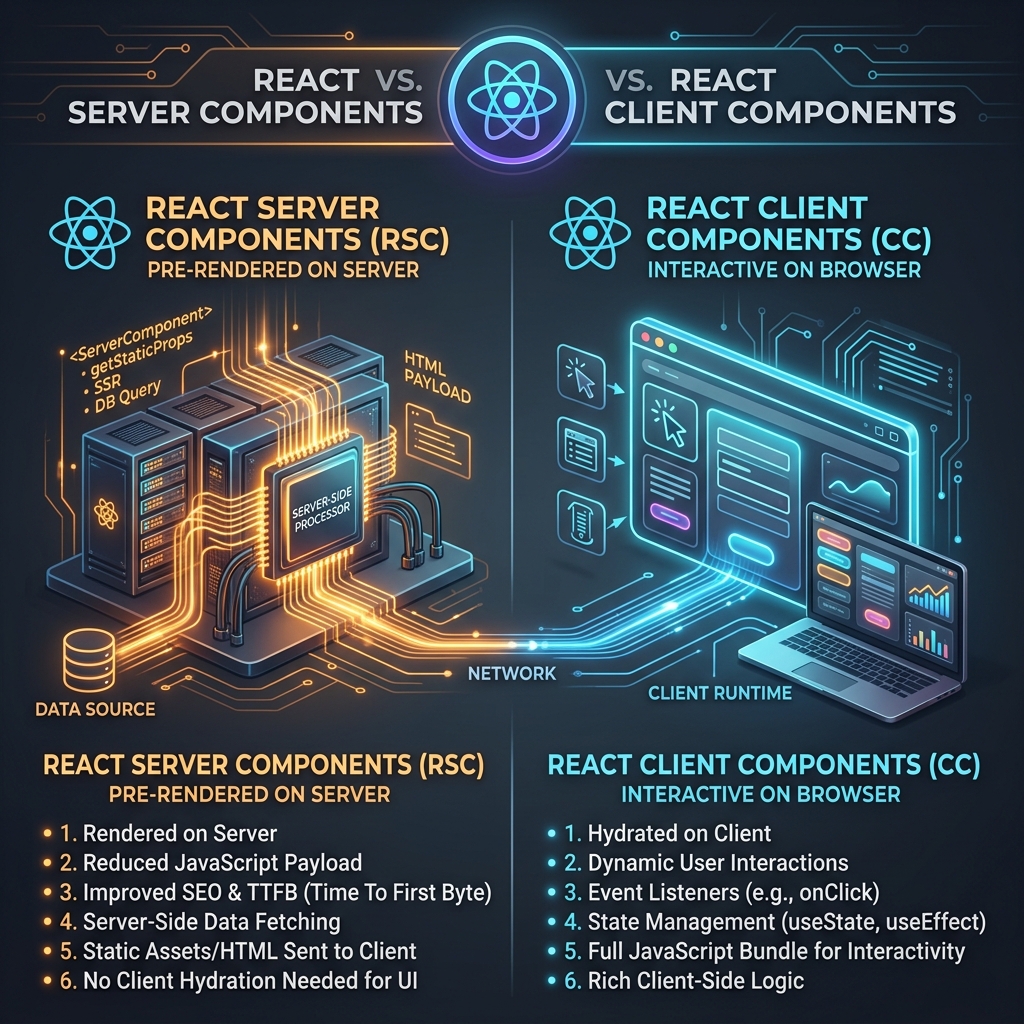
While React is a solid choice, Next.js offers server-side rendering (SSR) and static site generation (SSG) capabilities, which are invaluable for a public-facing platform like a multi-university admission platform. This improves initial page load times, enhances SEO for program listings, and provides a better user experience. For internal dashboards (university staff, agency counselors), a client-side rendered React application might suffice, or even a hybrid approach within Next.js.
Database Selection and Schema Design
For the database, PostgreSQL or MySQL are excellent choices. PostgreSQL is often preferred for its advanced features, data integrity, and geospatial capabilities, which could be useful for future enhancements like location-based university search.
A simplified conceptual schema includes:
- Users:
id,name,email,password,role_id,type(student, university, agency, admin) - Roles:
id,name(student, universityadmin, agencycounselor, super_admin) - Permissions:
id,name(e.g., 'createapplication', 'reviewapplication') - Role_Permissions: Pivot table
- Students:
id,userid,firstname,lastname,dob,country,educationalbackground,transcriptpath,passportpath, etc. - Universities:
id,userid(for university admin),name,country,city,description,logopath - Programs:
id,universityid,name,degreelevel,duration,tuitionfee,requirements,startdates - Applications:
id,studentid,programid,universityid,status(draft, submitted, underreview, accepted, rejected),submission_date - Documents:
id,ownerid(polymorphic relation to student/university),ownertype,type(transcript, SOP, LOR),file_path,status(uploaded, verified, rejected) - Communications:
id,senderid,receiverid,subject,message,timestamp
This relational structure allows for clear data organization and efficient querying, critical for a complex edtech SaaS platform.
Key Feature Implementation with Laravel
Let's dive into some core features and how Laravel facilitates their development.
Secure User Authentication and Authorization
Leverage Laravel Fortify for the authentication scaffolding and Spatie's Laravel-Permission for robust role and permission management.
// app/Providers/AuthServiceProvider.php
use App\Models\User;
use Illuminate\Support\Facades\Gate;

public function boot()
{
    $this->registerPolicies();

    Gate::before(function ($user, $ability) {
        return $user->hasRole('super_admin') ? true : null;
    });
}

// Example usage in a controller
public function store(Request $request)
{
    $this->authorize('create-program'); // Checks if user has 'create-program' permission

    // ... create program logic
}
This ensures that only authorized users can perform specific actions, critical for data integrity on a multi-university admission platform.
Dynamic Application Forms and Document Management
Application forms can be complex, with conditional fields and multiple stages. Laravel's form request validation handles input sanitization and validation. For document management, integrate with cloud storage services like AWS S3 or DigitalOcean Spaces.
// Example: Storing a student's transcript
use Illuminate\Support\Facades\Storage;

public function uploadTranscript(Request $request)
{
    $request->validate([
        'transcript' => 'required|file|mimes:pdf|max:2048', // 2MB limit
    ]);

    $path = $request->file('transcript')->store('transcripts/' . auth()->id(), 's3');

    // Save $path to the Documents table associated with the student
    auth()->user()->student->documents()->create([
        'type' => 'transcript',
        'file_path' => $path,
        'status' => 'uploaded',
    ]);

    return response()->json(['message' => 'Transcript uploaded successfully!', 'path' => $path]);
}
This snippet demonstrates secure file storage and association, a fundamental part of any Laravel admission system.
Real-time Notifications and Communication
Implement a notification system using Laravel's built-in notifications, which can send emails, database notifications, or even integrate with real-time channels like WebSockets (via Laravel Echo and Pusher/Soketi).
// app/Notifications/ApplicationStatusUpdated.php
namespace App\Notifications;

use App\Models\Application;
use Illuminate\Bus\Queueable;
use Illuminate\Contracts\Queue\ShouldQueue;
use Illuminate\Notifications\Messages\MailMessage;
use Illuminate\Notifications\Notification;

class ApplicationStatusUpdated extends Notification implements ShouldQueue
{
    use Queueable;

    protected $application;

    public function __construct(Application $application)
    {
        $this->application = $application;
    }

    public function via($notifiable)
    {
        return ['mail', 'database']; // Send email and store in database
    }

    public function toMail($notifiable)
    {
        return (new MailMessage)
                    ->subject('Your Application Status Has Been Updated!')
                    ->line('Your application for ' . $this->application->program->name . ' at ' . $this->application->university->name . ' has been updated to: ' . strtoupper($this->application->status) . '.')
                    ->action('View Application', url('/student/applications/' . $this->application->id))
                    ->line('Thank you for using our platform!');
    }

    public function toArray($notifiable)
    {
        return [
            'application_id' => $this->application->id,
            'status' => $this->application->status,
            'message' => 'Your application status for ' . $this->application->program->name . ' has been updated.',
        ];
    }
}

// Usage in a controller/service
use App\Models\Application;
use App\Notifications\ApplicationStatusUpdated;

$application = Application::find($applicationId);
$application->update(['status' => 'accepted']);
$application->student->user->notify(new ApplicationStatusUpdated($application)); // Notify the student
Queued notifications ensure that sending emails doesn't block the user's request, improving performance.
Integrations with External Systems
A crucial aspect of an edtech SaaS platform is its ability to integrate with existing university Student Information Systems (SIS), CRM platforms, and payment gateways. Laravel's HTTP client makes it easy to interact with external APIs.
// Example: Sending application data to a university SIS via API
use Illuminate\Support\Facades\Http;

public function sendToSis(Application $application)
{
    $response = Http::withHeaders([
        'Authorization' => 'Bearer ' . env('UNIVERSITY_SIS_API_KEY'),
        'Accept' => 'application/json',
    ])->post($application->university->sis_api_endpoint, [
        'student_id' => $application->student->external_id,
        'program_code' => $application->program->external_code,
        'application_data' => $application->toArray(), // Send relevant application data
    ]);

    if ($response->successful()) {
        // Log success, update application status, etc.
        return true;
    } else {
        // Handle API error
        \Log::error("SIS integration failed for application {$application->id}: " . $response->body());
        return false;
    }
}
This demonstrates how to securely interact with third-party systems, a common requirement for a centralized university application.
Deployment and Scalability Considerations
Deploying a multi-university admission platform requires careful planning for scalability and reliability.
Cloud Infrastructure: AWS or DigitalOcean
For cloud hosting, AWS offers unparalleled flexibility and a vast array of services (EC2, RDS, S3, SQS, ElastiCache). DigitalOcean provides a simpler, more cost-effective solution for startups. For high availability, consider using load balancers, auto-scaling groups, and managed database services (RDS for PostgreSQL/MySQL).
Containerization with Docker and Orchestration with Kubernetes
Dockerizing your Laravel application provides consistency across development, staging, and production environments. Kubernetes (K8s) can then orchestrate these containers, managing scaling, deployments, and self-healing. This is especially vital for an edtech SaaS platform that might experience seasonal spikes in traffic.
# Dockerfile for Laravel
FROM php:8.2-fpm-alpine

# Install system dependencies
RUN apk add --no-cache \
    git \
    curl \
    libpng-dev \
    libjpeg-turbo-dev \
    freetype-dev \
    icu-dev \
    libzip-dev \
    jpegoptim optipng pngquant gifsicle \
    supervisor

# Install PHP extensions
RUN docker-php-ext-configure gd --with-freetype --with-jpeg \
    && docker-php-ext-install -j$(nproc) gd \
    && docker-php-ext-install pdo pdo_mysql zip exif pcntl \
    && docker-php-ext-install bcmath opcache intl

# Install Composer
COPY --from=composer:latest /usr/bin/composer /usr/bin/composer

WORKDIR /var/www/html

COPY . .

RUN composer install --no-dev --optimize-autoloader

RUN php artisan optimize:clear
RUN php artisan config:cache
RUN php artisan route:cache
RUN php artisan view:cache

EXPOSE 9000
CMD ["php-fpm"]
This Dockerfile sets up a production-ready PHP-FPM environment for your Laravel application.
Security Best Practices for EdTech Platforms
Given the sensitive nature of student data (personal information, academic records), security is paramount for any Laravel admission system.
- Data Encryption: Encrypt sensitive data at rest (database encryption, S3 encryption) and in transit (HTTPS/SSL for all communications).
- Regular Security Audits: Conduct penetration testing and vulnerability assessments regularly.
- OWASP Top 10: Adhere to OWASP Top 10 guidelines to prevent common web application vulnerabilities (SQL injection, XSS, CSRF). Laravel's features like Eloquent, Blade templating, and CSRF protection help mitigate many of these.
- Compliance: Ensure compliance with relevant data privacy regulations like GDPR, FERPA (for US institutions), and local data protection laws.
- Strong Password Policies: Enforce strong passwords and consider multi-factor authentication (MFA) for all user roles, especially administrators and university staff.
Key Takeaways
- A multi-university admission platform built with Laravel offers a powerful solution to streamline complex application processes for students, universities, and agencies.
- Laravel's robust features for authentication, API development, queue management, and ORM make it an excellent choice for the backend of an edtech SaaS platform.
- Frontend frameworks like Next.js enhance user experience and SEO, critical for public-facing applications.
- Scalability can be achieved through cloud infrastructure (AWS/DigitalOcean) and containerization (Docker/Kubernetes).
- Security, including data encryption and compliance with privacy regulations, must be a top priority for any Laravel admission system.
- Understanding the diverse needs of students, universities, and agencies is crucial for designing a truly effective and user-centric platform.
FAQ
Q1: Is Laravel suitable for handling high traffic volumes associated with a multi-university admission platform?
A1: Absolutely. Laravel, when properly configured and deployed with caching (Redis/Memcached), queues, and optimized database queries, can handle very high traffic. Its modular nature also allows for horizontal scaling by adding more servers behind a load balancer.
Q2: What's the typical development timeline for a platform of this complexity?
A2: A comprehensive multi-university admission platform with all core features (student portal, university portal, admin panel, document management, notifications, basic integrations) could take anywhere from 8 to 18 months with a dedicated team, depending on the scope and specific requirements. Iterative development with an MVP (Minimum Viable Product) approach is recommended.
Q3: How do you ensure data privacy and compliance (e.g., GDPR, FERPA) when dealing with sensitive student information?
A3: We implement strict data encryption at rest and in transit, role-based access control (RBAC), regular security audits, and anonymization techniques where appropriate. Data residency requirements are also considered, often leveraging cloud providers' regional data centers. Clear privacy policies and user consent mechanisms are integrated into the platform.
Q4: Can this platform integrate with existing university Student Information Systems (SIS)?
A4: Yes, integration with existing SIS systems is a critical component. This is typically achieved via APIs (REST or SOAP) provided by the SIS. Laravel's HTTP client simplifies making these external API calls, and we design robust error handling and logging for seamless data exchange.
Q5: What are the ongoing maintenance and cost considerations for such a platform?
A5: Ongoing costs include cloud infrastructure (servers, database, storage), third-party service subscriptions (email, SMS, CDN), and regular software maintenance (updates, security patches, feature enhancements). A well-architected Laravel application typically has lower maintenance overhead due to its clear structure and extensive documentation.
Looking to build an EdTech platform, student CRM, or admission management system? I specialize in developing scalable