Predictive Analytics for University Admissions: A Developer's Guide
The landscape of university admissions is more competitive and data-driven than ever. Institutions are grappling with fluctuating enrollment rates, the rising cost of student acquisition, and the imperative to identify best-fit candidates efficiently. For EdTech platforms, student CRMs, and admission management systems, merely managing applications is no longer sufficient. The real value lies in transforming raw data into actionable insights, and this is precisely where predictive analytics university admissions shines. As a full-stack developer who has spent years architecting and scaling solutions for the education sector, I've seen firsthand how these models can revolutionize the admissions funnel, from initial outreach to final enrollment.
Imagine an admissions officer knowing with high probability which applicants are most likely to accept an offer, which marketing channels yield the highest conversion rates for specific student profiles, or even anticipating potential enrollment shortfalls months in advance. This isn't science fiction; it's the power of education data analytics applied strategically. Companies like ApplyBoard and Edvoy are leveraging sophisticated algorithms to guide prospective students and institutions, demonstrating the tangible impact of data-driven decision-making. This guide will delve into the technical underpinnings, architectural considerations, and practical implementation strategies for building robust admission prediction models within your EdTech ecosystem.
The Imperative of Predictive Analytics in Higher Education
In an era where student mobility is increasing and competition for global talent intensifies, universities face immense pressure to optimize their recruitment strategies. Traditional admissions processes, often reliant on historical trends and subjective evaluations, are proving inadequate. The need for a more scientific, data-backed approach has never been greater.
Why Universities Need Prediction Models
Universities are under constant pressure to maintain enrollment targets, enhance student diversity, and improve retention rates. A 2023 report by HolonIQ highlighted that the global EdTech market is projected to reach \$404 billion by 2025, with a significant portion driven by data analytics and AI solutions. This growth underscores the industry's recognition of data as a strategic asset. An admission prediction model allows institutions to:
- Optimize Recruitment Spend: Target marketing efforts more effectively by identifying student segments most likely to apply and enroll.
- Improve Yield Rates: Predict which admitted students are most likely to accept their offer, enabling personalized outreach and engagement strategies.
- Enhance Student Success: Identify at-risk applicants early, allowing for targeted support and interventions even before enrollment.
- Forecast Enrollment Accurately: Provide better financial and resource planning by having a clearer picture of future student numbers, leading to better operational efficiency.
The Role of EdTech Platforms
As developers, we are the architects of these transformative tools. EdTech platforms and student CRMs are uniquely positioned to collect, process, and analyze the vast amounts of data required for effective predictive analytics. From applicant tracking systems (ATS) to marketing automation tools, every interaction leaves a data footprint. Our challenge is to consolidate this data, clean it, and feed it into intelligent models. Companies like AECC Global, which facilitates international student admissions, are prime examples of how integrated platforms can gather diverse data points, from academic records to visa application statuses, creating a rich dataset for analysis.
Architecting a Predictive Analytics Solution
Building a robust predictive analytics system for university admissions requires a thoughtful architectural approach. It's not just about throwing data at a machine learning algorithm; it's about establishing a scalable, maintainable, and secure data pipeline.
Data Ingestion and ETL Pipeline
The foundation of any predictive model is clean, comprehensive data. In a typical EdTech ecosystem, data originates from various sources: applicant forms, academic transcripts, standardized test scores (SAT/ACT/GRE/GMAT/IELTS/TOEFL), CRM interactions, marketing campaign data, financial aid applications, and even website analytics.
A robust Extract, Transform, Load (ETL) pipeline is critical.
# Example of a simplified Python ETL script using Pandas
import pandas as pd
from sqlalchemy import create_engine

# --- Configuration ---
DATABASE_URL = "mysql+mysqlconnector://user:password@host/admissions_db"
SOURCE_CSV_PATH = "admissions_applications.csv"

# --- 1. Extract ---
def extract_data(source_path):
    """Extracts data from a CSV file."""
    try:
        df = pd.read_csv(source_path)
        print(f"Extracted {len(df)} records from {source_path}")
        return df
    except FileNotFoundError:
        print(f"Error: Source file not found at {source_path}")
        return pd.DataFrame()

# --- 2. Transform ---
def transform_data(df):
    """Performs data cleaning and feature engineering."""
    if df.empty:
        return df

    # Example: Handle missing values
    df['gpa'].fillna(df['gpa'].mean(), inplace=True)
    df['test_score'].fillna(0, inplace=True) # Assume 0 if not provided

    # Example: Feature engineering - create an 'application_strength' score
    df['application_strength'] = (df['gpa'] * 0.4) + (df['test_score'] / 1600 * 0.3) + \
                                 (df['essay_score'] * 0.2) + (df['extracurricular_score'] * 0.1)

    # Example: Convert categorical data to numerical (one-hot encoding)
    df = pd.get_dummies(df, columns=['program_of_interest', 'region'], drop_first=True)

    # Standardize numerical features (important for ML models)
    numerical_cols = ['gpa', 'test_score', 'application_strength']
    for col in numerical_cols:
        if col in df.columns:
            df[col] = (df[col] - df[col].mean()) / df[col].std()

    print(f"Transformed {len(df)} records.")
    return df

# --- 3. Load ---
def load_data(df, table_name, db_url):
    """Loads transformed data into a database."""
    if df.empty:
        print("No data to load.")
        return

    engine = create_engine(db_url)
    try:
        df.to_sql(table_name, engine, if_exists='append', index=False)
        print(f"Successfully loaded {len(df)} records into {table_name}.")
    except Exception as e:
        print(f"Error loading data: {e}")

# --- Main ETL Process ---
if __name__ == "__main__":
    raw_data = extract_data(SOURCE_CSV_PATH)
    processed_data = transform_data(raw_data)
    load_data(processed_data, "admissions_features", DATABASE_URL)
This Python script demonstrates a basic ETL flow. In a real-world scenario, you'd use more sophisticated tools like Apache Airflow for orchestration, AWS Glue, or Azure Data Factory for managed ETL services, especially when dealing with large volumes of data (Big Data). Our backend services, often built with Laravel, would expose APIs for data ingestion or consume data from message queues like Kafka or RabbitMQ.
Choosing the Right Machine Learning Model
The core of predictive analytics university admissions is the machine learning model. The choice of model depends on the type of prediction:
- Classification Models (Binary/Multi-class):
- Logistic Regression: Good baseline, interpretable, predicts probability of an event (e.g., "will enroll" vs. "will not enroll").
- Support Vector Machines (SVM): Effective in high-dimensional spaces, but can be complex.
- Decision Trees / Random Forests / Gradient Boosting (XGBoost, LightGBM): Excellent for capturing non-linear relationships and feature importance. Often top performers.
- Neural Networks: Can capture complex patterns but require large datasets and significant computational resources.
- Regression Models: For predicting continuous values (e.g., expected GPA, tuition revenue).
- Linear Regression: Simple, interpretable.
- Ridge/Lasso Regression: Regularized linear models to prevent overfitting.
For predicting student enrollment, a classification model is typically used. Given my experience, Gradient Boosting Machines (like XGBoost) often provide an excellent balance of accuracy and performance for structured tabular data.
Model Deployment and Integration
Once a model is trained and validated, it needs to be deployed and integrated into the EdTech platform. This typically involves:
1. API Endpoint: Exposing the model via a RESTful API. Frameworks like Flask or FastAPI in Python are ideal for this.
    # Example Flask API for model inference
    from flask import Flask, request, jsonify
    import joblib # To load the trained model

    app = Flask(__name__)
    model = joblib.load('admission_prediction_model.pkl') # Load your trained model
    feature_scaler = joblib.load('feature_scaler.pkl') # Load your scaler

    @app.route('/predict_admission', methods=['POST'])
    def predict_admission():
        data = request.get_json(force=True)
        # Assume 'data' contains features like gpa, test_score, program_of_interest, etc.
        # Preprocess input data (e.g., one-hot encode, scale)
        processed_input = preprocess_input(data, feature_scaler)
        prediction_proba = model.predict_proba(processed_input)[:, 1][0] # Probability of acceptance
        return jsonify({'admission_probability': float(prediction_proba)})

    def preprocess_input(input_data, scaler):
        # This function would replicate the transformation steps from your ETL
        # For simplicity, let's assume direct feature input after scaling
        df_input = pd.DataFrame([input_data])
        # Apply one-hot encoding for categorical features based on training data columns
        # Apply the same scaler used during training
        scaled_input = scaler.transform(df_input) # Assuming df_input has correct columns
        return scaled_input

    if __name__ == '__main__':
        app.run(debug=True, host='0.0.0.0', port=5000)
2. Backend Integration (Laravel/PHP): Our Laravel backend would consume this API.
    <?php

    namespace App\Services;

    use GuzzleHttp\Client;
    use Illuminate\Support\Facades\Log;

    class AdmissionPredictionService
    {
        protected $client;
        protected $predictionApiUrl;

        public function __construct()
        {
            $this->client = new Client();
            $this->predictionApiUrl = env('PREDICTION_API_URL', 'http://localhost:5000/predict_admission');
        }

        public function getAdmissionProbability(array $applicantData): ?float
        {
            try {
                $response = $this->client->post($this->predictionApiUrl, [
                    'json' => $applicantData, // Applicant data sent to the ML model
                    'headers' => [
                        'Content-Type' => 'application/json',
                        'Accept' => 'application/json',
                    ],
                ]);

                $result = json_decode($response->getBody()->getContents(), true);

                if (isset($result['admission_probability'])) {
                    return (float) $result['admission_probability'];
                }

                return null;

            } catch (\Exception $e) {
                Log::error("Error calling prediction API: " . $e->getMessage());
                return null;
            }
        }
    }
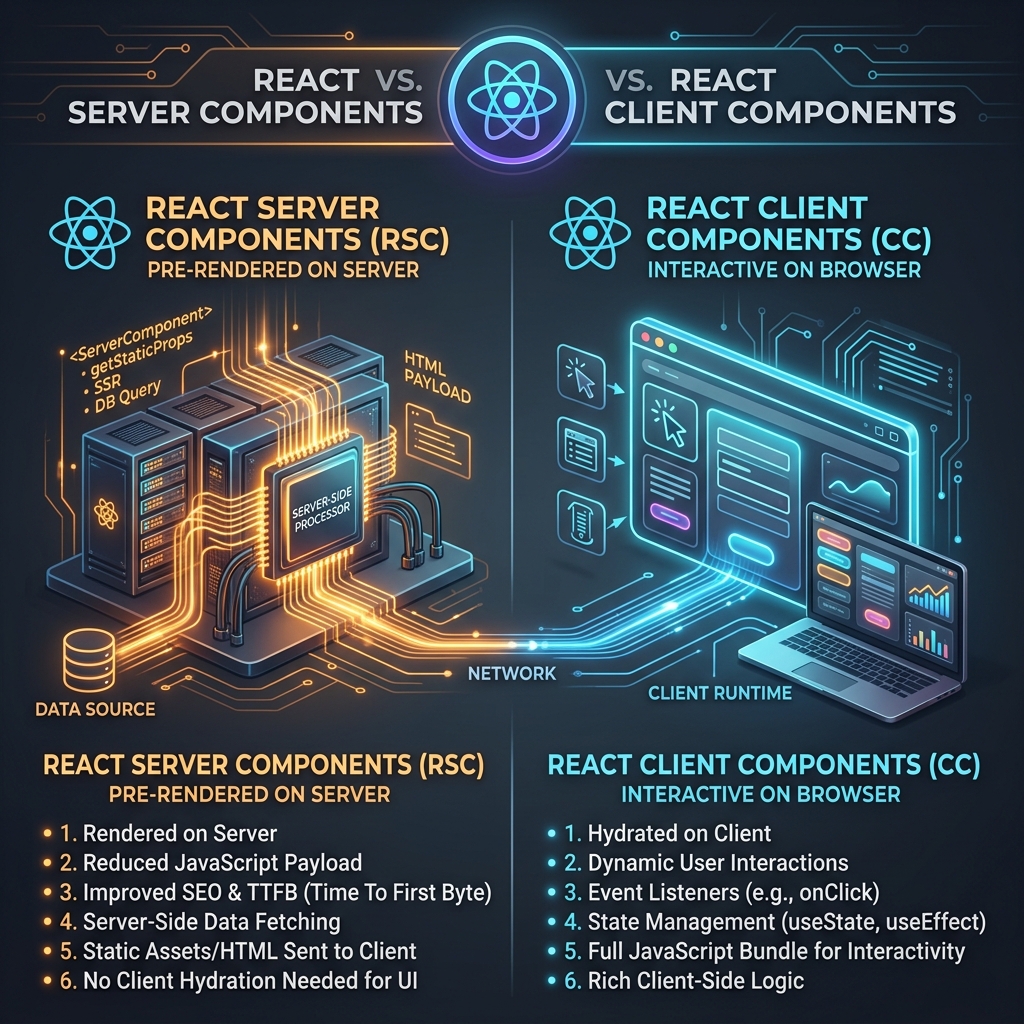
3. Frontend Integration (Next.js/React): The frontend, typically built with React or Next.js, would display these predictions to admissions officers or even to students (e.g., "likelihood of admission" calculators).
    // Example React component to display prediction
    import React, { useState, useEffect } from 'react';
    import axios from 'axios';

    function AdmissionPredictor({ applicantId }) {
      const [probability, setProbability] = useState(null);
      const [loading, setLoading] = useState(true);
      const [error, setError] = useState(null);

      useEffect(() => {
        const fetchPrediction = async () => {
          try {
            setLoading(true);
            // In a real app, you'd fetch applicant data from your backend first
            // and then send relevant features to the ML prediction API.
            // For this example, let's assume we have the data ready.
            const applicantData = {
              gpa: 3.8,
              test_score: 1450,
              program_of_interest: 'Computer Science',
              region: 'North America'
              // ... other features
            };

            const response = await axios.post('/api/predict-admission', applicantData);
            setProbability(response.data.admission_probability);
          } catch (err) {
            setError('Failed to fetch admission probability.');
            console.error(err);
          } finally {
            setLoading(false);
          }
        };

        if (applicantId) { // Trigger prediction when applicantId is available
          fetchPrediction();
        }
      }, [applicantId]);

      if (loading) return <p>Calculating admission probability...</p>;
      if (error) return <p className="text-red-500">{error}</p>;

      return (
        <div className="p-4 border rounded-lg shadow-sm bg-white">
          <h3 className="text-lg font-semibold mb-2">Admission Likelihood</h3>
          {probability !== null ? (
            <p className="text-2xl font-bold text-green-600">
              {(probability * 100).toFixed(2)}%
            </p>
          ) : (
            <p>Prediction not available.</p>
          )}
          <p className="text-sm text-gray-600 mt-2">
            This prediction is based on historical data and should be used as a guide.
          </p>
        </div>
      );
    }

    export default AdmissionPredictor;
This architecture ensures that the machine learning component is decoupled from the main application logic, allowing for independent scaling and maintenance.
Key Data Points for Admission Prediction Models
The quality and breadth of your data directly impact the accuracy of your enrollment forecasting. While specific data points vary by institution and program, certain categories are almost universally valuable.
Academic Performance & Demographics
These are foundational.
- GPA/Academic Records: High school GPA, college GPA (for transfer students), specific course grades.
- Standardized Test Scores: SAT, ACT, GRE, GMAT, IELTS, TOEFL.
- Program of Interest: Different programs have varying competitiveness and applicant pools.
- Demographics: Age, gender, ethnicity, nationality, socio-economic status, first-generation status.
- Geographic Location: Country, region, state, or even zip code can indicate proximity bias or regional recruitment strategies.
Engagement & Behavioral Data
This category is often overlooked but provides powerful insights into an applicant's genuine interest.
- Website & CRM Interactions: Number of visits to university website, specific pages viewed (e.g., financial aid, campus tour pages), email open rates, click-through rates, interactions with chatbots.
- Application Activity: Date of application submission, completion rate of application sections, number of programs applied to.
- Event Attendance: Participation in virtual open houses, campus visits, webinars.
- Communication Channel Preference: How an applicant prefers to be contacted can indicate readiness for engagement.
External Factors & Contextual Data
Considering the broader environment can enhance prediction accuracy.
- Economic Indicators: Local unemployment rates, cost of living, tuition trends.
- Competitor Data: Admission rates, popular programs at peer institutions (though often hard to obtain).
- Scholarship/Financial Aid Data: Whether an applicant applied for aid, amount of aid offered, financial need.
Overcoming Challenges in Implementation
Building these systems isn't without its hurdles. My experience has taught me that foresight in these areas saves immense time and resources.
Data Privacy and Security (GDPR, FERPA)
Handling sensitive student data demands stringent adherence to regulations like GDPR (for EU students) and FERPA (in the US).
- Anonymization/Pseudonymization: Before training models, sensitive identifiers should be removed or masked.
- Access Control: Implement granular role-based access control (RBAC) to ensure only authorized personnel can view or use student data.
- Secure Storage: Encrypt data at rest and in transit. Cloud providers like AWS offer services (KMS, S3 encryption) that facilitate this.
- Consent Management: Ensure clear consent mechanisms for data collection and usage, especially for predictive modeling.
Model Interpretability and Bias
Black-box models can lead to distrust and perpetuate existing biases.
- Explainable AI (XAI): Use techniques like SHAP (SHapley Additive exPlanations) or LIME (Local Interpretable Model-agnostic Explanations) to understand why a model made a particular prediction. This is crucial for gaining trust from admissions officers.
- Bias Detection: Regularly audit models for demographic parity or disparate impact, ensuring predictions aren't unfairly disadvantaging certain groups. This might involve comparing false positive/negative rates across different demographic segments.
- Feature Importance: Understand which features contribute most to the prediction. This can also reveal unexpected correlations or data quality issues.
Scalability and Maintenance
As the number of applicants grows and data sources multiply, the system must scale.
- Cloud-Native Architecture: Leverage services like AWS Lambda for serverless functions, Amazon S3 for data storage, AWS SageMaker for ML model training and deployment, or Google Cloud AI Platform.
- Microservices: Decompose the system into smaller, independent services (e.g., data ingestion service, prediction service, reporting service) to improve scalability and resilience.
- Monitoring and Alerting: Implement robust monitoring for data pipeline health, model performance (accuracy, latency), and system errors. Tools like Prometheus, Grafana, and ELK stack are invaluable.
- Model Retraining: Admission trends evolve. Models need to be periodically retrained with fresh data to maintain accuracy. Automate this process using CI/CD pipelines and MLOps practices.
Key Takeaways
- Data is Gold: The success of predictive analytics hinges on comprehensive, clean, and well-structured data from various sources within your EdTech platform.
- Strategic Model Selection: Choose ML models appropriate for the prediction task (classification for enrollment, regression for continuous values) and prioritize interpretability where possible.
- Robust Architecture: Implement a scalable ETL pipeline, decouple ML models via APIs, and integrate seamlessly with your backend (Laravel) and frontend (React/Next.js) systems.
- Ethical Considerations: Prioritize data privacy (GDPR, FERPA), actively mitigate model bias, and strive for interpretability to build trust and ensure fairness.
- Continuous Improvement: Predictive models are not "set it and forget it." Regular monitoring, retraining, and adaptation to new data and trends are essential for sustained accuracy and value.
FAQ
Q1: What kind of data is most crucial for an admission prediction model?
A1: While all data is valuable, academic performance (GPA, test scores), engagement metrics (website visits, CRM interactions), and demographic information often form the core. Behavioral data, showing an applicant's genuine interest, is increasingly important for improving prediction accuracy and understanding intent.
Q2: How accurate can these prediction models be?
A2: Accuracy varies widely depending on data quality, model complexity, and the specific context. Models can achieve 80-95% accuracy in predicting enrollment intent. It's crucial to define what "accuracy" means for your specific use case (e.g., precision, recall, F1-score) and continuously monitor performance.
Q3: What are the ethical concerns of using predictive analytics in admissions?