Building Accessible Web Applications: WCAG 2.2 Complete Guide for Developers
As a senior full-stack developer, I've seen firsthand how easily accessibility can become an afterthought in the rush to deliver features. Yet, ignoring it isn't just a compliance risk; it's a fundamental failure to serve all users. With over 1.3 billion people globally experiencing some form of disability – a number projected to grow to 2 billion by 2050 – building for accessibility isn't niche; it's a core tenet of modern web development. The Web Content Accessibility Guidelines (WCAG) 2.2 represent the latest evolution in this crucial standard, providing a roadmap for creating inclusive digital experiences.
This isn't just about ticking boxes; it's about empathy, good design, and future-proofing your applications. As developers, we hold the power to build a more inclusive web. In this comprehensive guide, we'll dive deep into WCAG 2.2, exploring its principles, success criteria, and, most importantly, how to practically implement them in your full-stack projects, whether you're working with React, Next.js, Laravel, or any other modern stack. We'll move beyond theory to concrete code examples and actionable strategies, ensuring your applications are not just functional, but genuinely usable by everyone.
By the end of this guide, you’ll have a clear understanding of what WCAG 2.2 entails and how to embed accessibility best practices directly into your development workflow. This isn't just a compliance document; it's a blueprint for building better software.
Understanding WCAG 2.2: The Foundation of Digital Inclusion
The Web Content Accessibility Guidelines (WCAG) are developed by the Web Accessibility Initiative (WAI) of the World Wide Web Consortium (W3C). WCAG 2.2, published in October 2023, builds upon previous versions (2.0 and 2.1) by adding new criteria to address broader user needs, particularly for those with cognitive disabilities, limited vision, and individuals using mobile devices. Adhering to these guidelines ensures your web content is perceivable, operable, understandable, and robust (POUR).
The POUR Principles Refresher
At the heart of WCAG are the four fundamental principles, often remembered by the acronym POUR:
1. Perceivable: Information and user interface components must be presentable to users in ways they can perceive. This means providing text alternatives for non-text content, captions for audio, and ensuring sufficient contrast.
2. Operable: User interface components and navigation must be operable. Users must be able to interact with all elements, regardless of their input method (keyboard, mouse, touch, voice). This includes keyboard accessibility, sufficient time limits, and avoidance of content that causes seizures.
3. Understandable: Information and the operation of the user interface must be understandable. Content should be readable, predictable, and help users avoid and correct mistakes.
4. Robust: Content must be robust enough that it can be interpreted reliably by a wide variety of user agents, including assistive technologies. This often involves using valid HTML and ARIA attributes correctly.
Key Additions in WCAG 2.2
WCAG 2.2 introduces several new success criteria, primarily focusing on Level A and AA, which are the most common compliance targets. These new criteria enhance accessibility for touch-based interactions, cognitive accessibility, and preventing hidden content.
- 2.5.7 Dragging Movements (AA): If an operation uses a dragging movement, a single pointer alternative without dragging is available, or the dragging movement is essential.
- 2.5.8 Target Size (Minimum) (AA): The size of the target for pointer inputs is at least 24 by 24 CSS pixels, except for certain exceptions. This is crucial for touch devices.
- 3.2.6 Findable Help (A): For web pages that are part of a set of web pages, and that provide help, at least one of the following is true: human contact details, self-help option, a mechanism to ask questions, or a fully automated contact mechanism.
- 3.3.7 Redundant Entry (A): Information previously entered by or provided to the user that is required on subsequent steps in a process is either auto-populated or available for the user to select, except when re-entering it is essential.
- 3.3.8 Accessible Authentication (Minimum) (AA): A cognitive function test (e.g., remembering a password, transcribing characters) is not required for any step in an authentication process unless an alternative authentication method is available that does not rely on a cognitive function test. This is a big one for passwordless authentication.
These additions underscore the evolving landscape of web interaction and the continuous effort to make the web more universally accessible. For a complete list and detailed descriptions, refer to the official WCAG 2.2 documentation.
Practical Implementation: Code-Centric Accessibility
Theory is great, but as developers, we need to know how to apply these rules in our daily coding. Let's look at practical examples across common full-stack technologies.
Semantic HTML and ARIA Attributes in React/Next.js
The foundation of accessible web content lies in semantic HTML. Using the right HTML elements (, , , , etc.) inherently provides meaning to assistive technologies. When semantic HTML isn't sufficient, ARIA (Accessible Rich Internet Applications) attributes bridge the gap, providing additional context.
Consider a custom dropdown component in React. Without proper ARIA, screen reader users might not understand its state or purpose.
// Bad example: Non-semantic and inaccessible dropdown
function InaccessibleDropdown() {
  const [isOpen, setIsOpen] = React.useState(false);

  return (
    <div onClick={() => setIsOpen(!isOpen)} style={{ border: '1px solid black', padding: '10px' }}>
      <span>Select an Option</span>
      {isOpen && (
        <ul style={{ listStyle: 'none', padding: 0 }}>
          <li>Option 1</li>
          <li>Option 2</li>
        </ul>
      )}
    </div>
  );
}

// Good example: Semantic HTML with ARIA for an accessible dropdown
function AccessibleDropdown() {
  const [isOpen, setIsOpen] = React.useState(false);
  const dropdownRef = React.useRef(null);
  const buttonRef = React.useRef(null);

  // Close dropdown when clicking outside
  React.useEffect(() => {
    function handleClickOutside(event) {
      if (dropdownRef.current && !dropdownRef.current.contains(event.target)) {
        setIsOpen(false);
      }
    }
    document.addEventListener("mousedown", handleClickOutside);
    return () => {
      document.removeEventListener("mousedown", handleClickOutside);
    };
  }, [dropdownRef]);

  // Keyboard navigation for dropdown
  const handleKeyDown = (event) => {
    if (event.key === 'Escape') {
      setIsOpen(false);
      buttonRef.current.focus(); // Return focus to button
    }
    // Add more logic for arrow keys to navigate options
  };

  return (
    <div ref={dropdownRef} className="dropdown" onKeyDown={handleKeyDown}>
      <button
        ref={buttonRef}
        id="dropdown-button"
        aria-haspopup="true" // Indicates a popup menu
        aria-expanded={isOpen} // Communicates current state
        onClick={() => setIsOpen(!isOpen)}
        aria-controls="dropdown-menu" // Links button to menu
      >
        <span className="sr-only">Toggle </span>Select an Option
      </button>
      {isOpen && (
        <ul
          id="dropdown-menu"
          role="menu" // Defines it as a menu
          aria-labelledby="dropdown-button" // Links menu to button label
          tabIndex="-1" // Makes it programmatically focusable
          className="dropdown-menu-list"
        >
          <li role="none"><a role="menuitem" href="#">Option 1</a></li>
          <li role="none"><a role="menuitem" href="#">Option 2</a></li>
          <li role="none"><a role="menuitem" href="#">Option 3</a></li>
        </ul>
      )}
    </div>
  );
}
In the AccessibleDropdown example, we use aria-haspopup, aria-expanded, aria-controls, and role="menu" to provide crucial context. We also handle keyboard interactions, which is vital for operability (WCAG 2.1.1 Keyboard).
Backend Considerations: Form Handling & Data Integrity
While much of accessibility happens on the frontend, the backend plays a critical role in supporting accessible user experiences, especially concerning form validation and data handling.
Server-Side Validation and Error Reporting
For WCAG 3.3.1 Error Identification and 3.3.3 Error Suggestion, server-side validation is crucial. Your Laravel or Node.js backend should return clear, descriptive error messages that the frontend can then display accessibly.
// Laravel example: Controller with validation and error response
namespace App\Http\Controllers;

use Illuminate\Http\Request;
use Illuminate\Validation\ValidationException;

class ContactController extends Controller
{
    public function submitForm(Request $request)
    {
        try {
            $validatedData = $request->validate([
                'name' => 'required|string|max:255',
                'email' => 'required|email',
                'message' => 'required|string',
            ]);

            // Process form data
            // Mail::to('[email protected]')->send(new ContactFormMail($validatedData));

            return response()->json(['message' => 'Message sent successfully!'], 200);

        } catch (ValidationException $e) {
            // Return validation errors in a structured way
            return response()->json([
                'message' => 'Validation failed',
                'errors' => $e->errors(),
            ], 422);
        }
    }
}
On the frontend, when receiving a 422 status with errors, your React component should map these to the relevant form fields and display them using aria-describedby or aria-invalid attributes to associate the error message with the input field.
WCAG 3.3.7 Redundant Entry: Backend Support
The new WCAG 2.2 criterion 3.3.7 Redundant Entry emphasizes pre-filling information. Your backend can facilitate this by:
- Storing User Preferences: For logged-in users, store and retrieve common form data (address, payment info) from your MySQL or PostgreSQL database.
- Session Management: For multi-step forms, temporarily store user input in a session (e.g., using Laravel's session facade) to pre-populate subsequent steps.
// Laravel example: Storing form data in session for multi-step process
public function storeStep1(Request $request)
{
    $validatedData = $request->validate([
        'first_name' => 'required',
        'last_name' => 'required',
    ]);

    session(['form_data.step1' => $validatedData]);

    return redirect()->route('step2.show');
}

public function showStep2()
{
    $step1Data = session('form_data.step1');
    // Pass $step1Data to your Blade view or React component to pre-fill
    return view('form.step2', compact('step1Data'));
}
This simple pattern significantly improves the experience for users, especially those with cognitive disabilities or motor impairments, by reducing repetitive data entry.
Advanced Accessibility Techniques and Tools
Beyond basic semantic HTML and ARIA, there are advanced techniques and tools that can elevate your application's accessibility.
Automated Testing vs. Manual Audits
While automated accessibility tools like Axe DevTools (integrated into browser dev tools), Lighthouse, and Pa11y are excellent for catching common errors (around 30-50% of issues), they cannot replace manual testing.
| Feature | Automated Testing (e.g., Lighthouse, Axe) | Manual Audits (e.g., Screen Reader Testing) |
| Coverage | Catches ~30-50% of WCAG violations (e.g., missing alt text, contrast) | Catches ~100% of WCAG violations (e.g., logical reading order, complex ARIA) |
| Speed | Very fast, integrates into CI/CD | Time-consuming, requires human expertise |
| Cost | Low, often free tools | Higher, often involves expert consultants or dedicated internal resources |
| Type of Issues | Objective, rule-based (e.g., color contrast, missing labels) | Subjective, experiential (e.g., clarity of instructions, keyboard flow) |
| Best Use | Early detection, continuous integration, preventing regressions | Comprehensive review, complex interactions, user experience for assistive tech |
It's crucial to perform manual audits using screen readers (NVDA, JAWS, VoiceOver), keyboard-only navigation, and zoom functions. Engaging users with disabilities in user testing provides invaluable insights.
Integrating Accessibility into CI/CD
Making accessibility a non-negotiable part of your development lifecycle is paramount. Tools like eslint-plugin-jsx-a11y for React projects can lint accessibility issues directly in your IDE and build process.
// .eslintrc.json for a Next.js/React project
{
  "extends": [
    "next/core-web-vitals",
    "plugin:jsx-a11y/recommended" // Add this line
  ],
  "rules": {
    // Customize a11y rules if needed
    "jsx-a11y/label-has-associated-control": [ "error", {
      "required": {
        "some": [ "nesting", "id" ]
      }
    }]
  }
}
By integrating these checks into your CI/CD pipeline, you can prevent inaccessible code from ever reaching production. This proactive approach saves significant refactoring time down the line and ensures continuous compliance. For more details on integrating these into your pipeline, check out my other articles on CI/CD best practices.
Performance and Accessibility
It might not be immediately obvious, but website performance significantly impacts accessibility. A slow-loading page or unresponsive UI can be a major barrier for users with cognitive disabilities, limited motor skills, or those using older assistive technologies. Optimizing your Next.js application for speed (e.g., image optimization, code splitting, server-side rendering) directly contributes to a better accessible experience.
- Image Optimization: Ensure images are compressed and lazy-loaded. Use
altattributes for all images (WCAG 1.1.1 Non-text Content). - Code Splitting: Load only the JavaScript needed for the current view. This improves initial page load times.
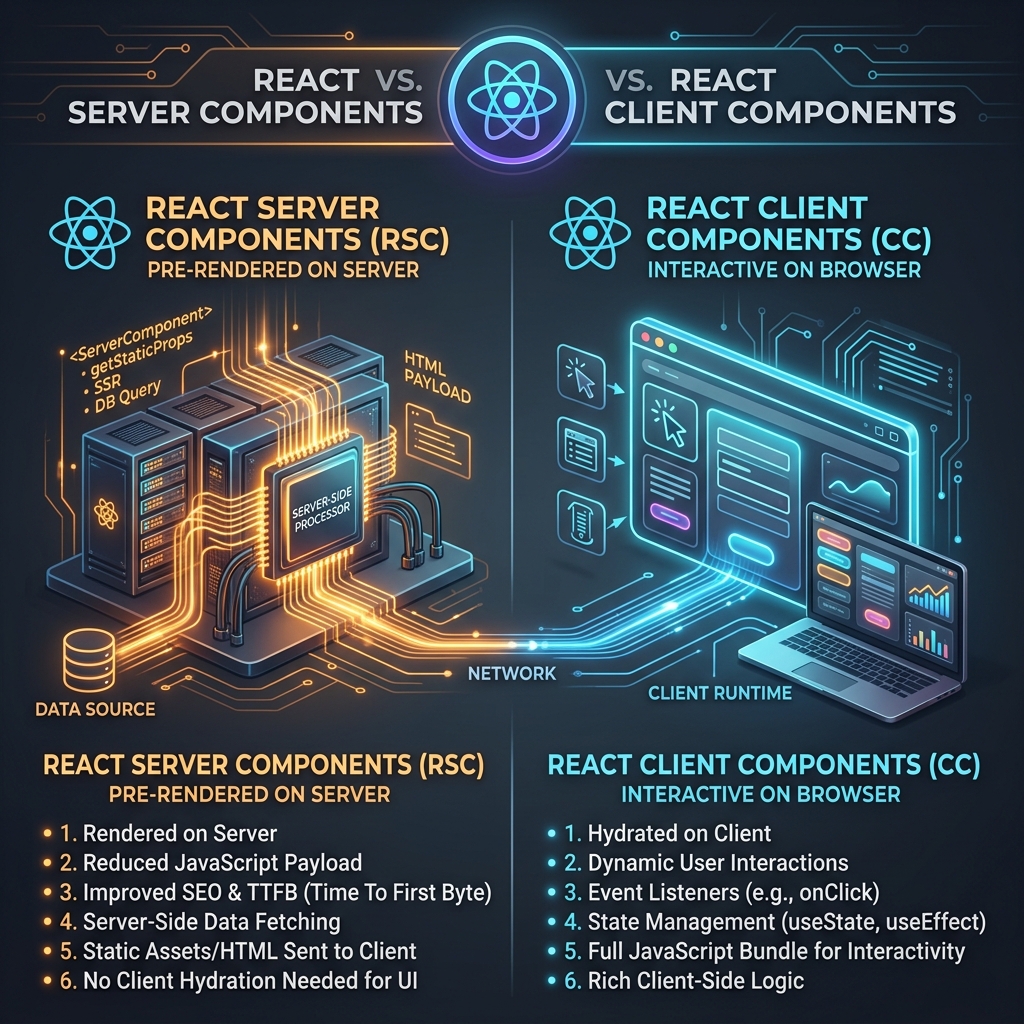
- Server-Side Rendering (SSR) / Static Site Generation (SSG): Next.js excels here, providing fast initial content delivery, which is beneficial for screen readers and users on slow connections.
- Efficient Database Queries: Slow database queries (e.g., in a Laravel/MySQL application) can lead to sluggish server responses, impacting perceived performance. Optimize your eloquent queries, use indexing, and consider caching strategies.
These performance optimizations, while not directly WCAG criteria, broadly support the "Understandable" and "Operable" principles by making the application more responsive and predictable.
Key Takeaways
Building accessible web applications is an ongoing journey, not a destination. By integrating WCAG 2.2 guidelines into your development process from the outset, you not only comply with legal requirements but also open your application to a wider, more diverse audience.
- Embrace WCAG 2.2 as a standard: Understand its principles (POUR) and the new success criteria, especially concerning touch targets and cognitive accessibility.
- Prioritize Semantic HTML: It's the most effective and fundamental accessibility tool.
- Leverage ARIA Responsibly: Use ARIA attributes to supplement, not replace, semantic HTML when building complex UI components.
- Backend's Role: Ensure your backend supports accessibility through robust validation, clear error messages, and features like redundant entry prevention.
- Combine Automated and Manual Testing: Automated tools catch low-hanging fruit, but manual audits with screen readers are essential for comprehensive coverage.
- Integrate A11y into CI/CD: Make accessibility checks a part of your regular development workflow to catch issues early.
- Performance is A11y: A fast, responsive application is inherently more accessible.
Making the web accessible is a shared responsibility. As developers, we have the skills and the platforms to make a significant impact. Let's build a web that truly works for everyone.
FAQ: Frequently Asked Questions about WCAG 2.2 and Web Accessibility
Q1: What is the primary difference between WCAG 2.1 and WCAG 2.2?
A1: WCAG 2.2 builds upon 2.1 by adding nine new success criteria, primarily focusing on improving accessibility for users with cognitive and learning disabilities, users with low vision, and users experiencing mobile device limitations. Key additions include criteria for dragging movements, target size (minimum), redundant entry, and accessible authentication (minimum).
Q2: Is WCAG 2.2 legally mandated?
A2: While WCAG itself is a set of guidelines, many national and international laws and policies (e.g., Section 508 in the US, EN 301 549 in the EU, AODA in Ontario, Canada) either directly reference or require compliance with WCAG. As of early 2026, many jurisdictions are updating their legal requirements to