Passkeys vs Passwords: The Complete Guide to Passwordless Authentication in 2026
The year is 2026, and if you're still relying solely on passwords for user authentication, you're not just behind the curve – you're actively compromising your users' security and your application's integrity. For decades, passwords have been the digital gatekeepers, a necessary evil fraught with vulnerabilities: phishing attacks, data breaches, credential stuffing, and the perennial "forgot my password" nightmare. As a senior full-stack developer with over a decade of hands-on experience building secure, scalable applications, I've witnessed firsthand the escalating costs and complexities associated with traditional password management.
The industry has been clamoring for a robust alternative, and finally, it's here: passkeys authentication 2026 is not just a buzzword; it's the paradigm shift we've been waiting for. This isn't merely about convenience; it's about fundamentally rethinking how users prove their identity in a way that is phishing-resistant, cryptographically secure, and remarkably user-friendly. From major tech giants like Apple, Google, and Microsoft to burgeoning startups, the adoption of passkeys is accelerating, promising a future where the password, as we know it, becomes a relic of the past.
In this comprehensive guide, we'll dive deep into the world of passkeys, exploring their underlying technology, practical implementation strategies, and the undeniable advantages they offer over traditional passwords. We'll demystify WebAuthn and FIDO2 authentication, provide actionable code examples for modern web stacks, and equip you with the knowledge to lead your projects confidently into the passwordless future. Whether you're a seasoned architect or a developer just starting your journey, understanding passkeys is no longer optional – it's an essential skill for building secure applications in 2026 and beyond.
The Inevitable Shift: Why Passwords Are Failing in 2026
Despite decades of security enhancements, multi-factor authentication (MFA), and user education, passwords remain the weakest link in the security chain. The human element, combined with inherent design flaws, makes them a constant target for malicious actors.
The Persistent Perils of Password-Based Authentication
The statistics for password-related breaches continue to be alarming. Recent reports indicate that over 80% of data breaches still involve compromised credentials. Phishing attacks, which often target passwords, are more sophisticated than ever, bypassing traditional MFA methods that rely on one-time passcodes (OTPs) sent via SMS or email. Users are fatigued, often reusing weak passwords across multiple services, creating a domino effect when one service is breached.
Consider these sobering facts for 2025-2026:
- A major cybersecurity firm projects that by the end of 2026, the average cost of a data breach will exceed $5 million, with compromised credentials being the primary initial attack vector in nearly 70% of cases.
- User experience suffers significantly due to password resets, complex password policies, and the constant fear of account takeover. This friction can lead to abandonment and reduced engagement.
Introducing Passkeys: The Secure, User-Friendly Alternative
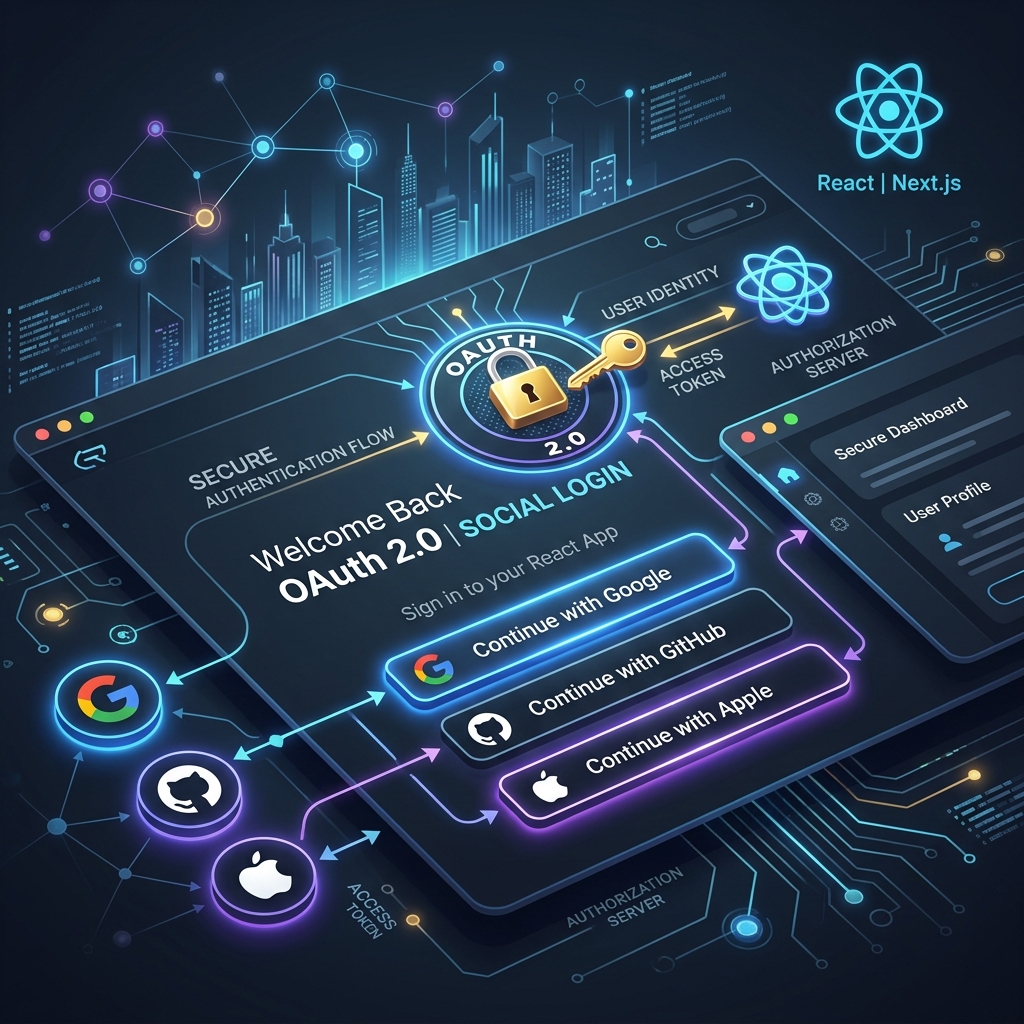
Passkeys represent a revolutionary approach to passwordless login. At their core, passkeys are cryptographic credentials that allow users to sign in to websites and applications using a simple gesture like a fingerprint scan, facial recognition, or a PIN. Unlike passwords, passkeys are never shared with the server. Instead, a unique cryptographic key pair is generated: a public key stored on the server and a private key securely stored on the user's device (or in a secure, synced credential manager).
This fundamental difference makes passkeys inherently phishing-resistant. Even if a user attempts to sign in to a malicious site, their device will refuse to use the passkey because the origin doesn't match the one it was registered with. This robust security model, built on the WebAuthn standard and FIDO2 authentication protocols, delivers a user experience that is both seamless and significantly more secure than any password-based system.
Understanding the Core Technology: WebAuthn, FIDO2, and Cryptography
To effectively implement passkeys authentication 2026, it's crucial to grasp the underlying standards and cryptographic principles that make them work. This isn't just magic; it's well-defined, open-source technology.
WebAuthn and FIDO2: The Foundation of Passkeys
Passkeys are built upon the FIDO Alliance's FIDO2 specifications, which include the Client-to-Authenticator Protocol (CTAP) and the Web Authentication API (WebAuthn).
- FIDO2: This is a set of open standards that enables users to leverage common devices to authenticate to online services in both mobile and desktop environments. It's designed to be highly secure and user-friendly.
- WebAuthn: This is a W3C standard API that allows web applications to integrate FIDO2 authentication directly into browsers. It enables browsers to communicate with authenticators (like biometric sensors, security keys, or platform authenticators) to create and use passkeys.
When a user registers a passkey, their device (the authenticator) generates a unique public/private key pair for that specific website. The public key is sent to the server for storage, while the private key remains securely on the device. During login, the website challenges the user's device, which then uses the private key to sign the challenge, proving the user's identity without ever exposing the private key or a password. This process is detailed in the official WebAuthn specification W3C Web Authentication API.
Asymmetric Cryptography in Action
The security of passkeys hinges on asymmetric (public-key) cryptography.
1. Registration:
- The user's device generates a unique public/private key pair.
- The public key is sent to the server and stored, linked to the user's account.
- The private key is stored securely on the user's device (e.g., in a Trusted Platform Module (TPM), Secure Enclave, or a secure credential manager).
2. Authentication:
- The server sends a cryptographic challenge (a random string of data) to the user's device.
- The device uses its private key to sign this challenge.
- The signed challenge is sent back to the server.
- The server uses the stored public key to verify the signature. If it matches, the user is authenticated.
This mechanism ensures that even if a malicious actor intercepts the signed challenge, they cannot replay it or derive the private key. The private key never leaves the secure environment of the user's device, making it immune to server-side breaches and phishing.
Practical Implementation: Integrating Passkeys into Your Stack
Migrating to passkeys authentication 2026 might seem daunting, but modern frameworks and libraries are making it increasingly accessible. As a full-stack developer, I've found that a phased approach, starting with a robust backend and integrating with frontend libraries, yields the best results.
Backend Implementation with PHP (Laravel Example)
On the backend, you'll need to handle the storage of public keys and manage the WebAuthn challenge-response flow. Libraries like web-auth/webauthn-lib for PHP simplify this significantly.
Let's look at a simplified Laravel example for registering a passkey:
// app/Http/Controllers/PasskeyController.php

namespace App\Http\Controllers;

use Illuminate\Http\Request;
use Webauthn\Server;
use Webauthn\PublicKeyCredentialCreationOptions;
use Webauthn\PublicKeyCredentialSource;
use Webauthn\AuthenticatorSelectionCriteria;
use Webauthn\AttestationConveyancePreference;
use Webauthn\PublicKeyCredentialParameters;
use Webauthn\PublicKeyCredentialUserEntity;
use Webauthn\PublicKeyCredentialRpEntity;
use Webauthn\AuthenticatorAttestationResponse;
use Webauthn\AuthenticatorSelectionCriteria\AttachmentMode;
use Webauthn\PublicKeyCredentialCreationOptions\AttestationConveyancePreference as Attestation;

class PasskeyController extends Controller
{
    private $webauthnServer;

    public function __construct(Server $webauthnServer)
    {
        $this->webauthnServer = $webauthnServer;
    }

    public function startRegistration(Request $request)
    {
        $user = $request->user(); // Assuming authenticated user

        $rpEntity = new PublicKeyCredentialRpEntity(config('app.name'), config('app.url'));
        $userEntity = new PublicKeyCredentialUserEntity($user->email, $user->id, $user->name);

        $credentialCreationOptions = PublicKeyCredentialCreationOptions::create(
            $rpEntity,
            $userEntity,
            random_bytes(32) // Challenge
        )
        ->setPubKeyCredParams([
            PublicKeyCredentialParameters::create('public-key', -7), // ES256
            PublicKeyCredentialParameters::create('public-key', -257), // RS256
        ])
        ->setAuthenticatorSelection(AuthenticatorSelectionCriteria::create()
            ->setAuthenticatorAttachment(AttachmentMode::CROSS_PLATFORM)
            ->setUserVerification(AuthenticatorSelectionCriteria::USER_VERIFICATION_PREFERRED)
        )
        ->setAttestation(Attestation::DIRECT);

        // Store the challenge in session for verification later
        session(['webauthn_challenge' => base64_encode($credentialCreationOptions->getChallenge())]);

        return response()->json($credentialCreationOptions);
    }

    public function finishRegistration(Request $request)
    {
        $user = $request->user();
        $challenge = base64_decode(session('webauthn_challenge'));

        try {
            $publicKeyCredential = $this->webauthnServer->loadAndCheckAttestationResponse(
                json_encode($request->all()),
                $challenge,
                [], // Relying Party IDs
                true // User verification required
            );

            // Store the credential (PublicKeyCredentialSource)
            // This would typically be saved to a database table like `user_passkeys`
            $user->passkeys()->create([
                'credential_id' => base64_encode($publicKeyCredential->getCredentialId()),
                'public_key' => base64_encode($publicKeyCredential->getPublicKeyCredentialDescriptor()->getPublicKey()),
                'counter' => $publicKeyCredential->getCounter(),
                // ... other metadata
            ]);

            session()->forget('webauthn_challenge');
            return response()->json(['message' => 'Passkey registered successfully!']);

        } catch (\Throwable $e) {
            // Handle errors (e.g., invalid challenge, attestation failed)
            return response()->json(['error' => $e->getMessage()], 400);
        }
    }
}
This snippet demonstrates the two-step process: initiating the registration with a challenge and then verifying the client's response. You'd need a passkeys relationship on your User model to store PublicKeyCredentialSource objects. For a deeper dive into Laravel and WebAuthn, check out the Webauthn-lib documentation.
Frontend Integration with Next.js/React
On the frontend, you'll use the browser's native WebAuthn API (navigator.credentials.create for registration, navigator.credentials.get for authentication). Libraries like simplewebauthn simplify this interaction.
// components/PasskeyRegistration.jsx (React/Next.js)

import React, { useState } from 'react';
import { startRegistration } from '@simplewebauthn/browser'; // npm install @simplewebauthn/browser

const PasskeyRegistration = () => {
    const [status, setStatus] = useState('');

    const registerPasskey = async () => {
        setStatus('Initiating passkey registration...');
        try {
            // 1. Request options from your backend
            const resp = await fetch('/api/passkeys/register/start', { method: 'POST' });
            const attestationOptions = await resp.json();

            // 2. Pass options to browser's WebAuthn API
            const attestation = await startRegistration(attestationOptions);

            // 3. Send result back to your backend for verification and storage
            const verificationResp = await fetch('/api/passkeys/register/finish', {
                method: 'POST',
                headers: { 'Content-Type': 'application/json' },
                body: JSON.stringify(attestation),
            });

            if (verificationResp.ok) {
                setStatus('Passkey registered successfully!');
            } else {
                const errorData = await verificationResp.json();
                setStatus(`Registration failed: ${errorData.error}`);
            }
        } catch (error) {
            console.error('Passkey registration error:', error);
            setStatus(`Registration failed: ${error.message}`);
        }
    };

    return (
        <div>
            <h3>Register a Passkey</h3>
            <button onClick={registerPasskey}>Register New Passkey</button>
            <p>{status}</p>
        </div>
    );
};

export default PasskeyRegistration;
This React component demonstrates the client-side flow. The startRegistration function from @simplewebauthn/browser handles the complex browser-authenticator interaction, abstracting away the low-level WebAuthn API calls. For more details on client-side integration, refer to the SimpleWebAuthn documentation.
Database Schema for Passkeys (MySQL Example)
You'll need a table to store the public key credentials associated with each user.
-- MySQL schema for user_passkeys table

CREATE TABLE `user_passkeys` (
    `id`             BIGINT UNSIGNED NOT NULL AUTO_INCREMENT PRIMARY KEY,
    `user_id`        BIGINT UNSIGNED NOT NULL,
    `credential_id`  VARBINARY(255) NOT NULL UNIQUE, -- The ID of the credential
    `public_key`     VARBINARY(2048) NOT NULL,       -- The raw public key bytes
    `counter`        BIGINT UNSIGNED NOT NULL DEFAULT 0, -- Signature counter
    `transports`     VARCHAR(255) NULL,              -- e.g., "usb", "nfc", "ble", "internal"
    `aaguid`         VARBINARY(16) NULL,             -- Authenticator Attestation GUID
    `created_at`     TIMESTAMP NULL,
    `updated_at`     TIMESTAMP NULL,
    INDEX `user_passkeys_user_id_foreign` (`user_id`),
    CONSTRAINT `user_passkeys_user_id_foreign` FOREIGN KEY (`user_id`) REFERENCES `users` (`id`) ON DELETE CASCADE
) ENGINE=InnoDB DEFAULT CHARSET=utf8mb4 COLLATE=utf8mb4_unicode_ci;
This schema provides the necessary fields to store PublicKeyCredentialSource objects. The credential_id is crucial for identifying the specific passkey during authentication.
The Future is Passwordless: Benefits and Considerations
Adopting passkeys authentication 2026 offers a multitude of benefits, but it also comes with considerations regarding user experience and fallback mechanisms.
Unlocking Unprecedented Security and UX
| Feature | Traditional Passwords | Passkeys (FIDO2/WebAuthn) |
| Security | Prone to phishing, credential stuffing, data breaches | Phishing-resistant, cryptographically secure, no shared secrets |
| User Experience | Complex, frequent resets, password manager reliance | Seamless, biometric (fingerprint/face), PIN-based, cross-device sync |
| Storage | Stored on server (hashed), vulnerable to breaches | Private key on device/synced manager, public key on server |
| MFA | Often a separate step (TOTP, SMS) | Inherently multi-factor (something you have + something you are/know) |
| Recovery | Email/SMS recovery (vulnerable) | Device backup/sync, platform-specific recovery |
The shift from "something you know" (password) to "something you have" (device) combined with "something you are" (biometrics) or "something you know" (device PIN) inherently provides a stronger, multi-factor authentication experience without additional steps. Users love the convenience; businesses appreciate the reduced support costs associated with password resets and account recovery. My team has seen a significant reduction in support tickets related to login issues after implementing passwordless login for internal tools. You can see some of our successful implementations in our projects section.
Strategies for Phased Rollout and User Adoption
Migrating your entire user base to passkeys overnight is unrealistic. A phased rollout is essential:
1. Introduce Passkeys as an Option: Allow users to register a passkey as an alternative login method, alongside their existing password.
2. Educate Users: Provide clear, concise explanations of what passkeys are and their benefits. Emphasize improved security and ease of use.
3. Encourage Adoption: Offer incentives or prominent UI nudges for users to switch.
4. Gradual Deprecation: Once a significant portion of your user base is using passkeys, you can consider making them the primary login method, potentially deprecating password-only logins for new accounts.
It's also crucial to consider account recovery strategies. While passkeys are robust, devices can be lost or damaged. Implementing platform-specific recovery options (like Apple's iCloud Keychain recovery) or offering alternative, secure recovery flows (e.g., email-based recovery with strong MFA) is paramount.
The Developer's Role in a Passwordless World
As developers, our role evolves. We transition from managing password hashes and reset flows to orchestrating cryptographic challenges and ensuring seamless