How to Build a Lead Management System for Education Agencies
The global education market is a fiercely competitive landscape, projected to reach an eye-watering \$10 trillion by 2030, with digital education spending alone expected to hit \$404 billion by 2025. For education agencies, study abroad consultants, and even university admissions departments, the challenge isn't just attracting prospective students; it's efficiently managing that influx of interest, nurturing leads, and ultimately converting them into enrolled students. Without a robust lead management system education, agencies often find themselves drowning in spreadsheets, missing follow-ups, and losing valuable prospective students to competitors.
Imagine the frustration: a promising inquiry from a student in a high-growth market like India or Vietnam gets lost in a jumbled inbox, or a crucial follow-up call is missed due to a disorganized manual process. This isn't just about inefficiency; it's about lost revenue, damaged reputation, and a failure to capitalize on the massive demand for international education. Companies like ApplyBoard, Edvoy, and AECC Global didn't achieve their scale by relying on archaic methods; they invested heavily in sophisticated systems to streamline their education lead generation and conversion funnels. This post will delve into the technical intricacies and strategic considerations for building a bespoke, highly effective lead management system tailored specifically for the unique demands of the education sector.
As a senior full-stack developer who has spent years crafting EdTech platforms, student CRMs, and admission management systems, I've seen firsthand the transformative power of a well-architected lead management solution. This isn't just about throwing together a few forms and a database; it requires a deep understanding of the student journey, agency workflows, and the underlying technologies that can scale with growth. We'll explore the core components, architectural choices, and implementation strategies necessary to build a system that not only tracks leads but actively drives conversions and provides actionable insights.
Understanding the Core Components of an Education Lead Management System
A successful lead management system education extends far beyond simple contact storage. It's an integrated platform designed to capture, track, qualify, nurture, and convert prospective students. For education agencies, this means handling diverse student profiles, program interests, document requirements, and communication preferences across multiple channels.
Lead Capture and Ingestion
The first step in any lead management system is getting leads into the system. For education agencies, leads can come from numerous sources:
- Website Forms: Inquiry forms for specific programs, scholarship applications, or general contact.
- Landing Pages: Dedicated pages for marketing campaigns (e.g., "Study in Canada" campaigns).
- Third-Party Portals: Integrations with platforms like Hotcourses, Studyportals, or even university application systems.
- Events & Fairs: Manual entry or bulk uploads from education fairs and webinars.
- Social Media: Direct messages or form submissions from platforms like Facebook, Instagram, or LinkedIn.
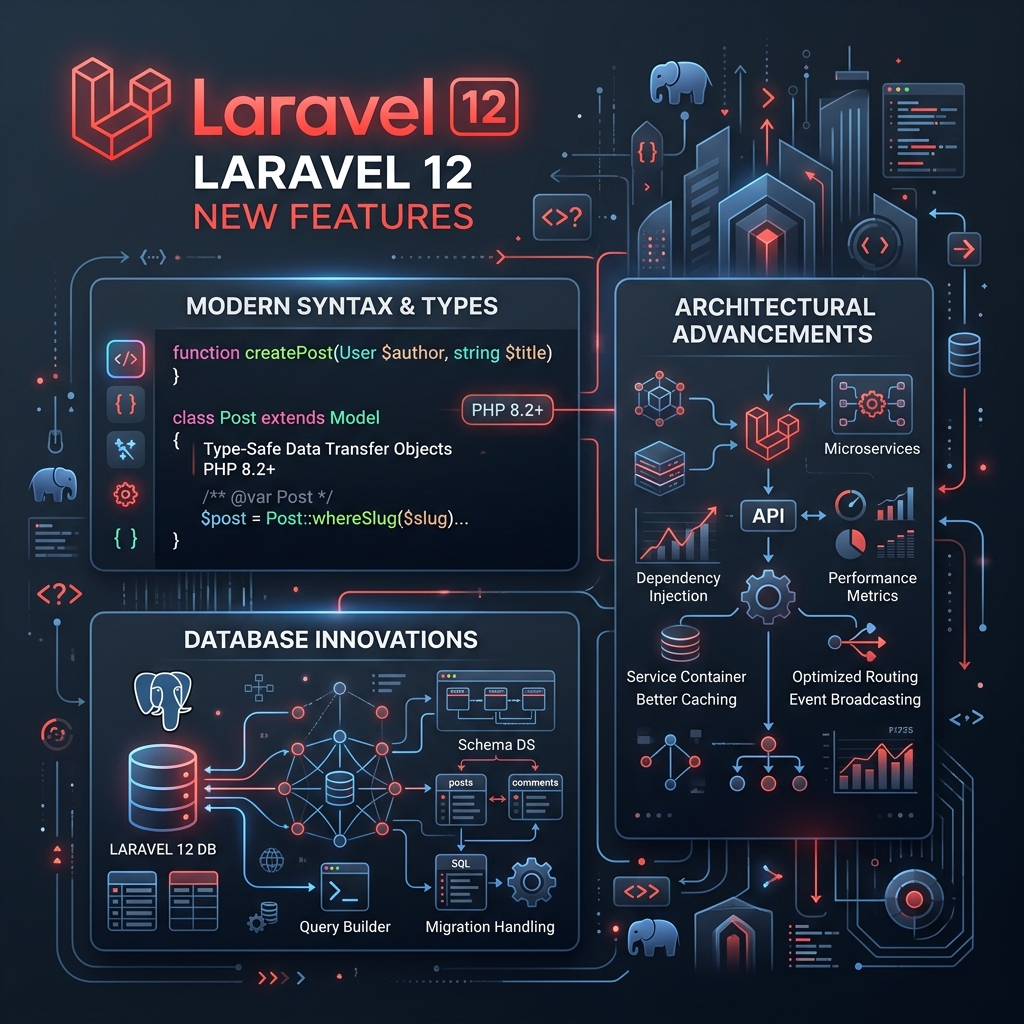
For robust lead capture, we often employ a microservices approach or a dedicated ingestion layer. Using a framework like Laravel for the backend, we can define clear API endpoints for various lead sources.
// Example: Laravel API endpoint for a lead submission
// app/Http/Controllers/LeadController.php

namespace App\Http\Controllers;

use Illuminate\Http\Request;
use App\Models\Lead;
use Illuminate\Support\Facades\Validator;

class LeadController extends Controller
{
    public function store(Request $request)
    {
        $validator = Validator::make($request->all(), [
            'first_name' => 'required|string|max:255',
            'last_name' => 'required|string|max:255',
            'email' => 'required|email|unique:leads,email|max:255',
            'phone' => 'nullable|string|max:20',
            'country_of_residence' => 'required|string|max:255',
            'program_of_interest' => 'nullable|string|max:255',
            'source' => 'required|string|max:255', // e.g., 'website_form', 'facebook_ad'
        ]);

        if ($validator->fails()) {
            return response()->json(['errors' => $validator->errors()], 422);
        }

        $lead = Lead::create($request->all());

        // Dispatch events for lead assignment, notifications, etc.
        // event(new LeadCreated($lead));

        return response()->json(['message' => 'Lead captured successfully', 'lead' => $lead], 201);
    }
}
This API endpoint can be consumed by a Next.js or React frontend form, a webhook from a third-party service, or even a Python script for batch imports.
Lead Qualification and Scoring
Not all leads are created equal. A student inquiring about a full scholarship for Harvard is different from someone vaguely browsing undergraduate programs. Student lead tracking needs to incorporate qualification criteria. This involves:
- Initial Data Validation: Ensuring essential fields are complete.
- Enrichment: Using APIs (e.g., Clearbit, Hunter.io) to gather additional data like company, role, or social profiles, though less relevant for student leads, it can be adapted for institution-level leads. For students, this might involve integrating with education-specific data providers or internal academic record systems.
- Scoring: Assigning a numerical score based on pre-defined criteria (e.g., academic background, financial capacity, preferred study destination, urgency). A lead showing high intent (e.g., "ready to apply within 3 months") coupled with strong academic credentials should receive a higher score.
A simple lead scoring model can be implemented as a background job or an event listener in Laravel.
// Example: Simplified Lead Scoring Logic (can be expanded with more rules)
// app/Services/LeadScoringService.php

namespace App\Services;

use App\Models\Lead;

class LeadScoringService
{
    public function scoreLead(Lead $lead)
    {
        $score = 0;

        // Basic demographic/interest scoring
        if ($lead->country_of_residence === 'India' || $lead->country_of_residence === 'China') {
            $score += 20; // High-demand markets
        }
        if (str_contains(strtolower($lead->program_of_interest), 'master')) {
            $score += 15; // Often higher intent
        }

        // Intent-based scoring (requires more data points, e.g., form selections)
        if ($lead->has_specified_intake_year) { // Assuming a field exists
            $score += 10;
        }
        if ($lead->has_uploaded_documents) { // Assuming a flag
            $score += 25; // Strong indicator
        }

        // Update the lead's score
        $lead->score = $score;
        $lead->save();

        return $score;
    }
}
Lead Nurturing and Communication
Once qualified, leads need to be nurtured. This involves targeted communication to keep them engaged, provide valuable information, and guide them through the application process.
- Automated Email Sequences: Sending welcome emails, program information, scholarship alerts, and application deadline reminders.
- SMS/WhatsApp Integration: For quick updates and reminders, especially in regions where these platforms are primary communication channels.
- Personalized Communication: Enabling counselors to send tailored messages based on student profiles.
- Document Collection: A secure portal for students to upload transcripts, recommendation letters, and other application documents.
For email automation, integrating with services like SendGrid, Mailgun, or AWS SES is crucial. For SMS/WhatsApp, Twilio is a popular choice. The frontend, built with React or Next.js, would provide the UI for counselors to manage these communications and view student activity timelines.
Architectural Considerations and Technology Stack
Building an agency lead management system requires a robust and scalable architecture. My preferred stack for such systems typically involves a combination of modern, proven technologies.
Backend: Laravel (PHP)
Laravel, a PHP framework, is an excellent choice for the backend due to its extensive ecosystem, developer-friendliness, and features like Eloquent ORM, built-in authentication, queues, and task scheduling. It provides a solid foundation for managing complex business logic, database interactions, and API endpoints.
// Example: Lead model with relationships
// app/Models/Lead.php

namespace App\Models;

use Illuminate\Database\Eloquent\Factories\HasFactory;
use Illuminate\Database\Eloquent\Model;

class Lead extends Model
{
    use HasFactory;

    protected $fillable = [
        'first_name', 'last_name', 'email', 'phone', 'country_of_residence',
        'program_of_interest', 'source', 'status', 'score', 'assigned_to',
    ];

    public function counselor()
    {
        return $this->belongsTo(User::class, 'assigned_to');
    }

    public function notes()
    {
        return $this->hasMany(LeadNote::class);
    }

    public function activityLogs()
    {
        return $this->hasMany(LeadActivityLog::class);
    }
}
This model provides a clear structure for lead data and defines relationships to counselors, notes, and activity logs, crucial for a comprehensive CRM.
Frontend: Next.js/React
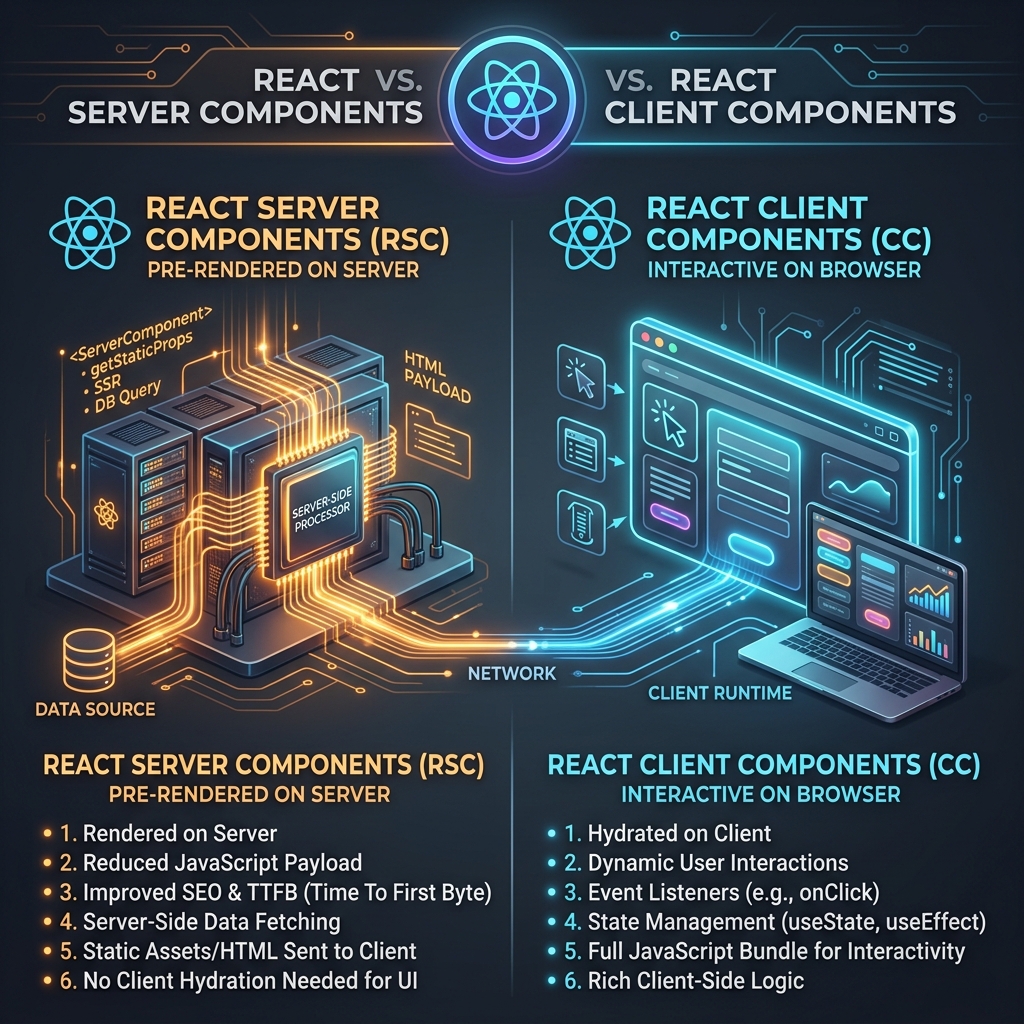
For the frontend, Next.js (built on React) offers an unparalleled developer experience, excellent performance, and SEO benefits. It allows for server-side rendering (SSR) or static site generation (SSG) for public-facing components (like lead capture forms) and robust client-side rendering for the internal agency dashboard.
// Example: React component for a lead list item
// components/LeadListItem.jsx

import React from 'react';
import Link from 'next/link';

const LeadListItem = ({ lead }) => {
  return (
    <div className="border p-4 mb-2 rounded-md shadow-sm flex justify-between items-center">
      <div>
        <h3 className="text-lg font-semibold">
          <Link href={`/leads/${lead.id}`} className="text-blue-600 hover:underline">
            {lead.first_name} {lead.last_name}
          </Link>
        </h3>
        <p className="text-gray-600">{lead.email} | {lead.country_of_residence}</p>
        <p className="text-sm text-gray-500">Status: <span className={`font-medium ${lead.status === 'New' ? 'text-green-600' : 'text-orange-600'}`}>{lead.status}</span> | Score: {lead.score}</p>
      </div>
      <div className="text-right">
        <p className="text-sm text-gray-700">Assigned: {lead.counselor ? lead.counselor.name : 'Unassigned'}</p>
        <button className="bg-indigo-500 hover:bg-indigo-600 text-white text-sm py-1 px-3 rounded mt-2">
          View Details
        </button>
      </div>
    </div>
  );
};

export default LeadListItem;
This snippet shows a basic React component for displaying a lead, demonstrating data binding and navigation.
Database: MySQL/PostgreSQL
Relational databases like MySQL or PostgreSQL are ideal for storing structured lead data, user profiles, and activity logs. Their ACID compliance ensures data integrity, which is paramount in a system handling sensitive student information. For scalability, consider cloud-managed database services like AWS RDS or Google Cloud SQL.
Cloud Infrastructure: AWS/GCP
Deploying on cloud platforms like AWS or Google Cloud Platform provides scalability, reliability, and a vast array of services.
- Compute: AWS EC2 instances or GCP Compute Engine for Laravel application servers.
- Database: AWS RDS or GCP Cloud SQL.
- Storage: AWS S3 or GCP Cloud Storage for securely storing student documents.
- Queues: AWS SQS or GCP Cloud Tasks for managing background jobs (email sending, lead scoring, bulk imports).
- Monitoring: AWS CloudWatch or GCP Stackdriver for system health and performance.
This cloud-native approach ensures that as your agency grows and handles more leads, your system can scale seamlessly without significant re-architecture.
Key Features for an Advanced Education Lead Management System
Beyond the core components, an advanced system for education lead generation needs specific features to truly empower agencies.
Counselor Dashboard and Workflow Automation
A centralized dashboard is critical for counselors. It should provide:
- Lead Pipeline View: A Kanban-style board showing leads at different stages (New, Qualified, Contacted, Applied, Accepted, Enrolled, Lost).
- Task Management: Reminders for follow-ups, document requests, and application deadlines.
- Communication Hub: Integrated email, SMS, and possibly WhatsApp for direct communication with students.
- Performance Metrics: Individual counselor performance, conversion rates, and lead source effectiveness.
Automation is key here. When a lead changes status (e.g., from 'Qualified' to 'Applied'), the system should automatically trigger actions like sending a congratulatory email, assigning a new task to collect application fees, or updating the lead's profile.
Student Portal and Document Management
A secure, intuitive student portal is a game-changer. It allows students to:
- View Application Status: Track their progress in real-time.
- Upload Documents: Securely submit transcripts, passports, visa documents (e.g., using signed S3 URLs for secure uploads).
- Communicate: Direct messaging with their assigned counselor.
- Access Resources: View program details, university profiles, and visa guidance.
This self-service approach reduces the administrative burden on counselors and improves the student experience significantly.
Analytics and Reporting
Data-driven decisions are paramount. The system should provide comprehensive analytics:
- Lead Source Performance: Which channels generate the highest quality leads?
- Conversion Funnel Analysis: Identifying bottlenecks in the student journey.
- Counselor Performance: Tracking individual and team conversion rates, response times.
- Program/University Performance: Which programs or universities are most popular and have the highest acceptance rates?
Integrating with tools like Google Analytics (for public-facing components), or building custom dashboards with charting libraries (e.g., Chart.js, Recharts on the frontend) can provide these insights. For more advanced analytics, consider integrating with a data warehouse solution like AWS Redshift or Google BigQuery.
Security, Compliance, and Data Privacy
In the EdTech space, handling sensitive student data is a massive responsibility. Compliance with regulations like GDPR, CCPA, and FERPA (for US-based institutions) is non-negotiable.
Data Encryption and Access Control
- Encryption at Rest: All data stored in the database and cloud storage (e.g., S3 buckets for documents) must be encrypted.
- Encryption in Transit: Use HTTPS for all communication between the frontend, backend, and external services.
- Role-Based Access Control (RBAC): Implement granular permissions. A counselor should only see leads assigned to them or within their team, while an administrator has broader access. Laravel's built-in authorization features (gates and policies) are excellent for this.
// Example: Laravel Policy for Lead access
// app/Policies/LeadPolicy.php

namespace App\Policies;

use App\Models\User;
use App\Models\Lead;
use Illuminate\Auth\Access\HandlesAuthorization;

class LeadPolicy
{
    use HandlesAuthorization;

    public function view(User $user, Lead $lead)
    {
        // Admins can view all leads
        if ($user->hasRole('admin')) {
            return true;
        }

        // Counselors can view leads assigned to them
        return $user->id === $lead->assigned_to;
    }

    public function update(User $user, Lead $lead)
    {
        // Only assigned counselor or admin can update
        return $user->id === $lead->assigned_to || $user->hasRole('admin');
    }
}
This policy ensures that only authorized users can view or modify lead records.
Audit Trails and Data Retention
Maintain detailed audit trails of all actions performed on lead records (who did what, when). Define clear data retention policies to comply with privacy regulations and minimize unnecessary data storage. Regularly review and update these policies.
Integration with Existing Systems
Most education agencies already use various tools. A truly effective lead management system shouldn't operate in a silo.
- CRM Integration: If an agency uses Salesforce or HubSpot for general business, the lead management system might push qualified leads into the main CRM.
- ERP Integration: For universities, integration with existing Student Information Systems (SIS) like Banner, PeopleSoft, or Workday is crucial for seamless data flow post-admission.
- Marketing Automation: Connecting with platforms like Mailchimp, ActiveCampaign, or Marketo for more sophisticated email marketing campaigns.
- Payment Gateways: For application fees or tuition deposits.
APIs are the backbone of these integrations. Designing a well-documented and robust API for your lead management system ensures future compatibility and extensibility.
Conclusion and Future Trends
Building a custom lead management system education for education agencies is a significant undertaking, but the benefits far outweigh the investment. It transforms chaotic lead handling into a streamlined, data-driven process, directly impacting conversion rates and agency growth. By leveraging modern technologies like Laravel, React/Next.js, and cloud infrastructure, and focusing on user experience, automation, and robust security, you can create a platform that rivals industry leaders like ApplyBoard and Edvoy.
The future of EdTech lead management will increasingly involve AI for predictive analytics (e.g., predicting lead conversion likelihood), hyper-personalization, and even AI-powered chatbots for initial student queries. Investing in a flexible and scalable architecture now will position your agency to adopt these innovations as they mature.
Key Takeaways
- A custom lead management system is crucial for education agencies to efficiently capture, qualify, nurture, and convert prospective students.
- Core components include robust lead capture, intelligent qualification/scoring, and multi-channel nurturing capabilities.
- A strong technology stack (e.g., Laravel, Next.js/React, MySQL on AWS/GCP) provides scalability, performance, and maintainability.
- Key features include intuitive counselor dashboards, secure student portals, and comprehensive analytics.
- Security, data privacy (GDPR, FERPA), and seamless integration with other EdTech tools are non-negotiable.
- Future trends point towards AI for enhanced personalization and predictive lead management.
FAQ
Q1: What's the typical development timeline for a comprehensive lead management system for an education agency?
A1: A minimum viable product (MVP) with core lead capture, basic tracking, and counselor dashboard could take 3-6 months. A full-featured system with advanced automation, student portal, and extensive integrations would typically range from 9-18 months, depending on the team size and complexity.
Q2: How important is mobile responsiveness for an education lead management system?
A2: Extremely important. Prospective students, especially international ones, often access information and complete forms on their mobile devices. Counselors also benefit from mobile access for quick updates or checking lead status on the go. A responsive design (e.g., using Tailwind CSS with Next.js) is a must-have.
Q3: Can I use an off-the-shelf CRM like Salesforce or HubSpot instead of building a custom system?
A3: While general CRMs are powerful, they often lack the specific workflows, terminology, and integrations unique to the education sector (e.g., managing program preferences, visa documents, intake periods). A custom build allows for tailored processes and a much better student/counselor experience, often proving more cost-effective in the long run for specialized needs.
Q4: What are the biggest challenges in building such a system?
A4: Integrating with diverse third-party education portals and university systems, ensuring robust data security and compliance with global