Creating REST APIs for Education Platforms: Design and Security
The EdTech landscape is booming, projected to reach a staggering \$600 billion by 2027. This growth isn't just about new learning methodologies; it's fundamentally driven by interconnected digital ecosystems. From student CRMs managing admissions for global agencies like ApplyBoard and Edvoy, to sophisticated learning management systems (LMS) and assessment platforms, data needs to flow seamlessly. However, this interconnectedness presents a dual challenge: designing robust, scalable REST APIs that can handle diverse educational data, and ensuring ironclad security to protect sensitive student information. Many EdTech companies struggle with creating APIs that are both flexible enough for rapid feature development and resilient against modern cyber threats.
As a senior full-stack developer who has architected and built several EdTech platforms, I've seen firsthand the complexities involved. The difference between a thriving EdTech product and one that falters often lies in the quality of its underlying APIs. A poorly designed API can lead to integration nightmares, performance bottlenecks, and, most critically, security vulnerabilities that erode user trust and invite regulatory scrutiny. Think about the implications of a data breach involving student academic records or personal identification details – the reputational and financial damage can be catastrophic.
This guide will delve into the practicalities of designing and securing REST APIs specifically for education platforms. We'll explore architectural best practices, discuss critical security considerations, and provide actionable insights drawn from real-world EdTech implementations. Whether you're building a new admission management system, enhancing an existing student portal, or integrating with third-party tools, understanding these principles is paramount for success in the competitive EdTech market.
The Foundation: Understanding REST Principles for EdTech
REST (Representational State Transfer) is an architectural style for networked applications. Its principles of statelessness, client-server separation, cacheability, and a uniform interface make it an ideal choice for the distributed and data-intensive nature of EdTech platforms. When designing a REST API education platform, adherence to these principles ensures scalability and maintainability.
Resource-Oriented Design for Educational Entities
The core of REST is resources. In an EdTech context, these are logical entities like students, courses, enrollments, teachers, grades, applications, or institutions. Each resource should have a clear, unique identifier (URI).
For example:
/api/v1/students(Collection of students)/api/v1/students/{studentId}(Specific student)/api/v1/courses/{courseId}/enrollments(Enrollments for a specific course)
Using plural nouns for collections and singular nouns for specific resources is a common best practice. This semantic approach makes the API intuitive and easier to consume for external integrators, such as those working with student CRMs or university application portals.
Example: Laravel Routing for Student Resource
// routes/api.php
use App\Http\Controllers\StudentController;

Route::prefix('v1')->group(function () {
    Route::apiResource('students', StudentController::class);
    // This will generate routes like:
    // GET      /v1/students          -> index (all students)
    // POST     /v1/students          -> store (create student)
    // GET      /v1/students/{student} -> show (single student)
    // PUT/PATCH /v1/students/{student} -> update (update student)
    // DELETE   /v1/students/{student} -> destroy (delete student)
});
HTTP Methods and Status Codes: Speaking the Web's Language
Leveraging standard HTTP methods (GET, POST, PUT, PATCH, DELETE) correctly is crucial for a predictable API.
| HTTP Method | Operation | EdTech Example |
GET |
Retrieve | Fetch student profile, list courses |
POST |
Create | Register new student, submit application |
PUT |
Replace | Update entire student profile |
PATCH |
Partial Update | Update a student's contact number |
DELETE |
Remove | Remove an enrollment |
Equally important are HTTP status codes. They provide immediate feedback on the request's outcome.
- 2xx Success:
200 OK,201 Created,204 No Content - 4xx Client Errors:
400 Bad Request,401 Unauthorized,403 Forbidden,404 Not Found,422 Unprocessable Entity(for validation errors) - 5xx Server Errors:
500 Internal Server Error
Example: Next.js API Route for Student Creation
// pages/api/v1/students.js
import { createStudent } from '../../../lib/studentService'; // Hypothetical service

export default async function handler(req, res) {
  if (req.method === 'POST') {
    try {
      const studentData = req.body;
      // Basic validation (more robust validation should be done in a service layer)
      if (!studentData.firstName || !studentData.lastName || !studentData.email) {
        return res.status(400).json({ message: 'Missing required fields.' });
      }

      const newStudent = await createStudent(studentData);
      return res.status(201).json(newStudent);
    } catch (error) {
      console.error('Error creating student:', error);
      return res.status(500).json({ message: 'Internal server error.' });
    }
  } else {
    res.setHeader('Allow', ['POST']);
    return res.status(405).end(`Method ${req.method} Not Allowed`);
  }
}
Advanced EdTech API Design Considerations
Beyond the basics, a truly robust REST API education platform requires attention to pagination, filtering, sorting, versioning, and thoughtful error handling. These elements significantly enhance the developer experience and the API's overall utility.
Pagination, Filtering, and Sorting
For large datasets, such as lists of students across an entire university or thousands of course offerings, pagination is essential. Filtering allows clients to retrieve specific subsets of data, and sorting ensures data is presented in a meaningful order.
- Pagination:
GET /api/v1/students?page=2&limit=50(Offset-based)GET /api/v1/students?cursor={last_id}&limit=50(Cursor-based, better for real-time feeds)- Filtering:
GET /api/v1/students?status=active&country=Canada(Filtering students by status and country)GET /api/v1/courses?level=undergraduate&department=ComputerScience- Sorting:
GET /api/v1/students?sort_by=lastName&order=asc
API Versioning and Evolution
APIs evolve. New features are added, data models change, and sometimes, breaking changes are unavoidable. Versioning allows you to introduce new API versions without disrupting existing clients.
Common strategies:
1. URI Versioning: /api/v1/students, /api/v2/students (Most common and easiest to implement)
2. Header Versioning: Accept: application/vnd.myedtech.v1+json
3. Query Parameter Versioning: /api/students?version=1 (Less common, can conflict with other query params)
I generally prefer URI versioning for its clarity and ease of debugging. When building an EdTech system, plan for versioning from day one.
Comprehensive Error Handling
A well-designed API provides clear, consistent error messages. Instead of generic 500 Internal Server Error, provide context.
Example Error Response:
{
  "status": 422,
  "code": "VALIDATION_ERROR",
  "message": "The provided data failed validation.",
  "errors": [
    {
      "field": "email",
      "message": "The email address is already in use."
    },
    {
      "field": "password",
      "message": "Password must be at least 8 characters long."
    }
  ],
  "timestamp": "2024-10-27T14:30:00Z"
}
This structured approach helps clients (e.g., a React frontend or a partner CRM) understand precisely what went wrong and how to correct it.
Education API Security: Protecting Sensitive Student Data
Data breaches in education are increasingly common, with 2023-2024 seeing a significant uptick in attacks targeting student information. Protecting student data API endpoints isn't just good practice; it's a legal and ethical imperative. Compliance with regulations like FERPA (US), GDPR (EU), and local data privacy laws is non-negotiable.
Authentication and Authorization
These are the gatekeepers of your API.
- Authentication: Verifies the identity of the client.
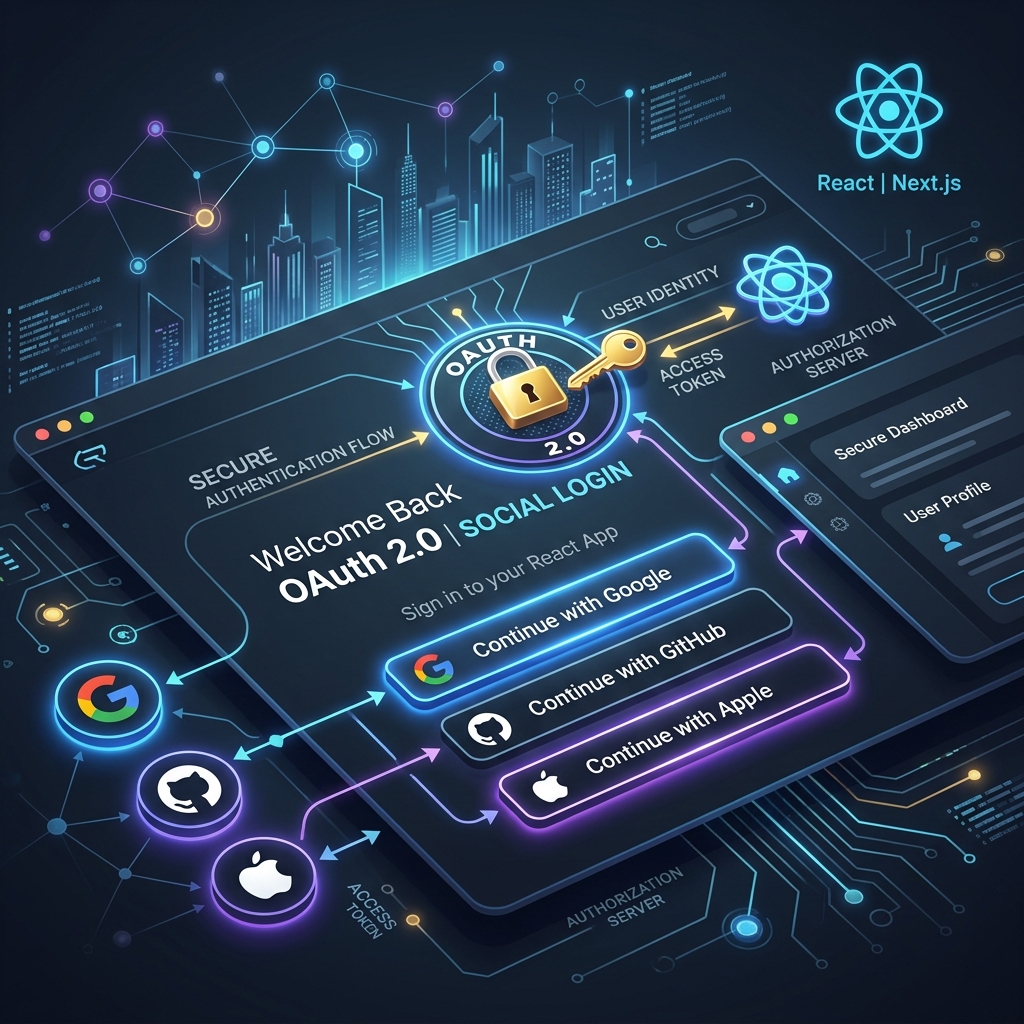
- OAuth 2.0: Industry standard for delegated authorization. Ideal for third-party integrations (e.g., an LMS integrating with a grading system). It allows users to grant specific permissions without sharing their credentials directly.
- JWT (JSON Web Tokens): Commonly used for stateless API authentication. After successful login, the server issues a token that the client includes in subsequent requests. This is excellent for single-page applications (SPAs) like those built with React.
- API Keys: Simpler for machine-to-machine communication but less secure for user-facing applications. Use with caution and implement IP whitelisting.
- Authorization: Determines what an authenticated client is allowed to do.
- Role-Based Access Control (RBAC): Assigns permissions based on user roles (e.g.,
student,teacher,administrator). A student might onlyGETtheir own grades, while a teacher canGETandPOSTgrades for their assigned courses. - Attribute-Based Access Control (ABAC): More granular, considering attributes of the user, resource, and environment. For example, a teacher can only access grades for students in courses they are currently teaching.
Example: JWT Authentication Middleware (Laravel)
// app/Http/Middleware/AuthenticateJWT.php
namespace App\Http\Middleware;

use Closure;
use Illuminate\Http\Request;
use Tymon\JWTAuth\Facades\JWTAuth;
use Tymon\JWTAuth\Exceptions\TokenExpiredException;
use Tymon\JWTAuth\Exceptions\TokenInvalidException;
use Tymon\JWTAuth\Exceptions\JWTException;

class AuthenticateJWT
{
    public function handle(Request $request, Closure $next)
    {
        try {
            $user = JWTAuth::parseToken()->authenticate();
        } catch (TokenExpiredException $e) {
            return response()->json(['error' => 'token_expired'], 401);
        } catch (TokenInvalidException $e) {
            return response()->json(['error' => 'token_invalid'], 401);
        } catch (JWTException $e) {
            return response()->json(['error' => 'token_absent'], 401);
        }

        if (!$user) {
            return response()->json(['error' => 'user_not_found'], 404);
        }

        return $next($request);
    }
}

// In app/Http/Kernel.php, add to api middleware group:
// \App\Http\Middleware\AuthenticateJWT::class,
Data Encryption and Transmission Security
All communication with your API must be encrypted.
- HTTPS (TLS/SSL): Non-negotiable. Always use HTTPS to encrypt data in transit. This prevents eavesdropping and tampering.
- Data at Rest Encryption: Sensitive data in your database (e.g., student IDs, financial information) should be encrypted. Many modern databases (like MySQL) offer features for transparent data encryption, or you can implement application-level encryption for highly sensitive fields.
Input Validation and Sanitization
SQL injection, Cross-Site Scripting (XSS), and other injection attacks are common threats.
- Strict Input Validation: Validate all incoming data on the server-side. Ensure data types, formats, lengths, and expected values are correct. For example, an email field must conform to an email regex.
- Sanitization: Cleanse user input to remove potentially malicious scripts or code. Never trust client-side validation alone. Libraries like HTML Purifier for PHP or
dompurifyfor JavaScript are invaluable.
Rate Limiting and Throttling
Protect your API from abuse, brute-force attacks, and denial-of-service (DoS) attempts.
- Rate Limiting: Restrict the number of requests a client can make within a given time frame (e.g., 100 requests per minute per IP address).
- Throttling: Limit the rate at which an API can be called. This is crucial for resource-intensive operations or to ensure fair usage among all clients.
Example: Laravel Rate Limiting
// routes/api.php
use Illuminate\Support\Facades\Route;

Route::middleware('auth:api', 'throttle:60,1')->group(function () {
    Route::get('/user', function (Request $request) {
        return $request->user();
    });
});
// 'throttle:60,1' means 60 requests per minute
Monitoring, Logging, and Auditing for EdTech Platforms
Even with the best security measures, incidents can occur. Robust monitoring, logging, and auditing are critical for detecting, investigating, and responding to security events. This is especially true for platforms like AECC Global, which handle vast amounts of international student data.
Centralized Logging and Alerting
- Log Everything Relevant: Record API requests, responses, errors, authentication attempts (success and failure), data modifications, and access to sensitive resources.
- Centralized Log Management: Use tools like ELK Stack (Elasticsearch, Logstash, Kibana), Splunk, or cloud services (AWS CloudWatch, Azure Monitor) to aggregate logs from all your services.
- Proactive Alerting: Set up alerts for suspicious activities, such as:
- High volume of failed login attempts from a single IP.
- Unusual data access patterns (e.g., a student trying to access another student's profile).
- Spikes in error rates.
API Gateway and Analytics
An API Gateway (e.g., AWS API Gateway, Nginx, Kong) can provide a single entry point for all your APIs, offering benefits like:
- Centralized Authentication/Authorization: Apply security policies consistently.
- Rate Limiting: Enforce limits before requests even hit your backend services.
- Caching: Improve performance by caching responses.
- Monitoring and Analytics: Gain insights into API usage, performance, and errors.
Regular Security Audits and Penetration Testing
- Code Reviews: Integrate security checks into your development workflow.
- Vulnerability Scans: Regularly scan your code and infrastructure for known vulnerabilities.
- Penetration Testing: Hire ethical hackers to simulate real-world attacks. This is invaluable for uncovering weaknesses that automated tools might miss. Consider engaging third-party security firms specializing in EdTech to ensure compliance and robust protection of your student data API.
Key Takeaways
- Resource-Oriented Design: Create clear, intuitive URIs for educational entities like students, courses, and enrollments.
- Standard HTTP Methods & Status Codes: Use
GET,POST,PUT,PATCH,DELETEcorrectly and provide meaningful HTTP status codes for responses. - Pagination, Filtering, Sorting: Implement these for efficient data retrieval in large EdTech datasets.
- API Versioning: Plan for API evolution using URI versioning (e.g.,
/v1/,/v2/). - Comprehensive Error Handling: Provide structured, informative error messages to aid client development.
- Robust Authentication & Authorization: Utilize OAuth 2.0, JWTs, and RBAC/ABAC to secure access to REST API education platform resources.
- HTTPS is Mandatory: Encrypt all data in transit. Consider data-at-rest encryption for sensitive information.
- Rigorous Input Validation: Sanitize and validate all incoming data to prevent injection attacks.
- Rate Limiting & Throttling: Protect against abuse and DoS attacks.
- Logging, Monitoring & Auditing: Implement centralized logging, proactive alerting, and regular security audits to detect and respond to threats.
FAQ
Q1: What's the biggest security risk for an EdTech API handling student data?
A1: The biggest risk is often a combination of weak authentication/authorization and insufficient input validation, leading to unauthorized access or data injection. Insider threats and misconfigured cloud resources are also significant concerns.
Q2: Should I use API keys or JWTs for my EdTech platform's API?
A2: For user-facing applications (like a student portal), JWTs are generally preferred as they provide stateless authentication and can carry user-specific claims. API keys are better suited for machine-to-machine integrations where a single client needs access, but they should be properly managed and secured (e.g., with IP whitelisting).
Q3: How often should I perform security audits or penetration testing on my EdTech API?
A3: It's recommended to perform security audits at least annually, or whenever significant architectural changes or new features are deployed. Penetration testing should be done regularly, ideally every 6-12 months, and after any major system overhaul.
Q4: What's the best way to handle sensitive student data like grades or financial information in my API?
A4: Beyond HTTPS, ensure you implement strong access controls (RBAC/ABAC), encrypt data at rest in your database, and consider tokenization or anonymization for highly sensitive fields where possible. Minimize data exposure and only return necessary information.
Q5: My EdTech platform needs to integrate with many third-party tools. How can I manage this securely?
A5: Implement OAuth 2.0 for third-party integrations, allowing users to grant specific, limited permissions without sharing their credentials. Provide clear documentation for your API, including security best practices, and consider an API Gateway to manage and monitor these external connections centrally.
Looking to build an EdTech platform, student CRM, or admission management system? I specialize in developing scalable education technology solutions using Laravel, React, and cloud infrastructure. Whether you're a study-abroad agency, EdTech startup, or university looking for custom software development, blank" rel="noopener noreferrer" style="color: var(--primary); text-decoration: none; border-bottom: 1px dashed var(--primary);">let's discuss your project. Check out my portfolio and technical expertise to see how I can help bring your vision to life.