Microservices Architecture for EdTech Platforms: When and How
The EdTech landscape is booming, with global market projections reaching \$600 billion by 2027. This rapid growth, fueled by digital transformation and a demand for personalized learning, presents both immense opportunity and significant technical challenges. Traditional monolithic architectures, while simpler to start, often buckle under the pressure of scaling diverse functionalities like student management, course delivery, analytics, payment gateways, and admissions processing. Imagine an international student recruitment platform like ApplyBoard or Edvoy, managing millions of student profiles, thousands of courses from global universities, intricate application workflows, and real-time communication. A single, tightly coupled codebase quickly becomes a bottleneck for innovation, deployment speed, and resilience.
As a senior full-stack developer who has spent years building complex EdTech platforms, I've seen firsthand how architectural decisions impact an organization's ability to adapt and scale. The question isn't if your EdTech platform will face scaling challenges, but when. For many, the answer to these challenges lies in embracing a microservices edtech platform architecture. This distributed approach breaks down a large application into smaller, independent services, each responsible for a specific business capability. But when is the right time to make this transition, and more importantly, how do you do it effectively without introducing undue complexity?
This comprehensive guide will delve into the nuances of adopting edtech microservices, exploring the benefits, challenges, and practical implementation strategies for building robust and scalable education platform architecture. We'll leverage my extensive experience with Laravel, React, and various cloud technologies to provide actionable insights for your next-generation EdTech project.
Understanding the Shift: Monolith to Microservices in EdTech
Before diving into the "how," it's crucial to understand the "why." A monolithic application is built as a single, indivisible unit. All components – UI, business logic, data access – are packaged together. While this simplifies initial development and deployment, it introduces significant hurdles as the platform grows.
The Monolithic Bottleneck in EdTech
Consider a typical student CRM or admission management system. A monolithic design means that a bug in the admissions module could potentially bring down the entire system, including the student portal, payment processing, and analytics dashboards. Deploying a small feature fix requires redeploying the entire application, leading to downtime and slower release cycles. As your EdTech platform expands its offerings, perhaps integrating AI-powered learning paths or sophisticated analytics, the codebase becomes unwieldy.
Common Monolithic Pain Points for EdTech:
- Slow Development Cycles: Large codebase, difficult for multiple teams to work concurrently without conflicts.
- Scalability Challenges: Hard to scale individual components; the entire application must scale, leading to inefficient resource utilization.
- Technology Lock-in: Difficult to adopt new technologies without rewriting significant portions of the application.
- Deployment Risks: A single point of failure; deploying updates is risky and often requires downtime.
- Maintenance Burden: Debugging and understanding a vast codebase becomes increasingly difficult.
The Promise of Microservices for EdTech
A distributed edtech system built on microservices addresses these pain points by decomposing the application into loosely coupled, independently deployable services. Each service runs in its own process and communicates with others via lightweight mechanisms, typically HTTP/REST APIs or message queues.
Key Benefits of Microservices for EdTech:
1. Independent Development & Deployment: Teams can work on different services concurrently, accelerating feature delivery. Imagine the admissions team at AECC Global deploying an update to their application tracking service without affecting the course catalog or student communication modules.
2. Enhanced Scalability: Services can be scaled independently based on demand. The student portal, which might experience peak traffic during enrollment periods, can scale out without requiring the entire platform to follow suit, optimizing cloud resource usage.
3. Technology Diversity: Different services can be built using the best-suited technology stack. For instance, a real-time chat service might leverage Node.js and WebSockets, while a complex admissions logic engine could use Python for its data processing capabilities, and the core student CRM could remain on Laravel.
4. Resilience & Fault Isolation: A failure in one service doesn't necessarily cascade to others, improving overall system stability. If the payment gateway service temporarily goes down, students can still browse courses and manage their profiles.
5. Easier Maintenance: Smaller, focused codebases are easier to understand, debug, and maintain.
When to Adopt Microservices for Your EdTech Platform
While the benefits are compelling, microservices aren't a silver bullet. The added operational complexity means they are not always the best choice for a brand-new, small-scale EdTech MVP. The decision to move to a microservices edtech platform architecture should be a strategic one, typically driven by growth, complexity, and specific business needs.
Early-Stage EdTech: Start with a Monolith (with foresight)
For a startup building its first EdTech product, a well-architected monolith can be significantly faster to develop and deploy. The initial focus should be on validating the product-market fit. A "modular monolith" approach, where internal components are loosely coupled and well-defined, can pave the way for a future microservices transition. Think of modules like StudentManagement, CourseCatalog, Admissions, Payments within a single Laravel application.
Example: Modular Monolith Structure (Laravel)
// app/Modules/StudentManagement/
//   - Controllers/StudentController.php
//   - Models/Student.php
//   - Services/StudentService.php
//   - Routes/web.php

// app/Modules/CourseCatalog/
//   - Controllers/CourseController.php
//   - Models/Course.php
//   - Services/CourseService.php
//   - Routes/api.php

// In your main AppServiceProvider, register module service providers.
This structure, even within a monolith, encourages separation of concerns, making extraction into separate services easier later on.
Growth Stage: The Tipping Point for Microservices
The ideal time to consider microservices is when your EdTech platform experiences:
- Significant User Growth: Your user base (students, educators, administrators) is rapidly expanding, leading to performance bottlenecks in specific areas.
- Feature Creep & Complexity: The codebase has grown so large that new features take longer to implement, and debugging becomes a nightmare.
- Multiple Development Teams: You have several independent teams working on different parts of the platform, and they frequently step on each other's toes.
- Need for High Availability & Fault Tolerance: Your platform is critical, and any downtime has severe business consequences (e.g., during application deadlines for an admissions system).
- Desire for Technology Agility: You want to experiment with new technologies for specific functionalities without a full platform rewrite.
According to a 2025 EdTech report, over 60% of rapidly scaling EdTech companies with valuations exceeding \$100M are either fully on microservices or in the process of migrating. This trend highlights the necessity of education platform architecture that can sustain hyper-growth.
How to Implement Microservices in EdTech: A Practical Approach
Transitioning to microservices is a significant undertaking. It requires careful planning, a clear understanding of your domain, and a robust CI/CD pipeline. Here’s a practical roadmap based on my experience.
1. Domain-Driven Design (DDD) for Service Decomposition
The most critical step is defining your service boundaries. This is where Domain-Driven Design shines. Identify the core business capabilities of your EdTech platform. Each bounded context typically maps to a microservice.
EdTech Bounded Contexts/Potential Microservices:
- User Management Service: Handles user authentication, authorization (students, teachers, admins, parents), profiles.
- Course Catalog Service: Manages courses, curricula, learning paths, prerequisites.
- Enrollment Service: Handles student enrollment in courses, waitlists.
- Learning Content Service: Stores and delivers learning materials (videos, documents, quizzes).
- Assessment Service: Manages quizzes, exams, grading, progress tracking.
- Payment & Billing Service: Processes tuition, fees, refunds, invoicing.
- Communication Service: Manages notifications, messaging, announcements.
- Analytics Service: Collects and processes learning data, generates reports.
- Admissions Service: Handles application forms, document uploads, review workflows (crucial for platforms like ApplyBoard).
- Recommendation Service: Provides personalized course or content recommendations.
Example: User Service API (Next.js/React Frontend, Laravel/PHP Backend)
Let's say you have a Next.js frontend consuming a Laravel-based User Service.
// User Service Backend (Laravel - app/Http/Controllers/UserController.php)
namespace App\Http\Controllers;

use App\Models\User;
use Illuminate\Http\Request;
use Illuminate\Support\Facades\Hash;
use Illuminate\Validation\ValidationException;

class UserController extends Controller
{
    public function show(User $user)
    {
        return response()->json($user);
    }

    public function update(Request $request, User $user)
    {
        $request->validate([
            'name' => 'sometimes|string|max:255',
            'email' => 'sometimes|email|unique:users,email,' . $user->id,
            // ... other profile fields
        ]);

        $user->update($request->all());
        return response()->json($user);
    }

    // ... other user-related endpoints
}
// EdTech Frontend (Next.js/React - components/UserProfile.jsx)
import React, { useState, useEffect } from 'react';
import axios from 'axios';

const UserProfile = ({ userId }) => {
  const [user, setUser] = useState(null);
  const [loading, setLoading] = useState(true);
  const [error, setError] = useState(null);

  useEffect(() => {
    const fetchUser = async () => {
      try {
        const response = await axios.get(`${process.env.NEXT_PUBLIC_USER_SERVICE_API}/users/${userId}`);
        setUser(response.data);
      } catch (err) {
        setError(err);
      } finally {
        setLoading(false);
      }
    };
    fetchUser();
  }, [userId]);

  if (loading) return <div>Loading profile...</div>;
  if (error) return <div>Error loading profile: {error.message}</div>;
  if (!user) return <div>User not found.</div>;

  return (
    <div>
      <h2>{user.name}'s Profile</h2>
      <p>Email: {user.email}</p>
      {/* ... display other user details */}
    </div>
  );
};

export default UserProfile;
This illustrates how a frontend component interacts with a dedicated User Service, completely independent of other services like Course Catalog.
2. Communication Between Services
Services need to communicate. The most common patterns are:
- Synchronous Communication (REST/HTTP): Ideal for requests that require an immediate response. For example, the Enrollment Service might call the Course Catalog Service to check course availability.
- Challenge: Introduces coupling, and if one service is down, dependent services might fail. Implement circuit breakers and retries.
- Asynchronous Communication (Message Queues/Event Buses): Best for operations that don't require an immediate response or for broadcasting events. For example, when a student enrolls in a course (Enrollment Service), it can publish an "EnrollmentCreated" event to a message queue (e.g., RabbitMQ, Kafka, AWS SQS). The Notification Service can then consume this event to send an email, and the Analytics Service can consume it to update enrollment statistics.
Example: Asynchronous Event (Laravel/RabbitMQ)
// Enrollment Service (Laravel - app/Events/EnrollmentCreated.php)
namespace App\Events;

use Illuminate\Broadcasting\InteractsWithSockets;
use Illuminate\Foundation\Events\Dispatchable;
use Illuminate\Queue\SerializesModels;

class EnrollmentCreated
{
    use Dispatchable, InteractsWithSockets, SerializesModels;

    public $enrollment;

    public function __construct($enrollment)
    {
        $this->enrollment = $enrollment;
    }
}

// Enrollment Service (Laravel - app/Http/Controllers/EnrollmentController.php)
// After successfully creating an enrollment:
event(new \App\Events\EnrollmentCreated($newEnrollment));
// Notification Service (Laravel - app/Listeners/SendEnrollmentConfirmation.php)
namespace App\Listeners;

use App\Events\EnrollmentCreated;
use Illuminate\Contracts\Queue\ShouldQueue;
use Illuminate\Queue\InteractsWithQueue;
use App\Mail\EnrollmentConfirmationMail;
use Illuminate\Support\Facades\Mail;

class SendEnrollmentConfirmation implements ShouldQueue
{
    use InteractsWithQueue;

    public function handle(EnrollmentCreated $event)
    {
        // Logic to send email
        Mail::to($event->enrollment->student->email)
            ->send(new EnrollmentConfirmationMail($event->enrollment));
    }
}
// Configure queue driver (e.g., 'rabbitmq') in config/queue.php
// And listen for events: php artisan queue:work
This pattern significantly decouples services, making the edtech microservices more resilient.
3. Data Management and Database Per Service
Each microservice should own its data and database. This ensures autonomy, prevents tight coupling, and allows services to choose the most appropriate database technology (e.g., MySQL for relational data, MongoDB for document storage, ElasticSearch for search).
Challenges:
- Data Consistency: Distributed transactions are complex. Eventual consistency, often achieved through event-driven architectures, is a common pattern.
- Joins across services: Avoid direct database joins. Services should expose APIs for data access. For complex queries requiring data from multiple services, consider building an API Gateway or using a read-only data store (e.g., a data warehouse) populated by events.
4. API Gateway
An API Gateway acts as a single entry point for all client requests (web, mobile). It routes requests to the appropriate microservice, handles authentication/authorization, rate limiting, and can even perform data transformation. This simplifies client-side development by abstracting the complexity of the underlying distributed edtech system.
Example: Conceptual API Gateway Configuration (e.g., using Nginx or a dedicated gateway like Kong/Ocelot)
# Nginx as a simple API Gateway
server {
    listen 80;
    server_name api.your-edtech.com;

    location /users/ {
        proxy_pass http://user-service:8000; # Internal DNS or IP of User Service
    }

    location /courses/ {
        proxy_pass http://course-catalog-service:8001; # Internal DNS or IP of Course Catalog Service
    }

    location /admissions/ {
        proxy_pass http://admissions-service:8002;
        # Add authentication/authorization logic here
        # proxy_set_header Authorization $http_authorization;
    }

    # ... other services
}
5. Deployment and Operations (DevOps)
Microservices introduce operational complexity. A robust DevOps culture and tooling are essential.
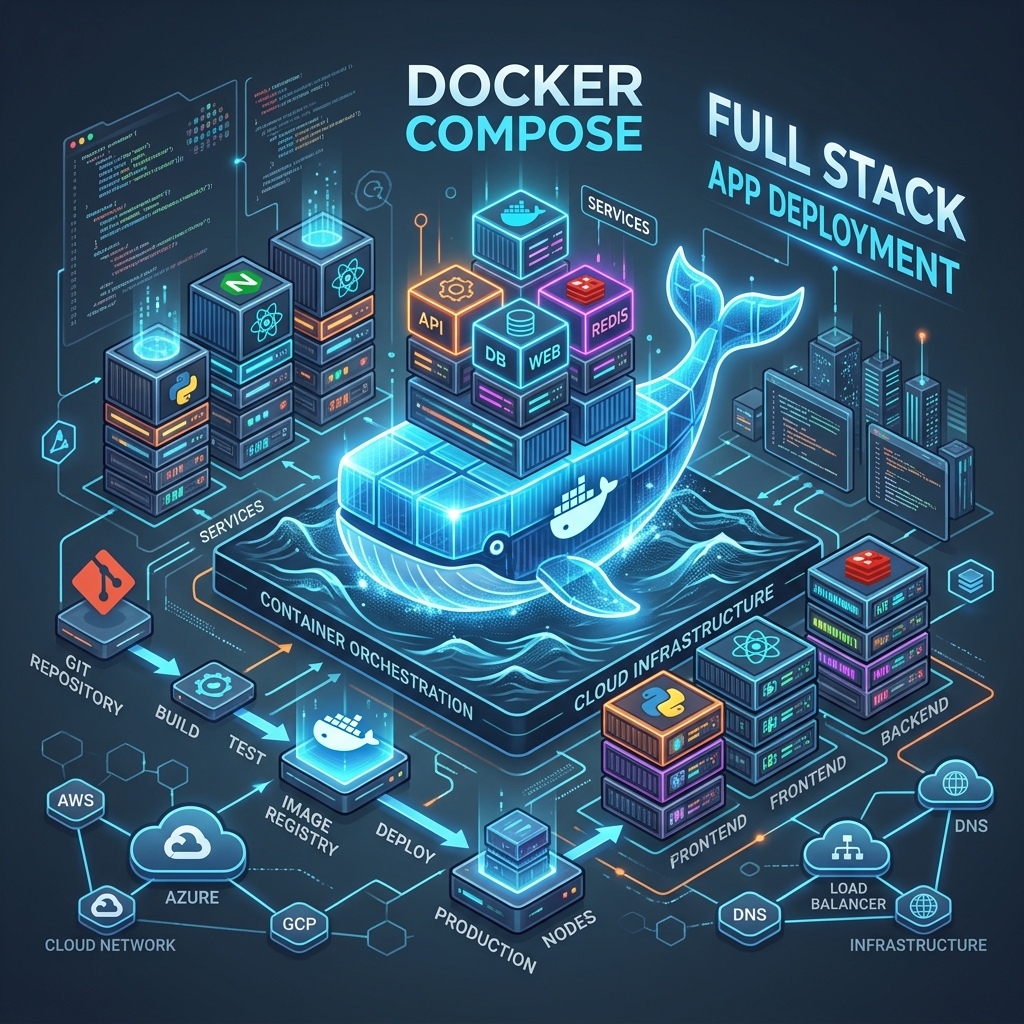
- Containerization (Docker): Package each service and its dependencies into a container for consistent deployment across environments.
- Orchestration (Kubernetes): Manage and automate the deployment, scaling, and operations of containerized applications. AWS ECS/EKS, Google Kubernetes Engine (GKE), Azure Kubernetes Service (AKS) are popular choices.
- CI/CD Pipelines: Automate testing, building, and deployment of each service independently. Tools like GitLab CI, GitHub Actions, Jenkins, CircleCI.
- Monitoring & Logging: Centralized logging (ELK stack, Splunk, Datadog) and monitoring (Prometheus, Grafana, New Relic) are critical for understanding service health and debugging issues in a distributed environment.
- Service Discovery: Services need to find each other. Tools like Eureka, Consul, or built-in Kubernetes service discovery.
My experience building scalable systems often involves a blend of these technologies. For instance, a Laravel microservice running in a Docker container, deployed to AWS EKS, with CI/CD managed by GitLab CI. For a deep dive into setting up such environments, check out my articles on cloud infrastructure.
Key Takeaways
- Microservices are not for every EdTech platform, especially early-stage MVPs. Start with a modular monolith if unsure, and migrate when complexity and scale demand it.
- Domain-Driven Design is crucial for defining clear service boundaries in your education platform architecture.
- Choose communication patterns wisely: REST for synchronous, message queues for asynchronous.
- Database per service promotes autonomy but requires careful handling of data consistency.
- An API Gateway simplifies client interaction and centralizes cross-cutting concerns.
- DevOps is non-negotiable for successful microservices adoption, encompassing containerization, orchestration, CI/CD, and robust monitoring.
- Real-world EdTech giants like ApplyBoard and Edvoy leverage distributed architectures to manage their vast ecosystems.
FAQ: Microservices in EdTech
Q1: What's the biggest challenge when migrating a monolithic EdTech platform to microservices?
A1: The biggest challenge often lies in identifying correct service boundaries and managing data consistency across distributed databases. Decomposing a tightly coupled monolith requires deep domain knowledge and careful planning to avoid creating a "distributed monolith" – a system with the complexity of microservices but without the benefits.
Q2: Can I use different programming languages for different microservices in an EdTech platform?
A2: Absolutely! This is one of the key advantages of edtech microservices. You can use PHP (Laravel) for a robust student CRM service, Python for an AI-powered recommendation engine, and Node.js (Next.js/React) for a real-time chat or interactive learning module. This allows teams to pick the best tool for the job, leveraging specialized libraries and frameworks.
Q3: How do microservices impact the cost of running an EdTech platform?
A3: While initial setup can be more complex, microservices can lead to cost efficiencies in the long run. By scaling individual services independently, you can optimize resource allocation, preventing over-provisioning of your entire system. However, the operational overhead (monitoring, infrastructure management) can be higher, requiring investment in DevOps tools and expertise. Cloud providers like AWS, Azure, and GCP offer services that can help manage this complexity.
Q4: What about security in a microservices EdTech environment?
A4: Security becomes more distributed. Each service needs to be secured independently, with robust authentication and authorization mechanisms. An API Gateway is critical for centralizing these concerns at the entry point. Service-to-service communication should also be secured (e.g., mTLS). Regular security audits and adherence to education-specific compliance (like FERPA, GDPR) are paramount.
Q5: Is it possible to implement microservices incrementally?
A5: Yes, this is often the recommended approach, known as the "Strangler Fig" pattern. You gradually extract functionalities from your monolith into new microservices. For example, you might start by extracting the Admissions Service or Payment Service as independent components, routing relevant traffic to them via an API Gateway, while the rest of the application remains monolithic. This reduces risk and allows teams to gain experience with distributed edtech system development.
---
Looking to build an EdTech platform, student CRM, or admission management system? I specialize in developing scalable education technology solutions using Laravel, React, and cloud infrastructure. Whether you're a study-abroad agency, EdTech startup, or university looking for custom software development, blank" rel="noopener noreferrer" style="color: var(--primary); text-decoration: none; border-bottom: 1px dashed var(--primary);">let's discuss your project. Check out my portfolio and technical expertise to see how I can help bring your vision to life.