Building AI Chatbots for Education Agencies: Complete Technical Guide
The landscape of international student recruitment is more competitive and complex than ever. Education agencies, the vital bridge between aspiring students and global institutions, face immense pressure to deliver personalized, instant support across multiple time zones. Traditional communication channels – email, phone calls, and even live chat with human agents – often buckle under the sheer volume of inquiries, leading to delayed responses, frustrated students, and ultimately, missed enrollment opportunities. Imagine an agency like ApplyBoard or Edvoy, handling hundreds of thousands of inquiries annually; the operational overhead for human-led support is astronomical, and the quality of interaction can be inconsistent. This is precisely where the transformative power of AI chatbots comes into play.
As a senior full-stack developer with years of experience architecting and deploying EdTech platforms, I've seen firsthand how intelligent automation can redefine student engagement. From building robust student CRMs to intricate admission management systems, the common thread is always the need for efficiency, scalability, and an exceptional user experience. AI chatbots, particularly those tailored for education agencies, are no longer a futuristic concept but a critical component of a modern EdTech stack. They offer 24/7 availability, instant answers to frequently asked questions, and can even guide students through complex application processes, freeing up human counselors to focus on high-value, personalized interactions.
This comprehensive guide will delve deep into the technical intricacies of building AI chatbots for education agencies. We'll explore the architectural choices, technology stacks, and implementation strategies required to develop a robust, scalable, and intelligent conversational agent. Whether you're an agency looking to enhance student support, an EdTech startup aiming to disrupt the market, or a developer eager to build cutting-edge solutions, this guide provides the practical, implementation-focused insights you need to succeed.
Understanding the Core Problem: Why AI Chatbots for Education Agencies?
Education agencies operate in a high-stakes environment where timely and accurate information is paramount. Students often have urgent questions about course eligibility, visa requirements, scholarship opportunities, and application deadlines. A delayed response, even by a few hours, can mean losing a prospective student to a competitor.
The Challenges of Traditional Student Support
- Scalability Issues: Human agents have limited capacity. As inquiry volumes surge during peak admission seasons, response times lengthen significantly. This is a common pain point for large agencies like AECC Global.
- Time Zone Differences: International student recruitment involves communicating with students across diverse geographical locations, making 24/7 human support economically unfeasible.
- Repetitive Inquiries: A significant portion of student questions are repetitive (e.g., "What are the IELTS requirements for a Master's in Computer Science?"). Answering these manually consumes valuable human resources.
- Data Silos and Inconsistency: Information can be scattered across different departments or systems, leading to inconsistent answers from different agents.
The AI Chatbot Solution: Benefits and Impact
AI chatbots offer a compelling solution by addressing these challenges head-on. By automating routine inquiries and providing instant, accurate information, they significantly enhance the student experience and operational efficiency.
- 24/7 Availability: Chatbots never sleep, ensuring students receive support regardless of their time zone.
- Instant Responses: Students get immediate answers to their questions, reducing frustration and improving engagement.
- Scalability: A single chatbot instance can handle thousands of concurrent conversations, scaling effortlessly with demand.
- Consistency and Accuracy: Chatbots draw from a centralized knowledge base, ensuring consistent and accurate information delivery.
- Lead Qualification & Nurturing: Advanced chatbots can pre-qualify leads, collect essential student data, and even guide them through initial application steps, passing warm leads to human counselors.
- Cost Efficiency: Reducing the reliance on human agents for repetitive tasks significantly lowers operational costs.
According to a 2025 HolonIQ report, the global EdTech market is projected to reach over $400 billion, with AI-driven solutions, including AI chatbots education agencies, being a major growth driver. Early adopters are already reporting significant improvements in student engagement metrics and conversion rates.
Architectural Blueprint: Designing a Scalable Education Chatbot
Building a robust education chatbot development platform requires a thoughtful architectural design. As a full-stack developer, I lean towards microservices or a well-defined modular monolith, leveraging cloud-native services for scalability and resilience.
Core Components of an AI Chatbot System
A typical AI chatbot architecture for education agencies would comprise several key components:
1. Frontend Interface: The user-facing component where students interact with the chatbot (web widget, mobile app integration, WhatsApp, etc.).
2. API Gateway: Routes requests, handles authentication, and provides a unified interface to backend services.
3. Natural Language Processing (NLP) Engine: The brain of the chatbot, responsible for understanding user intent and extracting entities.
4. Dialog Management System: Manages the conversation flow, tracks context, and determines the appropriate response.
5. Knowledge Base/Database: Stores information about courses, universities, visa requirements, FAQs, and student profiles.
6. Integration Layer: Connects the chatbot to external systems like CRM (e.g., Salesforce, custom Laravel CRM), admission management systems, email, and payment gateways.
7. Analytics & Monitoring: Tracks chatbot performance, user interactions, and identifies areas for improvement.
graph TD
    A[Student Interface (Web, Mobile, WhatsApp)] --> B(API Gateway)
    B --> C{NLP Engine (Intent & Entity Recognition)}
    C --> D[Dialog Management System]
    D --> E[Knowledge Base / RAG Store]
    D --> F[CRM / Admission System]
    D --> G[External APIs (e.g., Visa Check, University Portals)]
    D --> H[Human Handover Module]
    D -- Responds to --> A
    B -- Logs --> I[Analytics & Monitoring]
    F -- Updates --> I
Choosing the Right Technology Stack
For an AI chatbots education agencies project, I typically recommend a modern, performant, and flexible stack.
- Frontend:
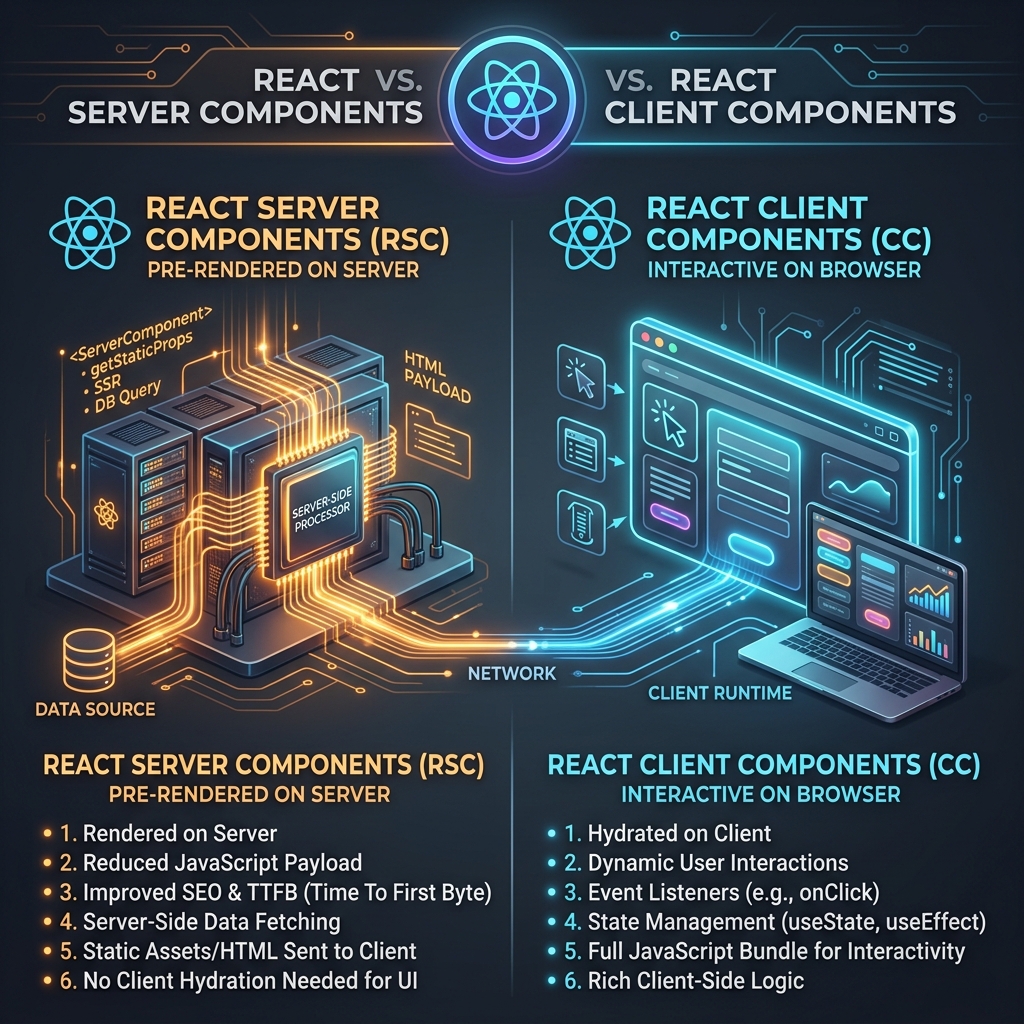
- React/Next.js: For building interactive web widgets. Next.js offers excellent SEO and server-side rendering capabilities, crucial for discoverability.
- Tailwind CSS: For rapid and consistent UI development.
- Backend & NLP:
- Python (Flask/Django/FastAPI): The de-facto standard for AI/ML development. Libraries like Hugging Face Transformers, NLTK, spaCy are indispensable.
- PHP (Laravel): Excellent for building robust APIs, integrating with CRMs, and managing application logic. Laravel's ecosystem is vast and mature, perfect for an EdTech platform's backend.
- Node.js (Express/NestJS): Another strong contender for backend services, especially if the team has strong JavaScript expertise.
- Database:
- PostgreSQL/MySQL: Relational databases for structured data (student profiles, application statuses, agency data).
- MongoDB/Elasticsearch: NoSQL for unstructured data, logging, and potentially for a semantic search-enabled knowledge base.
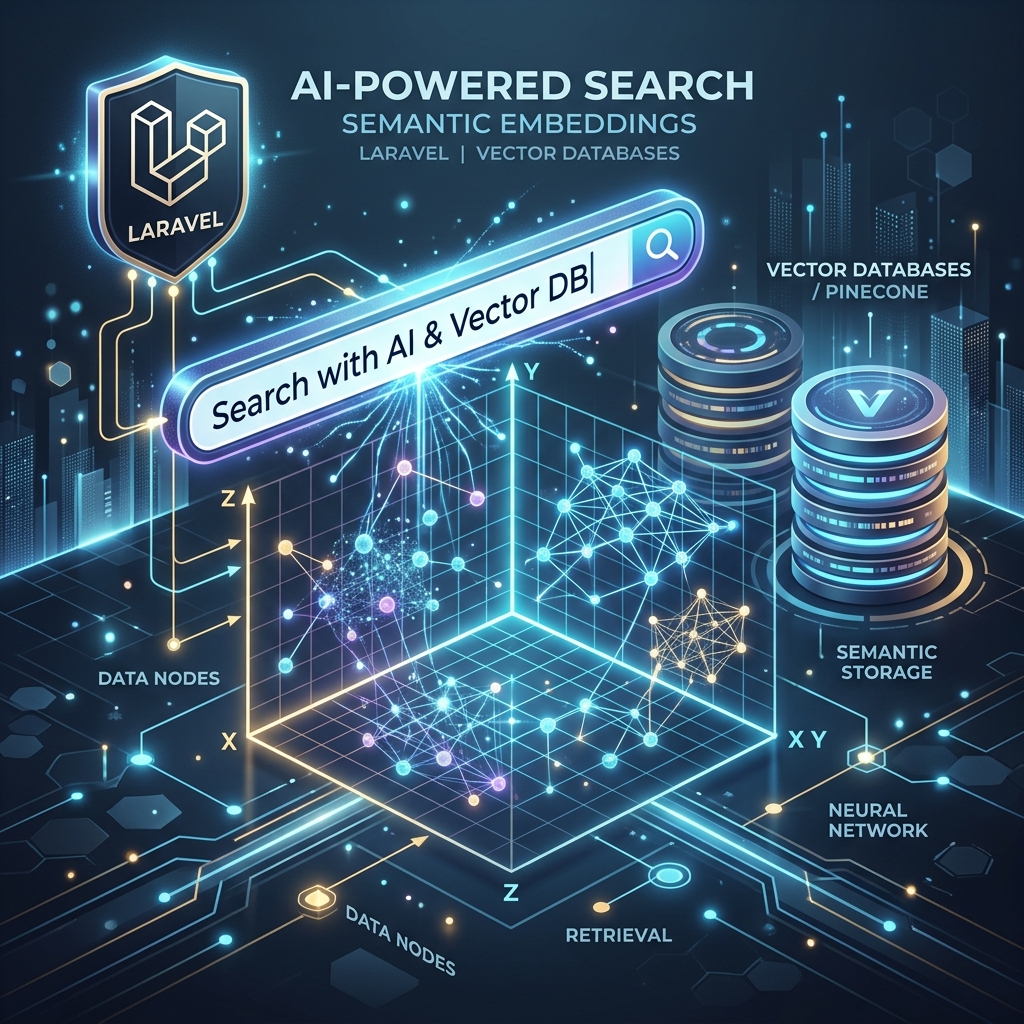
- Vector Databases (Pinecone, Weaviate): Increasingly important for Retrieval Augmented Generation (RAG) architectures, allowing the chatbot to query documents semantically.
- Cloud Infrastructure:
- AWS/Google Cloud Platform/Azure: For hosting, scaling, and leveraging managed services (e.g., AWS Lambda, S3, RDS, SageMaker, GCP Dialogflow, Azure Bot Service).
- Orchestration:
- Docker & Kubernetes: For containerization and managing microservices deployments.
// Example: Laravel API endpoint for chatbot interaction
// app/Http/Controllers/ChatbotController.php
namespace App\Http\Controllers;

use Illuminate\Http\Request;
use App\Services\ChatbotService; // Custom service for NLP/Dialog

class ChatbotController extends Controller
{
    protected $chatbotService;

    public function __construct(ChatbotService $chatbotService)
    {
        $this->chatbotService = $chatbotService;
    }

    public function handleMessage(Request $request)
    {
        $validatedData = $request->validate([
            'message' => 'required|string|max:1000',
            'conversation_id' => 'sometimes|string',
            'student_id' => 'sometimes|numeric',
        ]);

        $response = $this->chatbotService->processMessage(
            $validatedData['message'],
            $validatedData['conversation_id'] ?? null,
            $validatedData['student_id'] ?? null
        );

        return response()->json($response);
    }
}
Building the Intelligence: NLP and Dialog Management
The true power of an AI customer support education chatbot lies in its ability to understand and respond intelligently. This involves sophisticated Natural Language Processing (NLP) and robust dialog management.
Intent Recognition and Entity Extraction
- Intent Recognition: Identifying the user's goal or purpose (e.g., "apply for visa," "check course requirements," "scholarship inquiry").
- Entity Extraction: Pulling out key pieces of information from the user's query (e.g., "IELTS," "Master's in Computer Science," "University of Toronto").
Implementation Approach:
1. Rule-Based: Simple keywords and regex patterns for very basic chatbots. Limited scalability and flexibility.
2. Machine Learning (ML) Models:
- Traditional ML: Naive Bayes, SVMs with TF-IDF features. Requires significant feature engineering.
- Deep Learning (DL): Recurrent Neural Networks (RNNs), LSTMs, Transformers. State-of-the-art for NLP. Pre-trained models like BERT, GPT-3/4, or custom fine-tuned models are highly effective.
- Cloud NLP Services: AWS Comprehend, Google Cloud Natural Language API, Azure Cognitive Services. These offer managed and scalable NLP capabilities.
For student inquiry chatbot development, I often leverage a hybrid approach: pre-trained large language models (LLMs) for general understanding, fine-tuned with domain-specific data, and then augmented with explicit rules for critical information extraction where precision is paramount (e.g., passport numbers, university names).
# Example: Basic intent recognition using a pre-trained Hugging Face model
from transformers import pipeline

# Load a pre-trained sentiment analysis model (can be fine-tuned for intent)
# For production, fine-tune a model on your specific intents
classifier = pipeline("zero-shot-classification", model="facebook/bart-large-mnli")

def get_intent(text):
    candidate_labels = [
        "course inquiry",
        "visa requirements",
        "scholarship information",
        "application status",
        "contact human agent",
        "greet",
        "thank you"
    ]
    result = classifier(text, candidate_labels, multi_label=False)
    return result['labels'][0], result['scores'][0]

# Example usage
# user_query = "What are the requirements for a Master's in Business Analytics at LSE?"
# intent, confidence = get_intent(user_query)
# print(f"Detected Intent: {intent} with confidence {confidence:.2f}")
Developing the Dialog Flow and State Management
The dialog management system orchestrates the conversation. It keeps track of the conversation state, user context, and decides the next appropriate action.
- Finite State Machines (FSMs): Simple for linear flows but become complex quickly.
- Rule-Based Systems: Define explicit rules for transitions based on intents and entities.
- Contextual AI: Leverages ML to predict the next best action based on the entire conversation history.
- Retrieval Augmented Generation (RAG): A powerful technique where an LLM retrieves relevant information from a vast knowledge base (e.g., university brochures, visa documents) and then generates a coherent response. This is crucial for factual accuracy in education.
State Management: Essential for multi-turn conversations. Store conversation history, extracted entities, and user preferences (e.g., preferred study destination, academic level) in a session store (Redis, database).
Integrating with Existing EdTech Systems
A standalone chatbot has limited utility. Its true value emerges when it seamlessly integrates with an agency's core systems. This is often where my full-stack expertise shines, bridging the gap between conversational AI and backend business logic.
CRM Integration for Personalized Experiences
Integrating with a student CRM (Customer Relationship Management) is paramount. Whether it's a custom-built Laravel CRM or a commercial solution, the chatbot needs to:
- Retrieve Student Profiles: Access student's name, application status, enrolled courses, and past interactions to personalize responses.
- Update Student Records: Log chatbot interactions, update inquiry status, and capture new information provided by the student.
- Lead Handoff: Seamlessly transfer conversations to a human agent, providing the agent with the full conversation history and student context.
// Example: Laravel service for CRM integration
// app/Services/CrmService.php
namespace App\Services;

use App\Models\Student; // Assuming a Student model exists

class CrmService
{
    public function getStudentProfile(int $studentId): ?Student
    {
        return Student::find($studentId);
    }

    public function createInquiry(int $studentId, string $query, string $source = 'chatbot')
    {
        // Logic to create an inquiry record in CRM
        // e.g., Student::find($studentId)->inquiries()->create(['query' => $query, 'source' => $source]);
    }

    public function updateApplicationStatus(int $studentId, string $status): bool
    {
        // Logic to update application status
        $student = Student::find($studentId);
        if ($student) {
            $student->application_status = $status;
            return $student->save();
        }
        return false;
    }
}
Knowledge Base and Admission System Integration
- Dynamic Information Retrieval: The chatbot should query the knowledge base (which might be a database, a set of documents, or external APIs) for up-to-date information on courses, universities, visa rules, and scholarships. This is where RAG becomes critical.
- Application Tracking: For agencies using custom admission management systems, the chatbot can provide real-time updates on application statuses, document requirements, and interview schedules.
- Document Submission Guidance: Guiding students on how to submit documents, linking to relevant portals, or even accepting document uploads (with proper security).
External Links:
- For deep dives into RAG, explore resources from doc/rag" target="blank" rel="noopener noreferrer" style="color: var(--primary); text-decoration: none; border-bottom: 1px dashed var(--primary);">Hugging Face.
- For Laravel API development, refer to the official Laravel documentation.
Deployment, Monitoring, and Continuous Improvement
The journey doesn't end with development. Effective deployment, rigorous monitoring, and a commitment to continuous improvement are vital for a successful AI chatbots education agencies solution.
Deployment Strategy
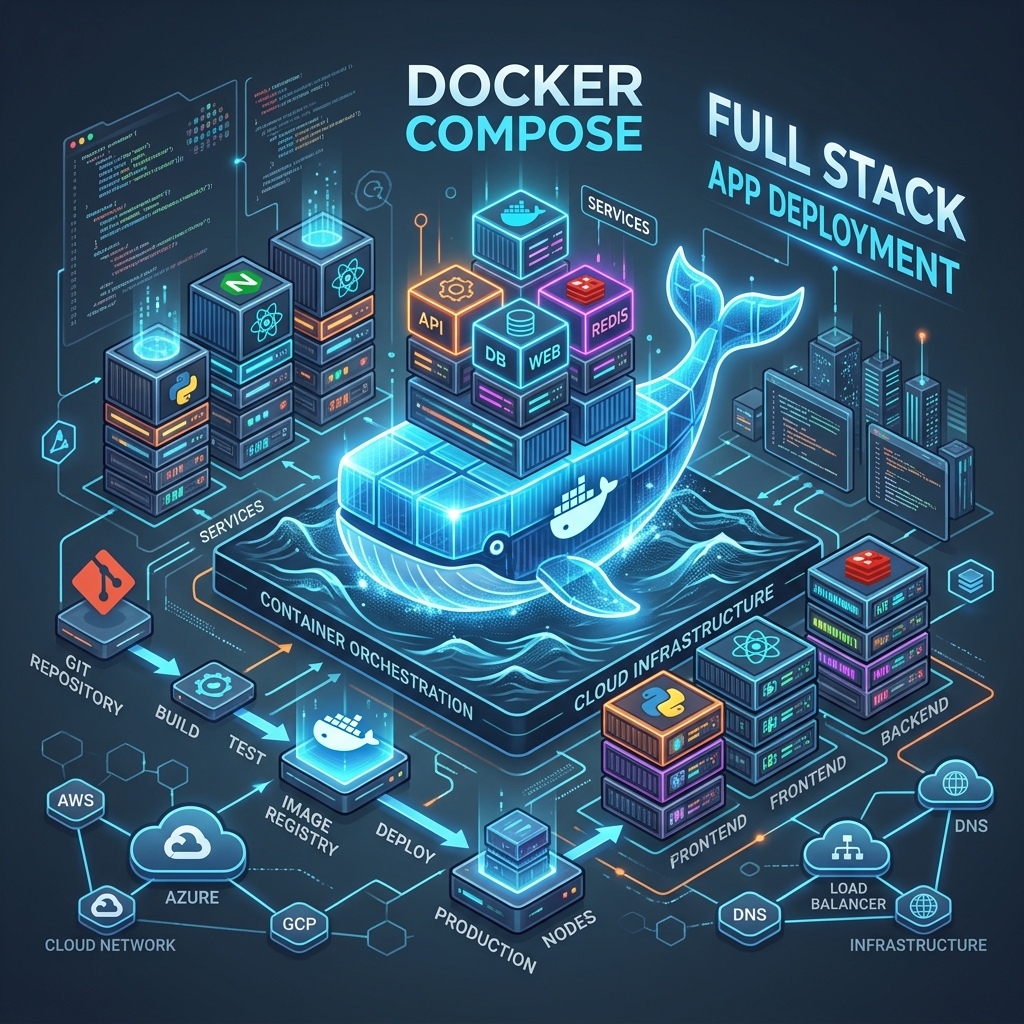
- Containerization (Docker): Package your chatbot components into Docker containers for consistent environments and easy deployment.
- Orchestration (Kubernetes/ECS): Manage and scale your containers across multiple servers. AWS EKS or Google Kubernetes Engine (GKE) are excellent choices.
- Serverless (AWS Lambda, Azure Functions): For specific, event-driven components (e.g., webhook handlers, background processing), serverless can be cost-effective.
- CI/CD Pipelines: Automate testing, building, and deployment using tools like GitHub Actions, GitLab CI, or Jenkins.
Performance Monitoring and Analytics
- Key Metrics:
- Resolution Rate: Percentage of inquiries resolved by the chatbot without human intervention.
- Fallback Rate: How often the chatbot fails to understand or respond, leading to a human handover.
- User Satisfaction (CSAT): Gather feedback directly from users.
- Response Latency: How quickly the chatbot responds.
- Active Conversations: Number of simultaneous conversations.
- Tools:
- Prometheus & Grafana: For infrastructure and application monitoring.
- ELK Stack (Elasticsearch, Logstash, Kibana): For centralized logging and log analysis.
- Google Analytics/Mixpanel: For user behavior tracking on the chatbot interface.
Iterative Improvement and Training
AI models are not "set and forget." Continuous improvement is crucial.
- Human-in-the-Loop: Regularly review conversations where the chatbot failed or where students explicitly requested human assistance. Use these "fallbacks" to identify gaps in your knowledge base or NLP model.
- Retraining Models: Periodically retrain your NLP models with new data, including common student queries and updated information.
- A/B Testing: Experiment with different conversational flows or response variations to optimize engagement and resolution rates.
- Feedback Loops: Implement mechanisms for students to provide feedback on chatbot responses ("Was this helpful?").
Key Takeaways
- AI chatbots education agencies are essential for scalable, 24/7 student support, reducing operational costs and improving student satisfaction.
- A robust architecture involves NLP, dialog management, a comprehensive knowledge base, and deep integration with CRM and admission systems.
- Python (for AI) and Laravel/Next.js (for backend/frontend) form a powerful tech stack for education chatbot development.
- Retrieval Augmented Generation (RAG) is critical for accurate, up-to-date responses from vast educational knowledge bases.
- Continuous monitoring, analytics, and human-in-the-loop training are vital for the long-term success of an AI customer support education chatbot.
- Real-world examples like ApplyBoard and Edvoy demonstrate the competitive edge gained through intelligent automation.
FAQ
Q1: How long does it typically take to build an AI chatbot for an education agency?
A1: The timeline varies significantly based on complexity. A basic FAQ chatbot might take 2-3 months, while a highly integrated, context-aware student inquiry chatbot with advanced NLP and custom integrations could take 6-12 months or more. My experience indicates that a phased approach, starting with core functionalities and iteratively adding features, is most effective.
Q2: What is the estimated cost of developing such a system?
A2: Costs can range from $30,000 for a simpler solution using off-the-shelf tools to over $200,000 for a custom, enterprise-grade platform with extensive integrations and advanced AI capabilities. Factors include developer rates, chosen tech stack, cloud infrastructure costs, and the level of customization required.
Q3: Can a chatbot fully replace human education counselors?
A3: No, not entirely. While chatbots excel at handling repetitive queries and providing instant information, human counselors remain indispensable for complex, sensitive, or highly personalized interactions that require empathy, nuanced advice, and relationship building. The goal of an AI chatbots education agencies solution is to augment human capabilities, allowing counselors to focus on higher-value tasks.
Q4: How do you ensure data privacy and security for student information?
A4: Data privacy and security are paramount. We implement industry best practices:
- End-to-end encryption: For all data in transit and at rest.
- Compliance: Adherence to regulations like GDPR, FERPA, and local data protection laws.
- Access Control: Role-based access to sensitive student data.
- Regular Security Audits: Penetration testing and vulnerability assessments.
- When working with cloud providers (AWS, GCP), we leverage their robust security features.
Q5: What's the biggest challenge in developing an AI chatbot for EdTech?
A5: The biggest challenge is often managing the sheer volume and complexity of domain-specific knowledge, especially across diverse universities, courses, and ever-changing visa regulations. Ensuring the chatbot provides accurate, up-to-date, and contextually relevant information consistently requires a well-structured knowledge base and sophisticated RAG capabilities. Another challenge is gathering sufficient, high-quality training data to achieve high accuracy in