Automating Student Admissions Using Laravel: A Practical Guide
The global education technology market is a rapidly expanding landscape, projected to reach an astounding $605.4 billion by 2027, growing at a CAGR of 16.5% according to HolonIQ's latest reports. Within this burgeoning sector, the efficiency and scalability of administrative processes, particularly student admissions, remain a critical bottleneck for many institutions and EdTech platforms. Manual admission processes are not only time-consuming and prone to human error but also severely hinder an institution's ability to process a high volume of applications from an increasingly globalized student body. Companies like ApplyBoard and Edvoy have revolutionized international student recruitment by leveraging technology to streamline these complex workflows, setting a new standard for efficiency and applicant experience.
As a senior full-stack developer with extensive experience building sophisticated EdTech platforms and student CRMs, I've seen firsthand the transformative power of automation in this domain. The manual juggling of application forms, transcripts, recommendation letters, and financial aid documents can overwhelm even the most dedicated admissions teams. This often leads to delayed responses, frustrated applicants, and ultimately, missed enrollment targets. The key to unlocking scalability and enhancing the applicant journey lies in robust, intelligent automation.
This guide delves into the practical aspects of automating student admissions using Laravel, a powerful PHP framework renowned for its elegant syntax, robust features, and developer-friendly ecosystem. We'll explore how to architect and implement an end-to-end admission management system that not only streamlines workflows but also provides a superior experience for both applicants and administrators. By the end of this article, you'll have a clear understanding of how to leverage Laravel for Laravel admission automation, transforming your institution's or EdTech company's student application processing from a cumbersome chore into a seamless, efficient operation.
Understanding the Challenges in Traditional Student Admissions
Before we dive into solutions, it's crucial to acknowledge the inherent complexities of traditional student admission processes. These challenges are multifaceted, impacting efficiency, data accuracy, and the overall applicant experience.
Manual Data Entry and Verification
One of the most significant pain points is the sheer volume of manual data entry. Admissions officers spend countless hours transcribing information from paper forms or disparate digital documents into their systems. This process is not only tedious but also highly susceptible to errors. Verification of documents, such as academic transcripts or English proficiency test scores, often involves manual checks against various external databases or contacting issuing authorities, further slowing down the process.
Disjointed Communication and Tracking
Applicants often find themselves in a black hole after submitting their applications, with little to no visibility into their application status. Admissions teams, on the other hand, struggle with tracking communication history, follow-ups, and document submissions across multiple channels (email, phone, physical mail). This disjointed communication leads to redundant inquiries, missed deadlines, and a poor applicant experience. Imagine the frustration of an international student applying through AECC Global, only to face delays due to a lack of real-time status updates.
Lack of Scalability and Bottlenecks
Traditional systems struggle significantly when application volumes surge. Peak admission seasons often lead to overwhelming backlogs, increased processing times, and stressed admissions staff. Without automated workflows and intelligent task distribution, institutions hit a hard ceiling on the number of applications they can efficiently process, directly impacting their enrollment capacity and growth potential. This is where education workflow automation becomes indispensable.
Why Laravel for Admission Automation?
Laravel stands out as an excellent choice for building sophisticated EdTech applications, including admission management systems. Its comprehensive feature set, vibrant community, and focus on developer experience make it a powerful ally in the quest for automation.
Robust MVC Architecture and Ecosystem
Laravel adheres to the Model-View-Controller (MVC) architectural pattern, promoting clean code separation and maintainability. This structure is ideal for complex applications like admission systems, where data models (applicants, courses, documents), business logic (validation, decision-making), and user interfaces (applicant portals, admin dashboards) are distinct.
Key Laravel Features for EdTech:
- Eloquent ORM: Simplifies database interactions, allowing developers to work with database records as PHP objects. This is crucial for managing diverse student data.
- Blade Templating Engine: Provides a powerful, yet simple, templating engine for building dynamic and interactive user interfaces for both applicants and administrators.
- Artisan Console: A command-line interface that automates repetitive tasks, such as database migrations, seeding, and custom command execution, speeding up development.
- Queues: Essential for handling time-consuming tasks asynchronously, like sending bulk emails, processing document uploads, or generating reports, without blocking the main application flow.
- Authentication & Authorization: Laravel's built-in features provide a secure foundation for managing user roles (applicants, admissions officers, reviewers) and permissions.
Scalability and Performance
Laravel is designed with scalability in mind. Its robust architecture, combined with features like caching, queueing, and database optimization capabilities, allows applications to handle a growing number of users and data without compromising performance. For an EdTech platform aiming to process thousands of applications annually, this is non-negotiable. Integration with tools like Redis for caching and Horizon for queue management further enhances its performance profile.
Extensive Package Ecosystem and Community Support
The Laravel ecosystem boasts a rich collection of official and community-contributed packages (e.g., Laravel Nova for admin panels, Spatie packages for permissions or media management). This allows developers to integrate complex functionalities rapidly, reducing development time and cost. The active community provides ample support, tutorials, and ready-made solutions, making problem-solving more efficient. As a developer, I frequently leverage these packages to accelerate project delivery and maintain high code quality.
Architecting an Automated Admission System with Laravel
Building an automated admission system requires careful planning and a modular approach. Here's a high-level architectural overview and key components.
Core Modules and Data Models
A robust admission system typically comprises several interconnected modules, each managing specific aspects of the application lifecycle.
1. Applicant Portal:
- Purpose: The primary interface for prospective students to apply, upload documents, track status, and communicate.
- Key Features: User registration/login, multi-step application forms, document upload (transcripts, essays, passports), status tracking, messaging system.
2. Administrator Dashboard:
- Purpose: Centralized control panel for admissions staff to manage applications, review documents, communicate, and make decisions.
- Key Features: Application listing/filtering, document review, decision making (accept/reject/waitlist), communication tools, reporting, user management.
3. Workflow Engine:
- Purpose: Orchestrates the entire admission process, defining stages, transitions, and automated actions.
- Key Features: Configurable workflows, automated email notifications (application received, document missing, decision made), task assignment, deadline management.
4. Document Management System (DMS):
- Purpose: Securely stores and manages all applicant documents, often integrated with cloud storage.
- Key Features: Secure file upload, versioning, access control, integration with third-party verification services.
Essential Laravel Models:
// app/Models/Applicant.php
class Applicant extends Model
{
    protected $fillable = [
        'user_id', 'first_name', 'last_name', 'email', 'phone', 'dob',
        'address', 'nationality', 'application_status_id', 'programme_id',
    ];

    public function user() { return $this->belongsTo(User::class); }
    public function applicationStatus() { return $this->belongsTo(ApplicationStatus::class); }
    public function programme() { return $this->belongsTo(Programme::class); }
    public function documents() { return $this->hasMany(Document::class); }
    public function communications() { return $this->hasMany(Communication::class); }
}

// app/Models/ApplicationStatus.php
class ApplicationStatus extends Model
{
    protected $fillable = ['name', 'description', 'is_final'];
    // e.g., 'Draft', 'Submitted', 'Under Review', 'Accepted', 'Rejected'
}

// app/Models/Document.php
class Document extends Model
{
    protected $fillable = ['applicant_id', 'document_type_id', 'file_path', 'status', 'uploaded_at'];
    // e.g., 'Transcript', 'Passport', 'SOP'
}

// app/Models/Programme.php
class Programme extends Model
{
    protected $fillable = ['name', 'description', 'eligibility_criteria'];
}
Implementing Workflow Automation and Notifications
The true power of automating student admissions Laravel lies in its ability to automate repetitive tasks and communications. Laravel's event and queue systems are perfect for this.
1. Event-Driven Architecture:
When an applicant submits their form, or an admissions officer changes a status, an event can be dispatched. Listeners can then react to these events.
// app/Events/ApplicationSubmitted.php
class ApplicationSubmitted extends Event
{
    use SerializesModels;
    public $applicant;
    public function __construct(Applicant $applicant) { $this->applicant = $applicant; }
}

// app/Listeners/SendSubmissionConfirmation.php
class SendSubmissionConfirmation
{
    public function handle(ApplicationSubmitted $event)
    {
        Mail::to($event->applicant->email)->send(new ApplicationConfirmationMail($event->applicant));
        // Log activity, update CRM, etc.
    }
}
2. Queued Jobs for Asynchronous Tasks:
Sending emails, processing large document files (e.g., OCR for verification), or generating complex reports can be time-consuming. Laravel Queues allow these tasks to be offloaded to background workers, ensuring the user interface remains responsive.
// Example: Processing a document upload
// app/Http/Controllers/ApplicantController.php
public function uploadDocument(Request $request, Applicant $applicant)
{
    // ... file validation and storage ...
    $document = $applicant->documents()->create([...]);
    ProcessDocumentJob::dispatch($document); // Dispatch to queue
    return back()->with('success', 'Document uploaded successfully.');
}

// app/Jobs/ProcessDocumentJob.php
class ProcessDocumentJob implements ShouldQueue
{
    use Dispatchable, InteractsWithQueue, Queueable, SerializesModels;
    protected $document;

    public function __construct(Document $document) { $this->document = $document; }

    public function handle()
    {
        // Perform OCR, send to third-party verification API, update document status
        Log::info("Processing document #{$this->document->id} for applicant #{$this->document->applicant->id}");
        // ... heavy processing logic ...
        $this->document->update(['status' => 'processed']);
    }
}
This approach is critical for maintaining a smooth user experience, especially during peak application periods.
Enhancing the Applicant Experience with Modern Frontend Technologies
While Laravel handles the backend logic, a compelling user experience demands a modern, reactive frontend. This is where technologies like Next.js or React shine.
Integrating with React/Next.js for Dynamic Portals
For the Applicant Portal and potentially the Administrator Dashboard, using a JavaScript framework like React or Next.js provides a highly interactive and dynamic user interface. This separation of concerns (SPA frontend, Laravel API backend) is a common pattern in modern web development.
1. API-First Approach:
Laravel serves as a powerful API backend, exposing endpoints for authentication, application submission, document upload, status retrieval, and more. Laravel Sanctum or Passport can be used for API authentication.
// Example: Laravel API endpoint for application submission
// routes/api.php
Route::middleware('auth:sanctum')->post('/applications', [ApplicationController::class, 'store']);

// app/Http/Controllers/Api/ApplicationController.php
public function store(Request $request)
{
    $validatedData = $request->validate([
        'programme_id' => 'required|exists:programmes,id',
        'answers' => 'required|array', // JSON representation of form answers
        // ... other fields
    ]);

    $applicant = Auth::user()->applicant; // Assuming user has an associated applicant profile
    if (!$applicant) {
        // Create new applicant profile if it doesn't exist
        $applicant = Applicant::create(['user_id' => Auth::id(), /* ... */]);
    }

    $application = $applicant->applications()->create($validatedData);
    return response()->json(['message' => 'Application submitted successfully!', 'application' => $application], 201);
}
2. Frontend Development with Next.js/React:
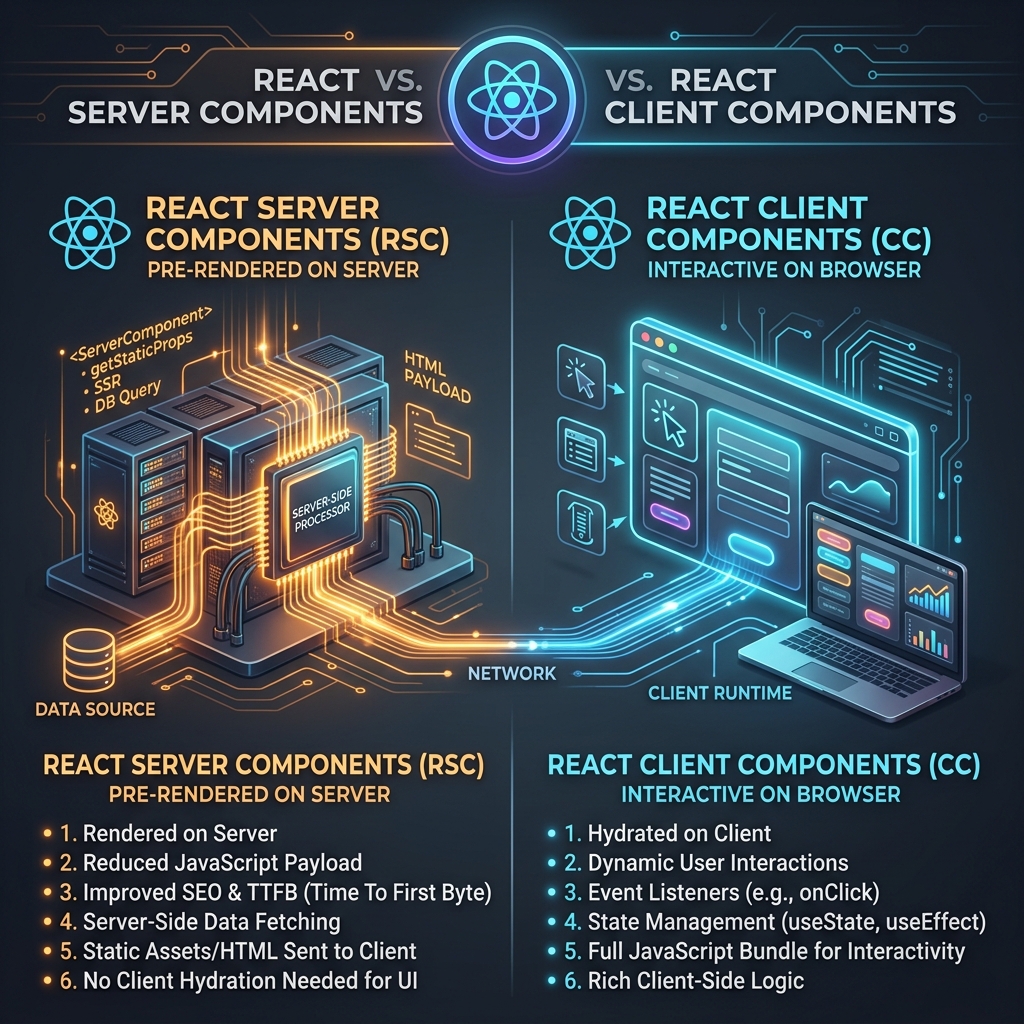
Next.js (a React framework) offers server-side rendering (SSR) or static site generation (SSG) for improved SEO and performance, which is beneficial for public-facing pages. For the logged-in applicant portal, client-side rendering with React is perfectly suitable.
// Example: React component for submitting application form
// components/ApplicationForm.js (within a Next.js or React app)
import React, { useState } from 'react';
import axios from 'axios';

function ApplicationForm({ programmes }) {
  const [formData, setFormData] = useState({ programme_id: '', answers: {} });
  const [loading, setLoading] = useState(false);
  const [error, setError] = useState(null);
  const [success, setSuccess] = useState(false);

  const handleSubmit = async (e) => {
    e.preventDefault();
    setLoading(true);
    setError(null);
    try {
      const response = await axios.post('/api/applications', formData, {
        headers: { Authorization: `Bearer ${localStorage.getItem('authToken')}` }
      });
      setSuccess(true);
      console.log(response.data);
    } catch (err) {
      setError(err.response?.data?.message || 'Failed to submit application.');
    } finally {
      setLoading(false);
    }
  };

  return (
    <form onSubmit={handleSubmit}>
      {/* Form fields for programme selection, personal details, etc. */}
      {/* ... */}
      <button type="submit" disabled={loading}>
        {loading ? 'Submitting...' : 'Submit Application'}
      </button>
      {success && <p className="text-green-500">Application submitted successfully!</p>}
      {error && <p className="text-red-500">{error}</p>}
    </form>
  );
}
export default ApplicationForm;
This separation allows for independent scaling of frontend and backend, and enables specialized development teams to work concurrently.
Advanced Automation and Integrations
Beyond basic workflow, modern admission systems leverage advanced features and integrations to provide a truly superior experience.
AI-Powered Document Verification and Chatbots
For enhanced student application processing, AI and machine learning can be integrated.
- Document OCR & Validation: Services like AWS Textract or Google Cloud Vision can extract text from uploaded documents (transcripts, certificates) and automatically populate fields, or verify data against external sources. Python can be used for custom ML models for this.
- AI Chatbots: Integrate a chatbot (e.g., powered by Dialogflow or custom OpenAI models) into the applicant portal to answer frequently asked questions, guide applicants through the process, and even pre-qualify them, reducing the load on admissions staff.
Third-Party Integrations for Comprehensive Data
An automated admission system is rarely an island. Integration with other systems is crucial.
- CRM Systems: Sync applicant data with existing student CRMs (e.g., Salesforce, custom Laravel CRM) for long-term engagement and tracking.
- Payment Gateways: Integrate with payment providers (Stripe, PayPal) for application fees, tuition deposits, or scholarship payments.
- Identity Verification: Services like Onfido or Persona can be integrated for secure identity and document verification, especially for international students.
- Email & SMS Gateways: Beyond Laravel's built-in mailer, integrate with robust services like SendGrid or Twilio for high-volume, reliable communication.
- Analytics Platforms: Connect with Google Analytics, Mixpanel, or custom dashboards to track application funnel performance, identify bottlenecks, and make data-driven decisions.
// Example: Integrating with a payment gateway (Stripe)
// app/Http/Controllers/PaymentController.php
use Stripe\Stripe;
use Stripe\Checkout\Session;

class PaymentController extends Controller
{
    public function createCheckoutSession(Application $application)
    {
        Stripe::setApiKey(config('services.stripe.secret'));

        $session = Session::create([
            'line_items' => [[
                'price_data' => [
                    'currency' => 'usd',
                    'product_data' => ['name' => 'Application Fee'],
                    'unit_amount' => 5000, // $50.00
                ],
                'quantity' => 1,
            ]],
            'mode' => 'payment',
            'success_url' => route('payment.success', $application),
            'cancel_url' => route('payment.cancel', $application),
            'metadata' => ['application_id' => $application->id],
        ]);

        return redirect()->away($session->url);
    }

    public function handleWebhook(Request $request)
    {
        // Verify Stripe webhook signature
        $payload = $request->all();
        $event = null;

        try {
            $event = \Stripe\Webhook::constructEvent(
                $payload, $_SERVER['HTTP_STRIPE_SIGNATURE'], config('services.stripe.webhook_secret')
            );
        } catch(\UnexpectedValueException $e) {
            return response()->json(['error' => 'Invalid payload'], 400);
        } catch(\Stripe\Exception\SignatureVerificationException $e) {
            return response()->json(['error' => 'Invalid signature'], 400);
        }

        // Handle the event
        switch ($event->type) {
            case 'checkout.session.completed':
                $session = $event->data->object;
                $applicationId = $session->metadata->application_id;
                $application = Application::find($applicationId);
                if ($application) {
                    $application->update(['payment_status' => 'paid']);
                    // Dispatch event for payment confirmation, update applicant status etc.
                    event(new ApplicationFeePaid($application));
                }
                break;
            // ... handle other event types
        }
        return response()->json(['status' => 'success']);
    }
}
This level of integration transforms a basic admission system into a comprehensive education workflow automation platform, significantly reducing manual effort and improving data flow. For more details on Laravel's HTTP client for external API calls, refer to the Laravel HTTP Client documentation.
Security and Compliance in EdTech Admissions
Building an EdTech platform, especially one handling sensitive student data, mandates stringent security and compliance measures.
Data Privacy and GDPR/FERPA Compliance
Student data is highly sensitive. Any admission system must be built with data privacy regulations like GDPR (for European students) and FERPA (for US students) in mind from day one.
- Data Encryption: Encrypt sensitive data both at rest (database, file storage) and in transit (SSL/TLS for all communication).
- Access Control: Implement robust Role-Based Access Control (RBAC) using Laravel's authorization features or packages like Spatie's Laravel-Permission. Ensure only authorized personnel can access specific data.
- Data Minimization: Collect only the necessary data.
- Consent Management: Obtain explicit consent for data collection and processing.
- Audit Trails: Log all significant actions within the system (who did what, when) for accountability and compliance.
Secure File Storage and Access Control
Documents like passports, transcripts, and financial statements are critical.
- Cloud Storage: Utilize secure cloud storage solutions like AWS S3 or Google Cloud Storage, which offer robust security features, scalability, and redundancy.
- Signed URLs: Instead of direct public links, generate temporary, signed URLs for document access,