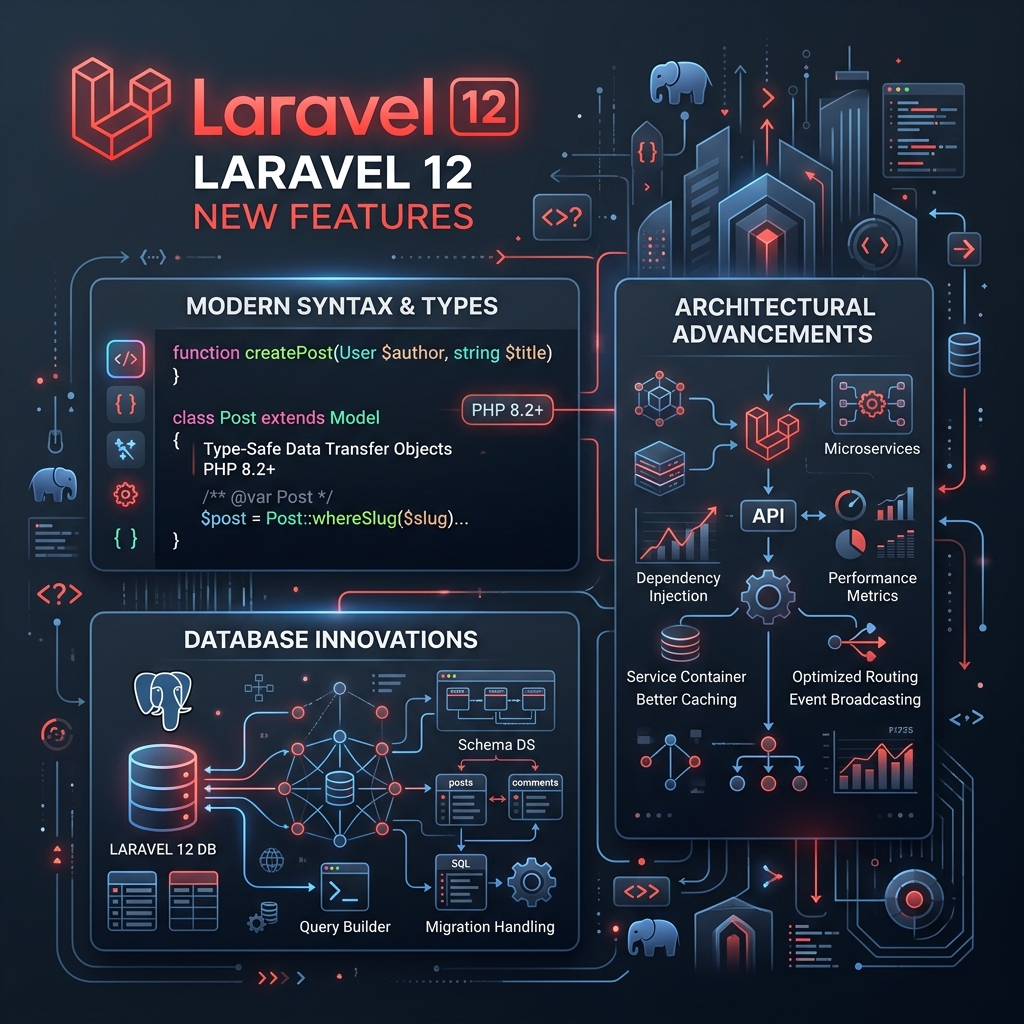
Building a Global University Database Platform: A Deep Dive into Data Architecture
As a senior full-stack developer who's navigated the complex waters of EdTech for over a decade, I've seen firsthand the transformative power of well-structured data. Imagine the sheer volume of information a student-facing platform like ApplyBoard or Edvoy juggles daily: thousands of universities, hundreds of thousands of courses, admission requirements, tuition fees, scholarship opportunities, and real-time application statuses. Aggregating, normalizing, and presenting this data in a user-friendly, performant, and scalable manner is not just a technical challenge; it's the bedrock of a successful global education data platform.
The problem isn't just about collecting data; it's about making it intelligible and actionable. Many EdTech startups grapple with disparate data sources, inconsistent formats, and the monumental task of keeping information current. A university database platform isn't just a static directory; it's a dynamic ecosystem that fuels student search, application management, and ultimately, empowers global education mobility. In this comprehensive guide, we'll dissect the intricate data architecture required to build such a system, focusing on scalability, maintainability, and the developer's perspective.
The Foundation: Understanding the Core Data Model for a University Database Platform
At the heart of any robust university database platform lies a meticulously designed data model. This isn't just about tables and columns; it's about understanding the relationships between educational entities and how they evolve. Our goal is to create a schema that can accommodate the diversity of global education systems while providing a unified view for end-users and internal systems alike.
Key Entities and Their Relationships
Let's break down the essential components. Think of this as the initial ERD (Entity-Relationship Diagram) sketch you'd put on a whiteboard.
1. University (Institution): The central entity.
- Attributes:
id,name,officialname,countryid,cityid,website,description,establishedyear,rankingnational,rankingglobal,logourl,isactive,slug. - Relationships: Has many
Campuses,Faculties,Departments,Courses,AdmissionRequirements,Scholarships,ContactPersons.
2. Campus: For universities with multiple locations.
- Attributes:
id,university_id,name,address,latitude,longitude.
3. Faculty/Department: Organizational units within a university.
- Attributes:
id,university_id,name,description. - Relationships: Has many
Courses.
4. Course/Program: The core offering. This is where the complexity truly begins, especially when building a global course database.
- Attributes:
id,universityid,facultyid,name,programlevel(e.g., Bachelor, Master, PhD, Diploma),duration(e.g., 3 years, 18 months),studymode(full-time, part-time, online),tuitionfee(currency, amount),applicationdeadline,startdate(multiple intakes),description,languageofinstruction,credits,isactive,slug. - Relationships: Belongs to
University,Faculty. Has manyAdmissionRequirements,CourseModules.
5. Admission Requirements: Highly dynamic and country-specific.
- Attributes:
id,courseid,universityid,requirementtype(academic, English proficiency, financial),description,minscore(for IELTS/TOEFL),required_documents(list of documents).
6. Scholarship: Financial aid.
- Attributes:
id,universityid,courseid(optional, for specific scholarships),name,description,amount,eligibility_criteria,deadline.
7. Location (Country, State, City): Essential for search and filtering.
- Attributes:
id,name,iso_code.
Example: MySQL Schema Snippet for Core Entities
As a Laravel developer, I'd typically define these migrations using standard Schema::create methods. Here's a simplified illustration for universities and courses:
-- universities table
CREATE TABLE `universities` (
  `id` BIGINT UNSIGNED NOT NULL AUTO_INCREMENT,
  `name` VARCHAR(255) NOT NULL,
  `official_name` VARCHAR(255) DEFAULT NULL,
  `country_id` BIGINT UNSIGNED NOT NULL,
  `city_id` BIGINT UNSIGNED NOT NULL,
  `website` VARCHAR(255) DEFAULT NULL,
  `description` TEXT DEFAULT NULL,
  `established_year` YEAR DEFAULT NULL,
  `logo_url` VARCHAR(255) DEFAULT NULL,
  `is_active` TINYINT(1) NOT NULL DEFAULT '0',
  `slug` VARCHAR(255) NOT NULL UNIQUE,
  `created_at` TIMESTAMP NULL DEFAULT CURRENT_TIMESTAMP,
  `updated_at` TIMESTAMP NULL DEFAULT CURRENT_TIMESTAMP ON UPDATE CURRENT_TIMESTAMP,
  PRIMARY KEY (`id`),
  KEY `universities_country_id_foreign` (`country_id`),
  KEY `universities_city_id_foreign` (`city_id`),
  FULLTEXT KEY `name_description_fulltext` (`name`, `description`)
) ENGINE=InnoDB DEFAULT CHARSET=utf8mb4 COLLATE=utf8mb4_unicode_ci;

-- courses table
CREATE TABLE `courses` (
  `id` BIGINT UNSIGNED NOT NULL AUTO_INCREMENT,
  `university_id` BIGINT UNSIGNED NOT NULL,
  `faculty_id` BIGINT UNSIGNED DEFAULT NULL,
  `name` VARCHAR(255) NOT NULL,
  `program_level` VARCHAR(50) NOT NULL, -- e.g., 'Bachelor', 'Master'
  `duration_value` INT NOT NULL,
  `duration_unit` VARCHAR(20) NOT NULL, -- e.g., 'years', 'months'
  `study_mode` VARCHAR(50) NOT NULL, -- e.g., 'Full-time', 'Online'
  `tuition_fee_amount` DECIMAL(10, 2) DEFAULT NULL,
  `tuition_fee_currency` CHAR(3) DEFAULT NULL, -- e.g., 'USD', 'GBP'
  `application_deadline` DATE DEFAULT NULL,
  `description` TEXT DEFAULT NULL,
  `language_of_instruction` VARCHAR(50) DEFAULT NULL,
  `credits` VARCHAR(50) DEFAULT NULL,
  `is_active` TINYINT(1) NOT NULL DEFAULT '0',
  `slug` VARCHAR(255) NOT NULL UNIQUE,
  `created_at` TIMESTAMP NULL DEFAULT CURRENT_TIMESTAMP,
  `updated_at` TIMESTAMP NULL DEFAULT CURRENT_TIMESTAMP ON UPDATE CURRENT_TIMESTAMP,
  PRIMARY KEY (`id`),
  KEY `courses_university_id_foreign` (`university_id`),
  KEY `courses_faculty_id_foreign` (`faculty_id`),
  FULLTEXT KEY `name_description_fulltext` (`name`, `description`)
) ENGINE=InnoDB DEFAULT CHARSET=utf8mb4 COLLATE=utf8mb4_unicode_ci;
Notice the use of FULLTEXT indexes for search functionality. This is crucial for performance when users are searching across millions of course descriptions. For more advanced search, we'll look at dedicated search engines later.
Data Aggregation and Normalization: The EdTech Jigsaw Puzzle
This is often where many aspiring education data platform providers stumble. Universities present their data in myriad formats: PDFs, poorly structured websites, Excel sheets, and occasionally, through APIs. The challenge is to ingest this diverse data and transform it into a consistent, queryable format.
Strategies for Data Ingestion
1. Web Scraping: The most common, yet delicate, method. Tools like Scrapy (Python) or Puppeteer (Node.js) are invaluable. However, ethical considerations and bot detection mechanisms require sophisticated approaches, including IP rotation, headless browsers, and intelligent parsing.
- Expert Tip: Design your scrapers to be resilient to website layout changes. Instead of rigid XPath, favor attribute-based selectors and incorporate AI-driven parsing where possible to identify semantic blocks.
2. University APIs: The ideal scenario, though still rare for comprehensive data. When available, integrate directly. Standards like Open Education Analytics (OEA) are emerging but not widely adopted yet.
3. Manual Data Entry/Curation: For critical, high-value data, or when automated methods fail. This requires robust internal tools and a dedicated data team. Companies like AECC Global often employ large teams for this very purpose.
4. Partner Data Feeds: Collaborating with data providers or directly with universities for structured data exports.
Normalization and Standardization
Once ingested, data must be normalized. This means:
- Standardizing program levels: 'B.A.', 'BSc', 'Bachelor of Arts' all become 'Bachelor'.
- Currency conversion: Storing tuition fees in a base currency (e.g., USD) and then converting for display.
- Duration units: Standardizing '3 years', '36 months' to a single unit for comparison.
- Categorization: Assigning subjects to a standardized taxonomy (e.g., UNESCO ISCED codes).
This process often involves a combination of regular expressions, lookup tables, and machine learning models for fuzzy matching.
// Example: Laravel service for normalizing program levels
namespace App\Services;

class ProgramLevelNormalizer
{
    protected array $mapping = [
        'bachelor of arts' => 'Bachelor',
        'ba' => 'Bachelor',
        'bachelor of science' => 'Bachelor',
        'bsc' => 'Bachelor',
        'master of arts' => 'Master',
        'ma' => 'Master',
        'msc' => 'Master',
        'master of science' => 'Master',
        'phd' => 'PhD',
        'doctor of philosophy' => 'PhD',
        // Add more mappings as needed
    ];

    public function normalize(string $level): string
    {
        $normalized = strtolower(trim($level));
        return $this->mapping[$normalized] ?? ucfirst($normalized); // Default to ucfirst if not found
    }
}

// Usage in a data ingestion script
$programLevel = (new ProgramLevelNormalizer())->normalize($scrapedProgramLevel);
Scalability and Performance: Handling Millions of Records
A truly global university database platform will inevitably deal with millions of universities, courses, and related data points. Performance is paramount for a smooth user experience, especially when filters and complex searches are involved.
Database Choices and Optimization
For our primary relational data, MySQL (or PostgreSQL) is a solid choice. However, we need to optimize it.
1. Indexing: Beyond primary and foreign keys, create indexes on frequently queried columns (e.g., programlevel, countryid, tuitionfeecurrency).
2. Denormalization (Strategic): For read-heavy operations, judicious denormalization can improve query speed. For example, caching a university's country name directly on the course record, rather than always joining.
3. Read Replicas: For high-traffic applications, separate read replicas offload read operations from the primary write database.
4. Sharding: For extremely large datasets, sharding (distributing data across multiple database instances) can be necessary, though it adds significant complexity.
Search Engine Integration: Beyond Relational Databases
Full-text search in MySQL has its limits. For a rich, faceted search experience akin to what you'd find on ApplyBoard or Edvoy, a dedicated search engine is indispensable.
- Elasticsearch/Algolia: These provide lightning-fast, highly configurable search capabilities. Data from your relational database is indexed into Elasticsearch, allowing complex queries, real-time filtering, and relevance ranking.
// Example: Elasticsearch document for a course
{
  "id": 12345,
  "university_id": 567,
  "university_name": "University of Global Excellence",
  "course_name": "Master of Artificial Intelligence",
  "program_level": "Master",
  "duration_years": 2,
  "tuition_fee_usd": 35000,
  "country_name": "Canada",
  "city_name": "Toronto",
  "description": "This program focuses on advanced AI techniques...",
  "keywords": ["AI", "Machine Learning", "Deep Learning"],
  "application_deadline": "2025-03-01",
  "start_dates": ["2025-09-01", "2026-01-01"]
}
This Elasticsearch index would be updated whenever course data changes in the primary database. Laravel's Scout package can simplify this integration.
Caching Strategies
- Application-level caching: Using Redis or Memcached to store frequently accessed data (e.g., university lists, popular courses).
- CDN (Content Delivery Network): For static assets like university logos and images.
Ensuring Data Quality and Governance
Data decays rapidly. Tuition fees change, programs are discontinued, new admission requirements emerge. Maintaining high data quality is critical for trustworthiness and user satisfaction.
Data Validation and Enrichment
1. Automated Validation: Implement strict validation rules at the application layer (e.g., Laravel's validation rules) and database constraints.
2. Human Review Workflows: For critical updates or new data, integrate a review/approval process. This could involve an internal admin panel where data curators verify information before it goes live.
3. Third-Party Data Enrichment: Integrate with APIs for geographical data (e.g., Google Maps API for coordinates), currency exchange rates, or even official university directories to cross-reference information.
Versioning and Audit Trails
- Soft Deletes: Instead of permanently deleting records, mark them as inactive.
- Versioning Tables: For critical entities like
CoursesorAdmissionRequirements, maintain a history of changes. This can be done by storing previous versions in a separate table or using a package like Laravel Auditing. This is invaluable for debugging and understanding data evolution.
// Example: Laravel Auditing package configuration
// In config/audit.php
'drivers' => [
    'database' => [
        'table' => 'audits',
        'connection' => null,
        'driver' => 'json', // Store old/new values as JSON
    ],
],

// In your Course model
use OwenIt\Auditing\Contracts\Auditable;
class Course extends Model implements Auditable
{
    use \OwenIt\Auditing\Auditable;
    // ...
}
This enables you to track who changed what, and when, for every critical piece of data in your education data platform.
API Design for a Global Course Database
The data architecture isn't complete without considering how other systems will interact with it. A well-designed API is crucial for internal applications (e.g., student CRMs, agent portals) and potential external partners.
RESTful API Principles
- Resource-oriented: Design endpoints around
universities,courses,applications, etc. - Stateless: Each request from a client to the server must contain all the information needed to understand the request.
- Standard HTTP methods: Use GET for retrieval, POST for creation, PUT for full updates, PATCH for partial updates, and DELETE for removal.
- Versioning: Essential for long-term maintainability (e.g.,
/api/v1/universities).
Example: Laravel API Endpoint for Courses
// routes/api.php
Route::prefix('v1')->group(function () {
    Route::get('/courses', [CourseController::class, 'index']);
    Route::get('/courses/{slug}', [CourseController::class, 'show']);
    // Add authenticated routes for creation/updates if needed
});

// app/Http/Controllers/Api/V1/CourseController.php
namespace App\Http\Controllers\Api\V1;

use App\Http\Controllers\Controller;
use App\Http\Resources\CourseResource;
use App\Models\Course;
use Illuminate\Http\Request;

class CourseController extends Controller
{
    public function index(Request $request)
    {
        $courses = Course::query()
            ->with(['university', 'faculty'])
            ->when($request->has('country_id'), function ($query) use ($request) {
                $query->whereHas('university', fn($q) => $q->where('country_id', $request->country_id));
            })
            ->when($request->has('program_level'), function ($query) use ($request) {
                $query->where('program_level', $request->program_level);
            })
            ->paginate(20);

        return CourseResource::collection($courses);
    }

    public function show(string $slug)
    {
        $course = Course::where('slug', $slug)
                        ->with(['university', 'faculty', 'admissionRequirements'])
                        ->firstOrFail();

        return new CourseResource($course);
    }
}
This simple API allows filtering by country and program level, demonstrating how the underlying data architecture supports flexible querying. Using Laravel API Resources ensures consistent data serialization.
Key Takeaways
- Robust Data Model is King: Start with a well-defined ERD that captures the nuances of global education.
- Normalization is Crucial for Consistency: Standardize diverse data formats from various sources.
- Dedicated Search Engines are Non-Negotiable: For a rich user experience, integrate Elasticsearch or Algolia.
- Data Quality Requires Continuous Effort: Implement validation, human review, and auditing mechanisms.
- API-First Approach: Design your data layer to be easily consumable by various applications.
- Scalability is an Architectural Concern: Plan for growth with optimized databases, caching, and potentially sharding from the outset.
FAQ
Q1: What's the biggest challenge in aggregating university data globally?
A1: The sheer inconsistency of data formats and availability across different universities and countries. Some provide structured APIs, while others only offer PDFs or poorly structured websites, making automated ingestion incredibly complex and requiring significant normalization efforts.
Q2: How do you handle real-time updates for tuition fees or application deadlines?
A2: For critical, frequently changing data points, a multi-pronged approach is best. This includes scheduled scraping jobs (tuned for specific university sites), direct API integrations where available, and a robust internal data curation team for manual verification and updates. Webhooks from university partners would be ideal but are not common.
Q3: Is it better to use a NoSQL database for this kind of platform?
A3: While NoSQL (like MongoDB) offers flexibility for rapidly evolving schemas, a relational database (like MySQL or PostgreSQL) is generally preferred for the core university database platform due to its strong consistency, ACID properties, and complex join capabilities between entities like universities, courses, and applicants. NoSQL can be excellent for specific use cases like user profiles, activity logs, or flexible document storage, but usually not for the primary academic data model.
Q4: What are the security considerations for handling sensitive student and university data?
A4: Security is paramount. This involves end-to-end encryption (SSL/TLS), robust authentication and authorization (e.g., OAuth2, JWT), strict access control (RBAC), regular security audits, protecting against common vulnerabilities (OWASP Top 10), and ensuring compliance with data privacy regulations like GDPR and CCPA. All data, especially personally identifiable information (PII), must be handled with utmost care.
Q5: How do EdTech companies like ApplyBoard manage their extensive global course database?
A5: Companies like ApplyBoard invest heavily in