Deploying Full Stack Apps with Docker Compose - A 2026 Production Guide
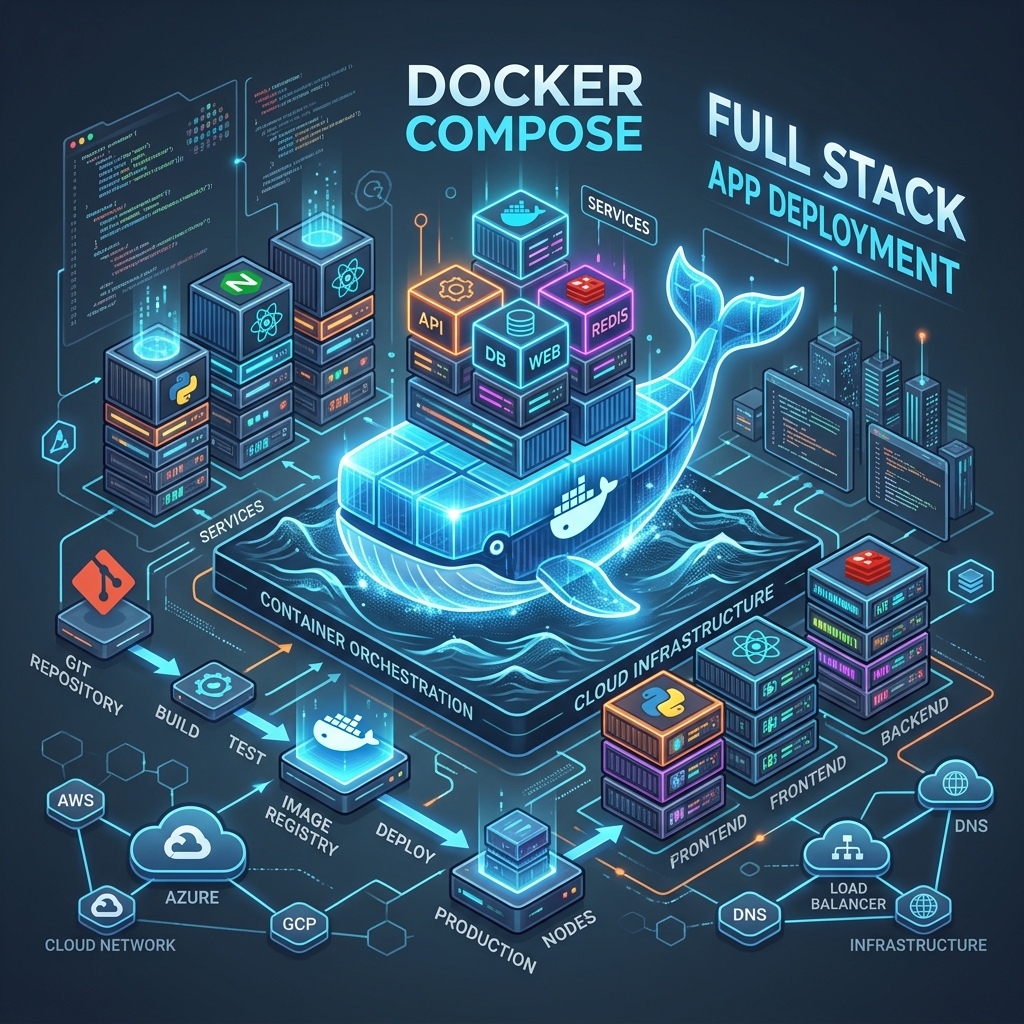
Deploying full stack applications has evolved significantly in recent years, and with the rise of containerization technologies, Docker Compose has emerged as a powerful tool for streamlining this process. As of 2026, organizations are increasingly adopting Docker Compose for production deployment, enabling them to manage complex applications with ease. In this guide, we will explore practical strategies and best practices for deploying full stack apps using Docker Compose, ensuring your applications are scalable, maintainable, and ready for production.
Why Use Docker Compose for Production Deployment?
Simplified Configuration Management
Docker Compose simplifies the configuration and orchestration of multiple containers, allowing developers to define and manage their entire application stack in a single docker-compose.yml file. This reduces the complexity typically associated with deploying full stack applications.
Enhanced Development Workflow
By utilizing Docker Compose, development teams can create a consistent environment that mirrors production. This enables a seamless transition from local development to production, minimizing the risk of "it works on my machine" scenarios.
Statistics on Docker Adoption
According to a 2025 survey by Docker, Inc., 70% of developers reported using Docker in their workflow, and 55% of organizations have adopted container orchestration tools like Docker Compose for production deployments. This trend highlights Docker's critical role in modern development practices.
Getting Started with Docker Compose
Setting Up Your Docker Environment
1. Install Docker: Ensure you have Docker installed on your machine. You can download it from the official Docker website.
2. Install Docker Compose: Docker Compose comes pre-installed with Docker Desktop. For Linux, follow the installation guide.
Defining Your Application Stack
The first step in deploying your full stack application is to define your architecture in a docker-compose.yml file. Below is an example of a typical setup involving a Laravel backend, a React frontend, and a MySQL database:
version: '3.8'
services:
  app:
    image: laravel-app
    build:
      context: .
      dockerfile: Dockerfile
    ports:
      - "8000:80"
    environment:
      DB_HOST: db
      DB_PORT: 3306
      DB_DATABASE: mydatabase
      DB_USERNAME: user
      DB_PASSWORD: password
    volumes:
      - .:/var/www/html

  frontend:
    image: react-frontend
    build:
      context: ./frontend
      dockerfile: Dockerfile
    ports:
      - "3000:3000"

  db:
    image: mysql:5.7
    environment:
      MYSQL_ROOT_PASSWORD: rootpassword
      MYSQL_DATABASE: mydatabase
      MYSQL_USER: user
      MYSQL_PASSWORD: password
    volumes:
      - db_data:/var/lib/mysql

volumes:
  db_data:
Multi-Stage Builds
Using multi-stage builds can significantly reduce your image size and streamline the deployment process. Here’s how to implement this for your Laravel backend:
# Laravel Dockerfile for multi-stage builds
FROM composer:latest AS build
WORKDIR /app
COPY . .
RUN composer install --no-dev

FROM php:8.0-fpm
WORKDIR /var/www/html
COPY --from=build /app .
COPY ./docker/php.ini /usr/local/etc/php/conf.d/
Best Practices for Docker Compose Production Deployment
1. Use Environment Variables
Using environment variables helps keep sensitive information out of your codebase. You can define them in a .env file:
DB_HOST=db
DB_PORT=3306
DB_DATABASE=mydatabase
DB_USERNAME=user
DB_PASSWORD=password
And reference them in your docker-compose.yml:
environment:
  DB_HOST: ${DB_HOST}
  DB_PORT: ${DB_PORT}
2. Optimize for Performance
When deploying in production, it’s essential to optimize your container images and configurations. Consider the following:
- Use lightweight base images to reduce size.
- Implement health checks to ensure your services are running correctly.
healthcheck:
  test: ["CMD", "curl", "-f", "http://localhost:8000"]
  interval: 30s
  timeout: 10s
  retries: 3
3. Implement CI/CD Pipelines
Integrating CI/CD into your workflow ensures that your Docker images are built and deployed automatically. Platforms like GitHub Actions or GitLab CI can help automate these processes. Here’s a simple example using GitHub Actions:
name: CI/CD Pipeline

on:
  push:
    branches:
      - main

jobs:
  build:
    runs-on: ubuntu-latest
    steps:
      - name: Checkout code
        uses: actions/checkout@v2

      - name: Build Docker image
        run: docker build -t myapp:latest .

      - name: Push Docker image
        run: docker push myapp:latest
Managing Dependencies and Services
Orchestration with Docker Compose
Docker Compose allows you to manage the lifecycle of your application easily. Use the following commands to handle your application:
- Start Services:
docker-compose up -d - Stop Services:
docker-compose down - View Logs:
docker-compose logs
Scaling Services
Docker Compose makes it easy to scale services based on demand. You can scale your Laravel service as follows:
docker-compose up --scale app=3
This command spins up three instances of your Laravel app, allowing you to handle more requests concurrently.
Key Takeaways
- Docker Compose simplifies the deployment of full stack applications by providing a unified configuration file.
- Multi-stage builds and environment variables are crucial for optimizing performance and managing sensitive data.
- Integrating CI/CD into your workflow enhances automation and efficiency in production deployments.
- Proper orchestration and scaling can significantly improve the responsiveness of your application.
Frequently Asked Questions
Q1: What is Docker Compose?
A1: Docker Compose is a tool for defining and running multi-container Docker applications. You can configure your application’s services, networks, and volumes in a single YAML file.
Q2: How do I manage environment variables in Docker Compose?
A2: You can manage environment variables by defining them in a .env file and referencing them in your docker-compose.yml, ensuring sensitive data is not hard-coded.
Q3: Can I use Docker Compose for production deployments?
A3: Yes, Docker Compose is suitable for production deployments, especially for microservices and complex applications that require orchestration.
Q4: What are multi-stage builds in Docker?
A4: Multi-stage builds allow you to use multiple FROM statements in your Dockerfile to create smaller, more efficient images by separating build and runtime environments.
Q5: How do I scale services with Docker Compose?
A5: You can scale services by using the --scale option with the docker-compose up command, allowing you to specify the number of instances for a particular service.
---
If you're looking to implement Docker Compose for your next full stack application deployment, I invite you to reach out for blank" rel="noopener noreferrer" style="color: var(--primary); text-decoration: none; border-bottom: 1px dashed var(--primary);">consultation. With my extensive experience in deploying applications using Docker, I can help you set up a robust and scalable architecture. Explore my projects and discover how I can assist you in achieving your development goals.