Next.js for High-Performance Education Platforms: Complete Guide
The EdTech landscape is fiercely competitive, with global investments projected to reach \$404 billion by 2025, according to HolonIQ. In this rapidly evolving environment, delivering a seamless, engaging, and performant user experience isn't just a luxury – it's a fundamental requirement for success. Traditional monolithic architectures or even single-page applications (SPAs) built with plain React often struggle to keep pace with the demands of an EdTech platform: dynamic content, personalized learning paths, real-time collaboration, and robust admission management systems. Students, educators, and administrators expect instant load times, intuitive interfaces, and rock-solid reliability, whether they're accessing a student portal, managing applications, or delivering online courses.
As a full-stack developer with extensive experience building complex EdTech solutions, I've seen firsthand the challenges companies face in scaling their platforms while maintaining optimal performance. From orchestrating student CRMs for international recruitment agencies like ApplyBoard and Edvoy, to developing bespoke learning management systems (LMS) for universities, the need for a modern, efficient, and scalable frontend framework is paramount. This is where Next.js shines, offering a powerful toolkit that addresses many of these pain points directly.
This comprehensive guide will delve into why Next.js is an exceptional choice for building high-performance education platforms. We'll explore its core features, architectural advantages, and practical implementation strategies, providing insights from a developer's perspective. Whether you're a startup looking to build a new Next.js education platform from scratch or an established institution aiming to modernize your existing React education platform, this article will equip you with the knowledge to make informed technical decisions.
Why Next.js is the EdTech Game Changer
At its core, Next.js is a React framework that enables functionalities like server-side rendering (SSR) and static site generation (SSG) for React applications. These capabilities fundamentally change how web applications are built and delivered, offering significant advantages, especially for data-rich and user-centric platforms like those found in education.
Performance Optimization: Speed and Responsiveness
One of the most critical factors for user retention and satisfaction in EdTech is performance. Slow loading times can lead to high bounce rates, especially for students in regions with limited internet access or when accessing a busy Next.js student portal.
Server-Side Rendering (SSR) and Static Site Generation (SSG)
Next.js provides built-in support for SSR and SSG, which are crucial for performance.
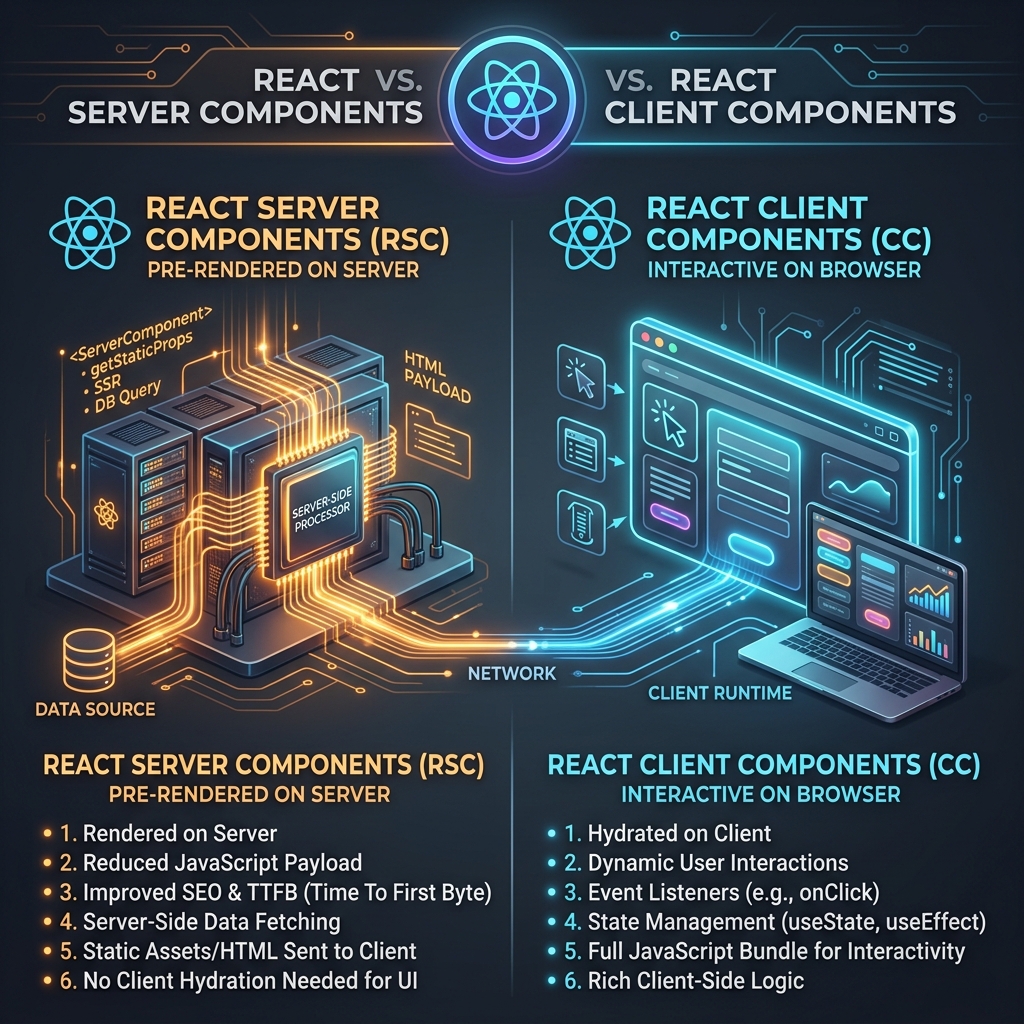
- Server-Side Rendering (SSR): With SSR, the server renders the initial HTML for a page on each request. This means the user's browser receives a fully formed HTML document, which can be displayed immediately. This is particularly beneficial for pages with dynamic, frequently updated content, such as a personalized student dashboard showing real-time course updates or application statuses.
    // pages/dashboard.js
    export async function getServerSideProps(context) {
      // Fetch student-specific data from an API
      const res = await fetch(`https://api.example.com/students/${context.params.id}/dashboard`);
      const data = await res.json();

      if (!data) {
        return {
          notFound: true,
        };
      }

      return {
        props: { studentData: data }, // will be passed to the page component as props
      };
    }

    function Dashboard({ studentData }) {
      return (
        <div>
          <h1>Welcome, {studentData.name}</h1>
          {/* Render dynamic content based on studentData */}
        </div>
      );
    }

    export default Dashboard;
This approach improves perceived performance and is excellent for SEO, as search engine crawlers can easily index the fully rendered content.
- Static Site Generation (SSG): For pages where content doesn't change frequently, like course catalogs, university profiles, or general information pages, SSG is ideal. Pages are pre-rendered into HTML, CSS, and JavaScript files at build time. These static assets can then be served from a CDN, offering lightning-fast load times and reducing server load. This is perfect for a public-facing EdTech platform or an admissions portal with static university brochures.
    // pages/courses/[id].js
    export async function getStaticPaths() {
      // Fetch all course IDs from an API
      const res = await fetch('https://api.example.com/courses');
      const courses = await res.json();

      const paths = courses.map((course) => ({
        params: { id: course.id },
      }));

      return { paths, fallback: false }; // fallback: false means pages not found will 404
    }

    export async function getStaticProps({ params }) {
      // Fetch data for a single course
      const res = await fetch(`https://api.example.com/courses/${params.id}`);
      const course = await res.json();

      return { props: { course } };
    }

    function CourseDetail({ course }) {
      return (
        <div>
          <h1>{course.title}</h1>
          <p>{course.description}</p>
        </div>
      );
    }

    export default CourseDetail;
The judicious use of SSR and SSG allows developers to optimize different parts of an EdTech platform for their specific content and access patterns, providing a truly high-performance experience.
Image Optimization and Code Splitting
Next.js includes built-in image optimization via next/image, which automatically optimizes images for different devices and viewports, lazy-loads them, and serves them in modern formats like WebP. This significantly reduces page weight, a common culprit for slow loading times on content-heavy educational sites. Furthermore, automatic code splitting ensures that only the necessary JavaScript is loaded for each page, further enhancing initial load performance.
Architectural Advantages for Scalable EdTech
Building a robust EdTech platform requires an architecture that can scale horizontally, support diverse integrations, and maintain a clear separation of concerns. Next.js, especially when paired with a strong backend like Laravel or a microservices architecture, provides an excellent foundation.
API Routes and Backend Integration
Next.js allows you to create API routes within your project, which are serverless functions that run on the server. While for complex EdTech platforms, I typically recommend a dedicated backend (e.g., a Laravel API for business logic and database management), these API routes can be incredibly useful for:
- Proxying requests: Hiding API keys or sensitive information from the client.
- Simple data fetching: For small, self-contained data operations that don't warrant a full backend service.
- Webhooks: Handling incoming webhooks from third-party services (e.g., payment gateways, LMS integrations).
// pages/api/submit-admission.js
export default async function handler(req, res) {
  if (req.method === 'POST') {
    const { studentId, courseId, formData } = req.body;
    try {
      // In a real scenario, this would call your Laravel/PHP backend API
      const backendRes = await fetch('https://your-laravel-api.com/admissions/submit', {
        method: 'POST',
        headers: { 'Content-Type': 'application/json' },
        body: JSON.stringify({ studentId, courseId, formData }),
      });
      const data = await backendRes.json();
      if (!backendRes.ok) throw new Error(data.message || 'Admission submission failed');
      res.status(200).json({ success: true, data });
    } catch (error) {
      res.status(500).json({ success: false, message: error.message });
    }
  } else {
    res.setHeader('Allow', ['POST']);
    res.status(405).end(`Method ${req.method} Not Allowed`);
  }
}
This example demonstrates how a Next.js API route can act as an intermediary for submitting an admission form to a Laravel backend. This pattern is common in many of the student CRM and admission management systems I've developed.
Modularity and Maintainability
Next.js encourages a component-based architecture, a hallmark of React education platform development. This promotes code reusability and makes it easier to maintain large-scale applications. Features like file-system based routing simplify project structure, allowing developers to intuitively understand where different parts of the application reside. This is invaluable when managing a complex EdTech platform with various user roles (students, teachers, administrators) and distinct functionalities.
Developer Experience (DX)
A productive developer experience translates directly into faster development cycles and higher quality code. Next.js offers:
- Fast Refresh: Instant feedback on code changes without losing component state.
- TypeScript Support: Excellent out-of-the-box integration for type safety, crucial in large teams.
- Rich Ecosystem: Access to the vast React ecosystem, including state management libraries (Redux, Zustand), UI component libraries (Material-UI, Ant Design), and testing utilities.
This focus on DX helps teams, whether internal or external, build sophisticated features for admission portals or student learning platforms more efficiently.
Building Key EdTech Modules with Next.js
Let's explore how Next.js can be leveraged for core EdTech functionalities.
The Student Portal and Dashboard
A student portal is often the central hub for students, providing access to courses, grades, schedules, and communication tools. A Next.js student portal can deliver a highly personalized and performant experience.
Dynamic Data and User Personalization
Using SSR, the student dashboard can fetch and display real-time, personalized data upon login. This ensures students see their latest course progress, upcoming deadlines, and notifications without delay. For example, a student applying through an agency like AECC Global would expect to see their application status update instantly.
// components/StudentDashboard.js
import useSWR from 'swr'; // For client-side data fetching and revalidation

const fetcher = (url) => fetch(url).then((res) => res.json());

function StudentDashboard({ initialData }) {
  const { data, error } = useSWR('/api/student/dashboard-data', fetcher, { initialData });

  if (error) return <div>Failed to load dashboard</div>;
  if (!data) return <div>Loading...</div>;

  return (
    <section className="student-dashboard">
      <h2>Welcome back, {data.studentName}!</h2>
      <div className="grid grid-cols-2 gap-4">
        <div className="card">
          <h3>My Courses</h3>
          <ul>
            {data.courses.map((course) => (
              <li key={course.id}>
                <Link href={`/courses/${course.id}`}>{course.title}</Link> - {course.progress}%
              </li>
            ))}
          </ul>
        </div>
        <div className="card">
          <h3>Notifications</h3>
          <ul>
            {data.notifications.map((notification) => (
              <li key={notification.id}>{notification.message}</li>
            ))}
          </ul>
        </div>
      </div>
    </section>
  );
}

export default StudentDashboard;

// pages/student/dashboard.js
import StudentDashboard from '../../components/StudentDashboard';

export async function getServerSideProps(context) {
  // Authenticate user and fetch initial dashboard data
  const res = await fetch('https://your-laravel-api.com/api/student/dashboard-initial', {
    headers: { Authorization: `Bearer ${context.req.cookies.authToken}` },
  });
  const initialData = await res.json();

  if (!initialData) {
    return {
      redirect: {
        destination: '/login',
        permanent: false,
      },
    };
  }

  return { props: { initialData } };
}

function DashboardPage({ initialData }) {
  return <StudentDashboard initialData={initialData} />;
}

export default DashboardPage;
This setup combines SSR for initial page load with client-side data fetching (using SWR) for dynamic updates, offering the best of both worlds for a responsive student portal.
Admission Management Systems
For institutions and agencies like Edvoy that manage thousands of applications, an efficient admission management system is crucial. Next.js can power the frontend of such systems, providing intuitive forms, applicant tracking interfaces, and reporting dashboards.
Optimized Forms and Workflows
SSG can be used for static parts of admission forms (e.g., country lists, program types), while client-side rendering handles complex conditional logic and real-time validation. The integration with a robust backend (e.g., a Laravel API handling application submissions, document uploads, and CRM functionalities) ensures data integrity and security.
Content-Rich Learning Materials
Many EdTech platforms rely heavily on content – course materials, articles, videos, and interactive exercises. Next.js's SSG capabilities are perfect for delivering these resources quickly and reliably.
SEO-Friendly Course Pages
Each course page, lesson, or resource can be pre-rendered as a static HTML file, making it highly discoverable by search engines. This is vital for organic traffic acquisition and ensuring educators can easily find relevant materials. Using Markdown for content and processing it into HTML at build time is a common pattern for such systems.
Integration with Existing EdTech Ecosystems
Most EdTech companies don't operate in a vacuum. They need to integrate with existing student information systems (SIS), learning management systems (LMS), payment gateways, and communication platforms.
Headless CMS and API-First Approach
Next.js naturally fits into a headless architecture. Your backend (e.g., a Laravel API or a Python/Django backend) serves as the "head" for data and business logic, while Next.js acts as the "head" for the presentation layer. This separation allows for greater flexibility, easier integration with third-party services, and the ability to swap out frontend or backend technologies independently.
Authentication and Authorization
Implementing secure authentication and authorization is paramount. Next.js can integrate seamlessly with various authentication strategies:
- JWT (JSON Web Tokens): For stateless authentication with a backend API (e.g., Laravel Sanctum).
- OAuth/OpenID Connect: For single sign-on (SSO) with institutional identity providers or social logins.
- NextAuth.js: A comprehensive authentication solution for Next.js that simplifies integration with many providers.
For example, when building a student CRM, ensuring that only authorized counselors can access specific student profiles requires a robust authorization layer, often managed by the backend and enforced on the frontend through routes and component rendering.
The Future of EdTech with Next.js
Next.js continues to evolve rapidly, with features like React Server Components (RSC) and enhanced data fetching capabilities promising even more powerful ways to build performant applications. These advancements will further solidify its position as a leading framework for building complex, data-intensive platforms.
The demand for high-quality online learning experiences will only grow. Organizations that invest in modern, scalable, and user-friendly technology will be the ones that thrive. Next.js offers a compelling pathway to achieve this, delivering the speed, reliability, and developer experience needed to build the next generation of EdTech solutions.
---
Key Takeaways
- Performance is paramount: Next.js's SSR and SSG capabilities provide superior load times and responsiveness, crucial for user engagement in EdTech.
- Scalability baked in: Its component-based architecture and API route system support scalable development for complex platforms like student CRMs and LMS.
- Enhanced Developer Experience: Features like Fast Refresh and TypeScript support boost productivity and code quality.
- SEO Advantage: Server-rendered pages are inherently more SEO-friendly, helping educational content reach a wider audience.
- Flexible Integrations: Ideal for headless architectures, integrating seamlessly with existing backends (Laravel, Python) and third-party EdTech tools.
- Real-world impact: Companies like ApplyBoard and Edvoy can benefit from such a robust frontend for their admission management systems, ensuring a smooth experience for international students.
---
FAQ
Q1: Is Next.js suitable for small EdTech startups, or is it overkill?
A1: Next.js is highly scalable, making it suitable for both small startups and large enterprises. While it introduces some initial complexity compared to a plain React SPA, the performance, SEO, and maintainability benefits often outweigh this, especially if the platform is expected to grow. For a startup focused on rapid iteration and future scalability, it's an excellent choice.
Q2: How does Next.js handle real-time features like live classes or chat in an EdTech platform?
A2: Next.js itself doesn't provide real-time capabilities directly. For features like live classes, chat, or collaborative whiteboards, you'd integrate real-time technologies such as WebSockets (e.g., with libraries like Socket.IO), WebRTC, or cloud-based real-time services (e.g., Pusher, Ably). Next.js would serve as the frontend orchestrator, displaying the real-time data pushed from your backend.
Q3: Can I use Next.js with any backend language, like Python or PHP (Laravel)?
A3: Absolutely. Next.js is a frontend framework and is entirely agnostic about your backend technology. You can easily integrate it with APIs built in Python (Django, Flask), PHP (Laravel, Symfony), Node.js (Express), Ruby on Rails, or any other language. The communication happens via standard HTTP requests (REST or GraphQL).
Q4: What are the main hosting options for a Next.js education platform?
A4: Popular hosting options include Vercel (the creators of Next.js, offering excellent optimization and deployment), Netlify (similar to Vercel), AWS Amplify, Google Cloud Run, or a custom server setup (e.g., using a Node.js server on AWS EC2 or DigitalOcean). For SSR EdTech applications, a Node.js environment is required to render pages on the server.
Q5: What are the security considerations when building an EdTech platform with Next.js?
A5: Security is paramount. Key considerations include:
- Secure API integrations: Always use HTTPS, validate and sanitize all input, and implement proper authentication/authorization with your backend.
- Data Protection: Ensure sensitive student data is handled according to regulations (e.g., GDPR, FERPA). Next.js on the frontend should not store sensitive data unencrypted.
- Vulnerability prevention: Guard against common web vulnerabilities like XSS, CSRF (often handled by the backend and proper token management), and insecure direct object references.
- Dependency Audits: Regularly audit your project's dependencies for known vulnerabilities.
---
Looking to build an EdTech platform, student CRM, or admission management system? I specialize in developing scalable education technology solutions using Laravel, React, and cloud infrastructure. Whether you're a study-abroad agency, EdTech startup, or university looking for custom software development, blank" rel="noopener noreferrer" style="color: var(--primary); text-decoration: none; border-bottom: 1px dashed var(--primary);">let's discuss your project. Check out my portfolio and technical expertise to see how I can help bring your vision to life.